
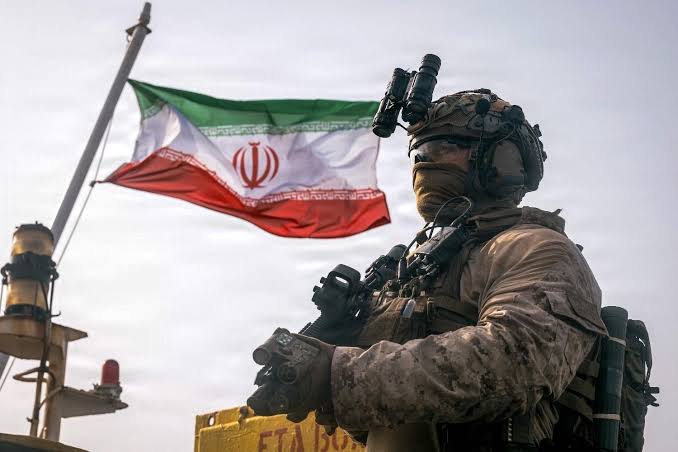
Analysis | By Sadaf Sundas Riaz
Efforts to revive an interim US-Iran peace arrangement have stalled, leaving Washington and Tehran trading accusations over broken commitments and raising the risk that renewed military action could again overtake diplomacy in a conflict already destabilizing the Middle East and global energy markets.
A senior Iranian source said Wednesday there had been “absolutely no progress” in efforts mediated by regional governments to restore the interim agreement reached in June. Washington accuses Tehran of failing to meet commitments linked to reopening the Strait of Hormuz, while Iran says the United States has failed to fulfill its own obligations, including lifting its blockade of Iranian ports and releasing frozen Iranian assets.


The dispute has transformed what appeared only days ago to be momentum toward a Hormuz agreement into another dangerous diplomatic impasse.
Both Sides Say the Other Broke the Deal
At the center of the confrontation is a fundamental disagreement over sequencing.
The United States wants reliable freedom of navigation through Hormuz and accuses Iran of failing to implement commitments concerning the vital shipping route.
Tehran argues that Washington cannot demand Iranian compliance while maintaining restrictions on Iranian ports and withholding economic concessions Iran says were part of the understanding.
That leaves negotiators facing a familiar problem: neither government wants to make the first major concession without evidence that the other will follow.
A Ceasefire That Never Became a Peace
The current dispute traces back to the interim arrangement reached in June, which halted a previous round of hostilities and established a 60-day window for negotiations toward a more permanent settlement involving Iran’s nuclear program, sanctions and broader security issues.
But the arrangement quickly came under strain.
Both governments accused the other of violations, and President Donald Trump declared the deal effectively over in July before Iran suspended its implementation. Attempts to revive that framework have since failed to produce a breakthrough.
The danger now is that a temporary diplomatic failure becomes the trigger for another military cycle.
Hormuz Remains the Most Dangerous Flashpoint
The Strait of Hormuz remains at the center of the crisis because disruption there carries consequences far beyond Iran and the United States.
Fresh attacks on commercial shipping have continued even as mediators attempt to restore negotiations. The United States and Yemen’s Iran-aligned Houthis reported separate maritime attacks this week, further demonstrating how quickly the confrontation can spread beyond direct US-Iran exchanges.
President Trump has meanwhile said US forces have “total control” of Hormuz, a claim rejected by Tehran, which insists restrictions will remain until Washington meets Iranian demands.
The combination of military deployments, disrupted shipping and failed negotiations creates significant potential for miscalculation.
Oil Markets Are Already Pricing in the Risk
Energy markets are responding to the uncertainty.
Oil prices edged higher Wednesday as investors weighed the diplomatic deadlock against continued attacks on shipping and concerns about supplies moving through the Middle East.
That matters directly to the United States.
A prolonged confrontation that pushes crude prices substantially higher could eventually feed into American gasoline prices, transportation costs and inflation — creating an economic vulnerability for the Trump administration even if the United States maintains military superiority in the Gulf.
The consequences would be potentially greater for energy-importing economies across Asia and elsewhere.
Why Another Escalation Could Be Harder to Contain
The next military confrontation may not simply repeat the previous one.
Iran has demonstrated that it can impose economic costs by threatening shipping and US interests across the region, while Washington has shown its willingness to use military force and maritime pressure.
Each side therefore retains tools capable of hurting the other without immediately entering an unrestricted war.
That is precisely what makes the situation dangerous.
A strike on a commercial vessel, an attack on US forces or another confrontation at sea could generate demands for retaliation before diplomats have time to contain the fallout.
Mediators Still Have a Window
Diplomacy has not disappeared completely.
Pakistan and other regional mediators remain engaged, and Pakistani officials have recently suggested that Washington and Tehran could still reach an arrangement.
International pressure for de-escalation is also continuing, with governments heavily dependent on Gulf energy supplies pushing both sides toward compromise.
But optimism surrounding an imminent agreement has clearly weakened.
The Bigger Picture
The central question is no longer whether Washington and Tehran can negotiate. They have already demonstrated that they can.
The question is whether either side believes the political and economic benefits of compromise outweigh the leverage provided by military pressure.
For Iran, Hormuz remains one of its strongest bargaining cards. For Washington, accepting Tehran’s conditions risks appearing to reward disruption of an international shipping route.
That leaves both governments with incentives to negotiate — but also incentives to keep applying pressure.
Unless mediators can break that contradiction, the conflict risks returning to the pattern that has repeatedly defined it: military escalation produces diplomacy, diplomacy produces an incomplete agreement, and disputes over implementation push the two sides back toward confrontation.
The next cycle may already be beginning.