
Beyond a Nuclear Deal, Washington Signals It May Try to Contain Iran Without One
By Shahnoor Saqib — The Changer
WASHINGTON: The Trump administration has publicly raised the possibility of preventing Iran from acquiring a nuclear weapon without reaching a negotiated nuclear agreement, a shift in emphasis that could transform the confrontation from a diplomacy built around securing a deal into a potentially open-ended strategy of military and economic containment.
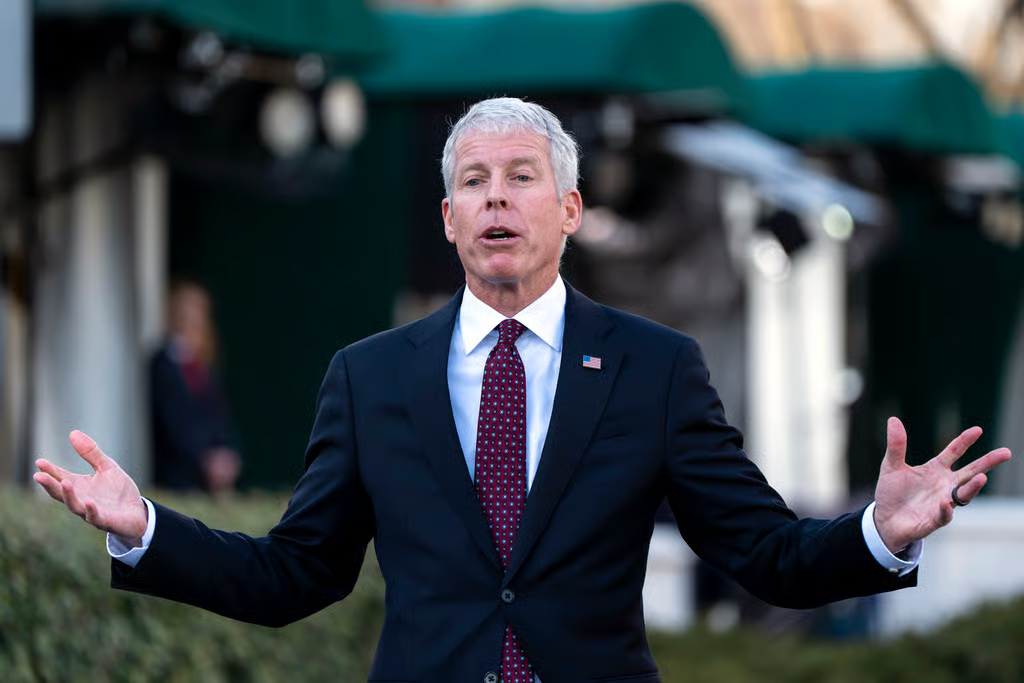
U.S. Energy Secretary Chris Wright said Sunday there “may not be a nuclear agreement” with Tehran and suggested an accord could potentially have to wait for a future Iranian administration. Speaking on ABC’s This Week, Wright said that in the absence of an agreement Washington could instead focus on destroying Iran’s ability to develop nuclear weapons, while continuing to work with regional allies.


The significance of those remarks goes beyond another pessimistic assessment of negotiations. A negotiated agreement and a strategy of repeatedly degrading nuclear capability are fundamentally different mechanisms. The first seeks verifiable political commitments governing Iran’s nuclear activities; the second depends on military, intelligence and economic pressure to prevent Tehran from rebuilding capabilities Washington considers threatening.
Wright’s remarks also place an unusually long potential timeline around diplomacy. His suggestion that an agreement might await Iran’s next administration implies Washington is considering the possibility that the current confrontation could continue without a comprehensive settlement for an extended period. President Donald Trump had already indicated in August that Tehran might not accept the kind of agreement he considers necessary, and last week said he was not particularly concerned about whether an agreement was ultimately reached.
The shift comes after months in which diplomacy and military confrontation have increasingly overlapped. ABC reported that a memorandum of understanding between Washington and Tehran collapsed, while hostilities subsequently resumed. Wright said Sunday that the United States remained in a “conflict zone” with Iran and argued that Washington was continuing to degrade Iranian military capabilities.
Economic pressure is another component of that strategy. Wright said U.S. naval operations were not only helping shipping move through the region but were intended to prevent Iranian oil and other exports from leaving the country. He explicitly linked that pressure to changing either Iran’s leadership or its policies — a statement that broadens the confrontation well beyond the technical parameters of uranium enrichment.
Meanwhile, nuclear oversight is becoming another pressure point. The United States, Britain, France and Germany have drafted an International Atomic Energy Agency resolution concerning Iran’s compliance with its non-proliferation obligations and possible referral to the U.N. Security Council. The IAEA dispute centres partly on access to nuclear facilities and accounting for Iran’s highly enriched uranium following attacks on nuclear sites.
Iran maintains that its nuclear programme is peaceful. No publicly available evidence establishes that Tehran has made a decision to manufacture a nuclear weapon, and assessments about its technical capacity should not be confused with proof of an order to build one. That distinction becomes particularly important as political rhetoric surrounding the conflict intensifies.
The strategic problem for Washington is that destroying or degrading facilities is different from establishing a durable verification system. Military action can damage infrastructure and delay technical programmes, but a negotiated framework can potentially provide inspections, monitoring and agreed limits. Conversely, an agreement requires political concessions and compliance from both sides that months of confrontation have made increasingly difficult to secure.
That is why Wright’s remarks mark a potentially consequential moment in the trajectory of the crisis. The Trump administration is now publicly discussing a scenario in which preventing an Iranian nuclear weapon no longer depends on obtaining Iran’s signature on a nuclear agreement at all.
If that becomes Washington’s enduring policy rather than negotiating rhetoric, the central question surrounding Iran will change. Instead of asking when the next nuclear agreement will be signed, policymakers may have to confront a more difficult question: how long can nuclear proliferation be contained through military and economic pressure when no negotiated framework exists to replace it?