
By Sadaf Sundas Riaz — The Changer
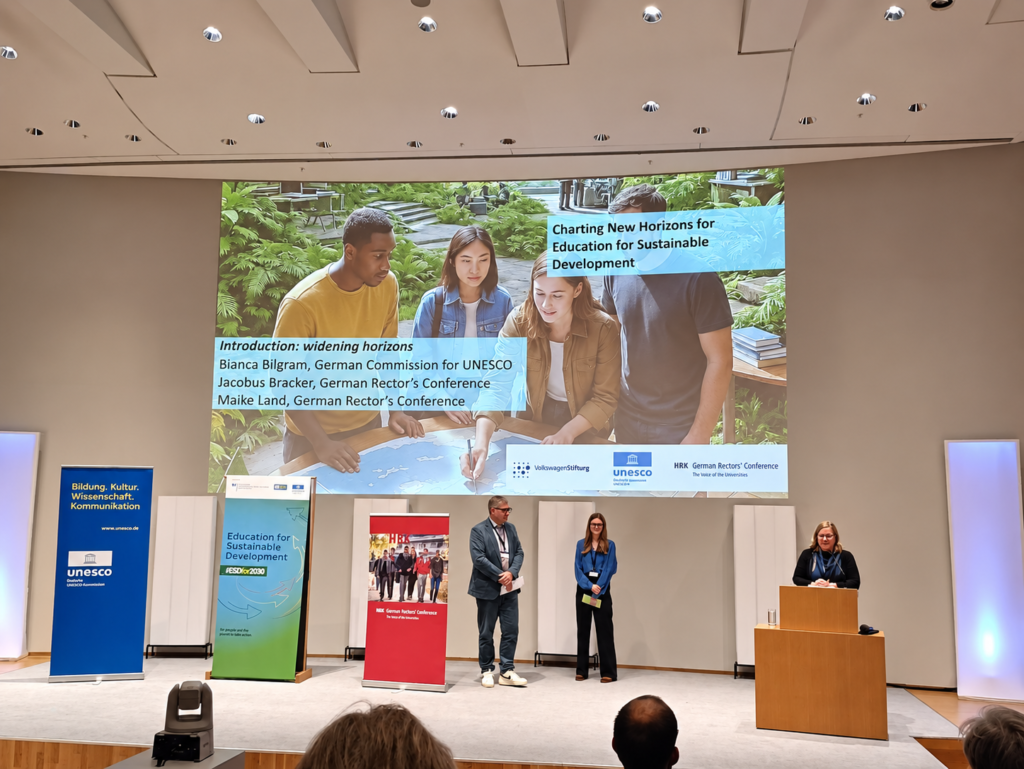
PARIS, Sept 7 — With fewer than four years remaining before the deadline for the United Nations Sustainable Development Goals, UNESCO has begun a process that raises a question the international development system can no longer postpone: what happens after 2030? A Global Expert Symposium held in Munich on Sept. 1–2 brought together governments, academics, civil society, youth and international organisations to explore how Education for Sustainable Development should evolve beyond the existing 2030 framework. The consultation is feeding into preparations for a World Conference on Education for Sustainable Development scheduled for Nairobi in January 2027.
The Munich meeting could easily be viewed as another specialised education conference. Its broader significance, however, lies in its timing. The 2030 Agenda was adopted in 2015 around 17 Sustainable Development Goals intended to provide a common international framework for development, poverty reduction, education, climate action and other priorities. As that deadline approaches, UNESCO and the SDG 4 High-Level Steering Committee are beginning to construct a framework for education that explicitly extends beyond it.


That process is already becoming institutional rather than theoretical. The SDG 4 High-Level Steering Committee — which brings together governments, international organisations, civil society, teachers, young people, donors and the private sector — has approved a three-year roadmap for global consultations on the post-2030 education agenda. Its 2026–2027 priorities include resilient education systems, stronger teaching, foundational and lifelong learning, inclusive digital transformation and sustainable education financing.
Young people are also being brought directly into the design process. UNESCO and the SDG 4 Youth & Student Network are conducting consultations intended to produce a Post-2030 Youth Education and Learning Agenda. Responses from the global process are due to be consolidated in October 2026 and presented to international leaders at a Global Education Meeting in early 2027, providing input into decisions about the future global education architecture.
The exercise reflects a difficult reality confronting multilateral institutions: designing a post-2030 framework does not mean the existing goals have been completed. UNESCO’s own current work remains focused on accelerating progress toward SDG 4 while simultaneously preparing for what follows it. The organisation describes this as a dual task — strengthening education systems to meet existing commitments while laying the foundations for the next international agenda.
Education for Sustainable Development also reaches well beyond conventional classroom policy. UNESCO defines it as equipping people with knowledge and skills to respond to interconnected challenges including climate change, biodiversity loss, resource use and inequality. Its existing framework focuses on policy, learning environments, educator capacity, youth mobilisation and local action, connecting education to environmental, social and economic development.
That breadth helps explain why the Munich discussions matter to the wider UN system. Decisions about post-2030 education inevitably intersect with climate resilience, digital transformation, inequality, human rights, employment, peace and development financing. UNESCO’s General Conference has already instructed the organisation to report on the consultation process shaping the post-2030 global education agenda, further embedding the exercise within its formal institutional programme.
Financing may prove one of the most difficult parts of the transition. The SDG 4 steering process has identified sustainable financing as fundamental to resilient education systems and is examining approaches including domestic resource mobilisation, debt-for-education swaps and improvements in public financial management. That debate is especially significant for developing countries where ambitious international targets often collide with debt burdens and limited fiscal capacity.
The Nairobi conference in January will therefore arrive at an important point. UNESCO says the Munich foresight exercise is intended to inform that conference while contributing to the wider discussion about the future of the Sustainable Development Goals beyond 2030. Rather than waiting until the deadline expires, the international education system is beginning to ask which existing commitments should survive, what new challenges must be incorporated and how future targets should be designed.