
U.S. Politics | By Saqib S. Qureshi
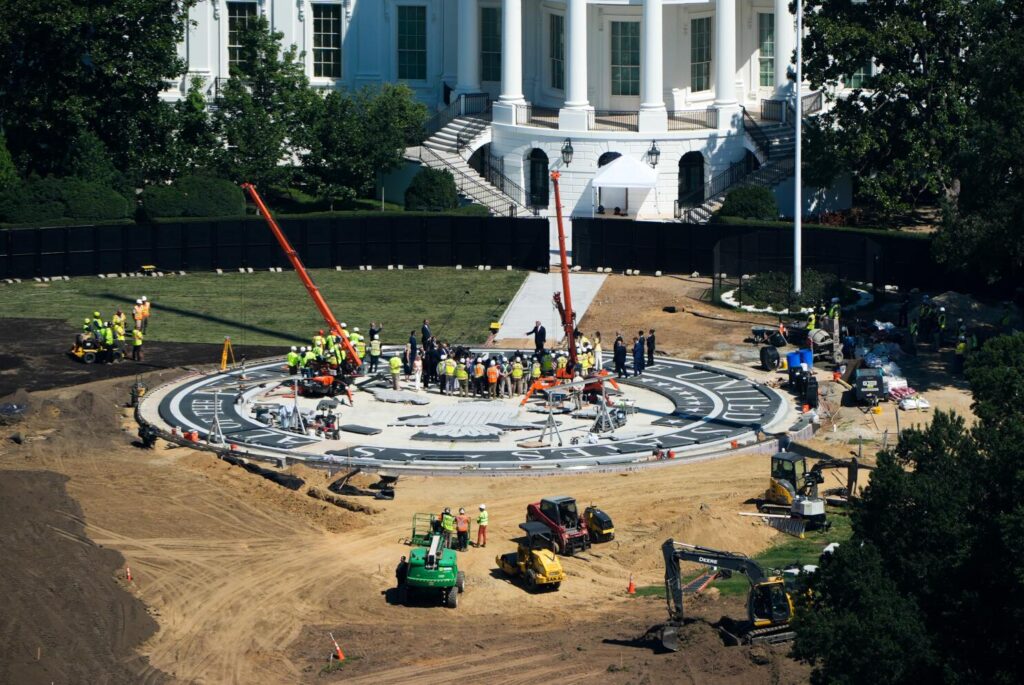
WASHINGTON — President Donald Trump temporarily shifted attention away from wars, markets and midterm politics on Wednesday to something much closer to his pre-political identity: building. Trump personally led reporters across the White House grounds to showcase a nearly completed new granite helipad, upgraded driveway and his much larger ballroom project, enthusiastically discussing construction materials, durability and design while presenting the renovations as improvements that will outlast his presidency.
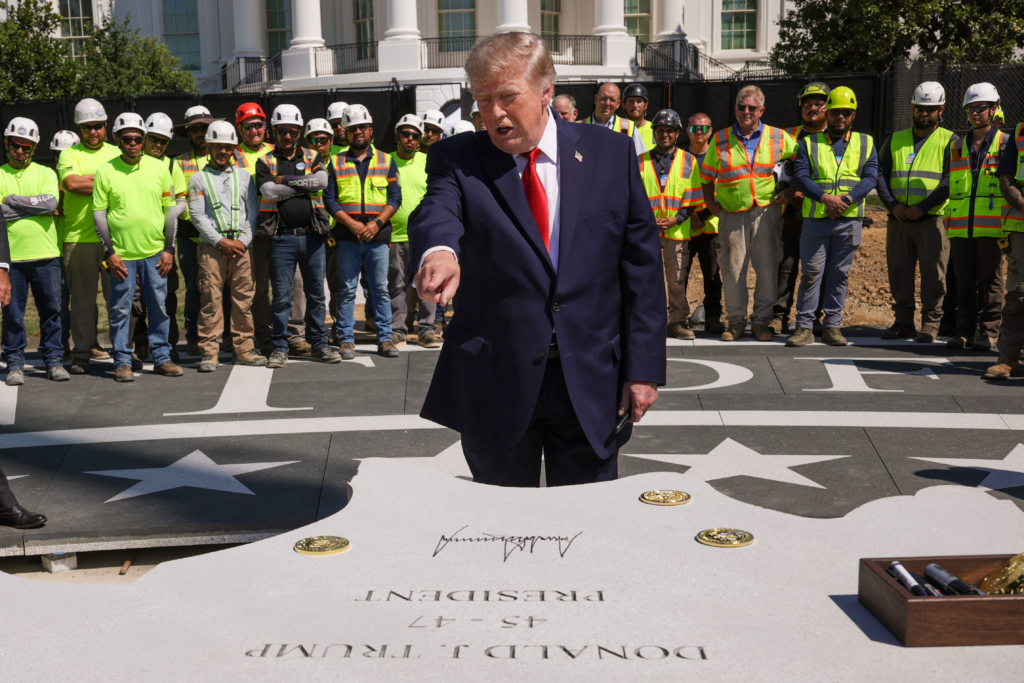
The centrepiece of the tour was the new South Lawn helipad intended for Marine One. Trump praised the use of granite instead of conventional paving and argued that the stronger surface was necessary because presidential helicopters can damage the lawn. He even signed a granite piece bearing his name and presidential designation that is intended to become part of the helipad, with construction workers also adding their signatures. Sikorsky, the Lockheed Martin subsidiary that manufactures presidential helicopters, is funding the granite for the project, according to reporting on the tour.


Trump also revealed another change that had received little public attention: asphalt on the driveway near the White House residence had been replaced with white granite. For roughly half an hour, the former New York real-estate developer spoke less like a president delivering a policy announcement and more like a construction executive inspecting a major development, repeatedly emphasizing the quality and permanence of the materials being installed.
The Helipad Is Only Part of Trump’s White House Transformation
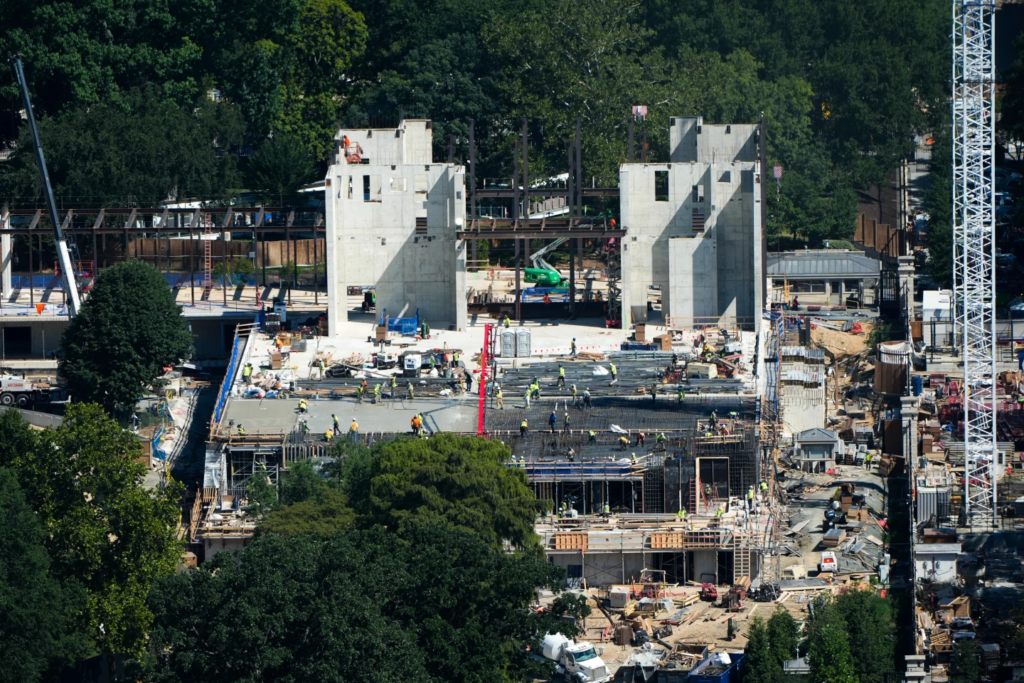
The renovation drive extends far beyond the landing pad. Trump is pursuing a $400 million ballroom complex, along with other changes to the White House campus, and on Wednesday again promoted the ballroom as both an event space and a project with national-security functions. The administration says the complex will incorporate enhanced security infrastructure, while Trump has highlighted features intended to protect against threats including drones.
The ballroom has also become the most controversial element of Trump’s construction agenda. Its scale, financing and approval process have generated legal challenges, and a federal court has restricted further above-ground work without congressional authorization. The administration has taken the dispute to the Supreme Court, arguing that security considerations strengthen the government’s authority to proceed.
The timing of Trump’s construction tour was striking. His administration is simultaneously confronting stalled Iran diplomacy, economic and market concerns and an approaching midterm election in which Republicans are fighting to preserve control of Congress. Reuters reported that Trump nevertheless appeared particularly comfortable discussing the construction work, comparing the transformation to restoring a neglected property and repeatedly stressing that the improvements were designed to last.
The Changer Angle: Trump Is Building a Physical Legacy, Not Just a Political One
Every president tries to leave behind policies, appointments and political movements. Trump appears increasingly interested in leaving behind stone, buildings and physical changes carrying his imprint. The helipad is revealing because it combines those instincts in miniature: a functional presidential facility rebuilt with expensive-looking granite, personally inspected by Trump and marked with a piece bearing his signature.
The much larger ballroom takes that instinct further. Trump has repeatedly portrayed the project as a long-overdue modernization rather than a vanity project, while critics question its cost, legal authorization and transformation of one of America’s most historically sensitive properties. The disagreement therefore goes beyond architecture. It is becoming an argument over how much authority a sitting president should have to physically remake the White House itself.
Wednesday’s tour also offered an unusually clear glimpse of the part of Trump that existed long before the MAGA movement and the presidency. For a brief period, the policy battles receded and the real-estate developer returned to the foreground — inspecting stone, discussing surfaces, praising construction and imagining how the finished projects will look years from now. Trump’s political legacy will remain contested. His construction agenda suggests he also wants a legacy that visitors can literally walk across.