
Pakistan | By News Desk
ISLAMABAD — Prime Minister Shehbaz Sharif called on Friday for a “grand dialogue” to address Balochistan’s longstanding grievances, saying the government was prepared to listen to legitimate concerns and that those willing to renounce violence should be welcomed back into the national mainstream. The appeal comes at a critical moment for Pakistan’s largest province, where a sharp escalation in militant violence has intensified questions over whether security operations alone can produce lasting stability.
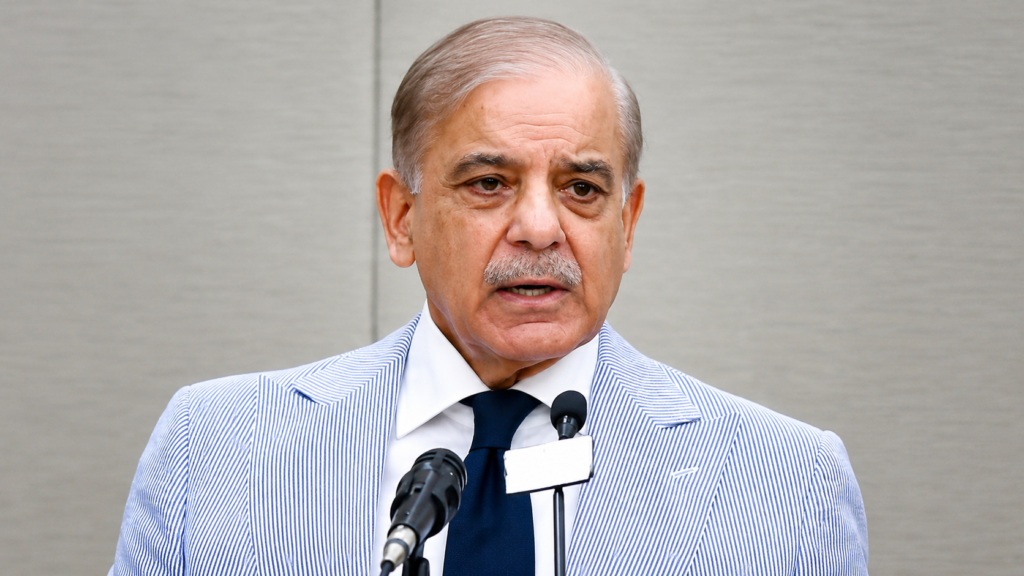
Addressing participants of the National Workshop Balochistan in Islamabad on August 21, Shehbaz said genuine grievances should be discussed openly and resolved through peaceful and civilised means. He argued that it was “never too late” to confront outstanding problems and called for a frank and meaningful national conversation. At the same time, the prime minister drew a distinction between grievances that could be addressed politically and continued violence, saying people prepared to abandon militancy and “correct their path” should be welcomed.


Shehbaz also directly addressed one of the most sensitive issues underlying Balochistan’s political discontent: control over and benefits from the province’s enormous natural wealth. He said there should be no ambiguity that Balochistan’s mineral resources primarily belong to its people, while acknowledging that exploiting large deposits requires investment, technology and expertise. He said Balochistan’s residents should be the first beneficiaries of those resources, followed by the rest of Pakistan.
The prime minister pointed to development spending as evidence of federal support, including Islamabad’s Rs40 billion contribution to a Rs70 billion programme to solarise agricultural tube wells, under which more than 20,000 tube wells have been converted. He also recalled arrangements under the National Finance Commission through which provinces increased Balochistan’s financial share and acknowledged that the province’s vast geography makes delivery of roads, education, healthcare and other services unusually difficult.
The political outreach comes against a far more difficult security backdrop. At least 372 people were killed in militant violence and security operations in Balochistan during July, according to figures from the Pakistan Institute for Conflict and Security Studies cited by Arab News, more than three times the previous month’s toll. Baloch nationalist grievances have historically included complaints over political marginalisation, security policies and the distribution of benefits from natural resources, while successive governments have rejected allegations of deliberate exploitation and pointed to development programmes and militant attacks on civilians, infrastructure and workers.
The Changer Angle: Islamabad Is Acknowledging That Security and Politics Must Run Together
The significance of Shehbaz’s speech lies in the combination of two messages that Pakistan has often presented separately: militancy will be confronted, but legitimate grievances require political engagement. Only days earlier, after another surge in violence, the government had stressed its determination to defeat terrorism. Friday’s language introduces a parallel route — an invitation for those prepared to abandon violence to re-enter a political process.
But calling for dialogue is considerably easier than constructing one. A meaningful process would have to determine who participates, which grievances are considered legitimate, what political or economic concessions are possible, and how people involved in violence could return to the mainstream. None of those mechanisms was detailed in Friday’s remarks. That means Shehbaz has opened a political door without yet defining what lies behind it.
The most consequential part of the speech may therefore be his explicit connection between reconciliation and Balochistan’s ownership of its mineral wealth. With the province increasingly central to Pakistan’s mining and investment ambitions, Islamabad faces a strategic choice: major resource projects can either deepen perceptions that wealth is leaving Balochistan or become a mechanism for demonstrating that local communities receive tangible benefits first. Shehbaz’s declaration sets the political benchmark; implementation will determine whether it changes anything.
For now, the government appears to be signalling that Balochistan cannot be treated solely as a counterterrorism problem. If the “grand dialogue” develops into a genuine political process alongside security measures and a clearer local share in resource wealth, it could represent a significant shift. If it remains only a speech, the grievances Shehbaz acknowledged will remain exactly where they were.