
Pakistan | By Jahanzaib Saqib
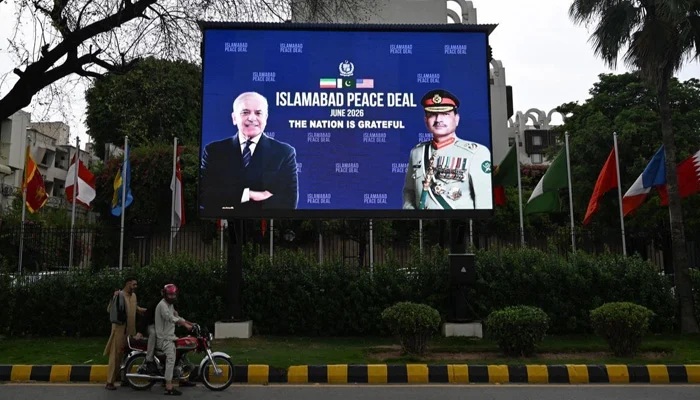
ISLAMABAD — Pakistan has renewed its push to revive the Islamabad Memorandum of Understanding between the United States and Iran, telling Washington that full implementation of the June agreement remains the “only way forward” as renewed confrontation over the Strait of Hormuz threatens another cycle of regional escalation.
Deputy Prime Minister and Foreign Minister Ishaq Dar delivered the message during talks in Islamabad with US Chargé d’Affaires Natalie A. Baker, where the two sides discussed Pakistan-US relations and the rapidly evolving security situation in the Middle East.


According to Pakistan’s Foreign Office, Dar welcomed the positive trajectory of ties with Washington while stressing that dialogue and diplomacy remained essential to achieving lasting regional peace.
He said implementation of the June 18 Islamabad MoU “in letter and spirit” was the only viable route out of the confrontation.
Pakistan Tries to Keep a Collapsing Deal Alive
Islamabad’s intervention comes as the diplomatic framework it helped broker faces its most serious test.
Pakistan spent months mediating between Washington and Tehran and helped the two sides reach an interim arrangement in June. But the understanding rapidly came under pressure as both governments accused the other of violating its commitments and military confrontation resumed.
The crisis has since become closely tied to the Strait of Hormuz, where disruptions to commercial shipping have threatened global energy supplies and pushed the confrontation beyond a bilateral US-Iran dispute.
Pakistan has continued pressing both governments to return to the framework rather than negotiate an entirely new agreement.
Dar Balances Washington Ties With Regional Interests
Dar’s meeting with Baker also highlighted the difficult diplomatic balance Pakistan is attempting to maintain.
Islamabad has sought closer relations with the Trump administration while preserving its relationship with neighboring Iran and expanding strategic ties with Saudi Arabia, Türkiye and other Gulf states.
Dar reaffirmed Pakistan’s commitment to regional peace and security while safeguarding its national interests, according to the Foreign Office.
That language is significant.
Pakistan shares a long border with Iran and would be directly exposed to the economic and security consequences of a prolonged regional war. At the same time, Washington remains one of Islamabad’s most consequential international relationships.
Islamabad Keeps Mediation Channel Open
Pakistan has repeatedly argued in recent weeks that abandoning the June framework would make resolving the crisis considerably harder.
The Foreign Office previously said Islamabad was doing its “utmost” to bring the parties back to the MoU so outstanding disputes could be addressed through diplomacy.
Dar’s latest message directly to the senior US diplomat shows that Pakistan is still attempting to preserve that negotiating architecture despite the deteriorating relationship between Washington and Tehran.
Why It Matters
Pakistan now has more at stake than simply protecting its reputation as a mediator.
A prolonged US-Iran confrontation could disrupt Gulf energy supplies, increase oil prices, destabilize neighboring states and place additional economic pressure on Pakistan itself.
The diplomatic stakes are equally significant. Successfully bringing Washington and Tehran back toward negotiations would strengthen Islamabad’s claim that it can operate as a credible intermediary between the United States, Iran and the wider Muslim world.
But the window is narrowing.
With Washington threatening additional economic pressure and Tehran showing little willingness to retreat over Hormuz, Pakistan’s challenge is no longer simply bringing the two sides back to the negotiating table.
It is convincing them that the Islamabad framework still offers something worth returning to.