
By Naeema Saleem | The Changer
ISLAMABAD — Pakistan’s warning that an attack on its stranded oil tanker near Saudi Arabia would be treated as an “act of war” is more than unusually forceful diplomatic language. The vessel has become a symbol of a much larger vulnerability: a Middle East conflict is now squeezing the alternative energy routes Islamabad expected to rely on when traditional Gulf shipping became dangerous.
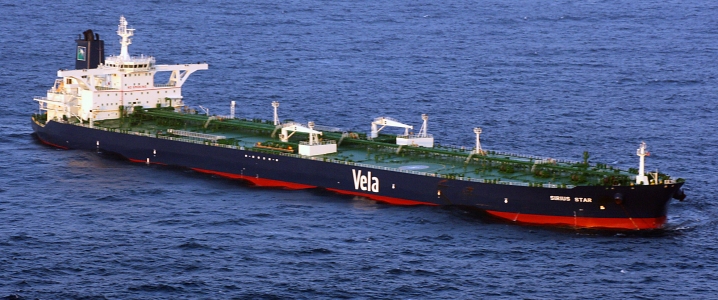
Petroleum Minister Ali Pervaiz Malik said Pakistan would ultimately have to move the empty tanker, which is waiting near the Red Sea end of Saudi Arabia’s East-West oil pipeline. Saudi authorities have asked that the vessel remain on standby while Islamabad examines how to bring it home or secure alternative crude supplies.


The immediate security warning was explicit. Malik said an attack on the Pakistani vessel would be considered an “act of war”, raising the stakes for a commercial ship caught close to an increasingly contested energy corridor.
But for Pakistan, the more consequential warning came elsewhere in the minister’s remarks: the country currently has diesel stocks covering the current month and the next, and prolonged disruption to crude supplies could put domestic availability under pressure.
That turns what might otherwise have been a maritime-security incident into an energy-security problem at home.
Saudi Arabia’s East-West Pipeline was supposed to provide precisely the kind of strategic alternative the current crisis requires. The roughly 1,200-kilometre system moves crude from Saudi Arabia’s eastern producing areas toward the Red Sea, allowing oil to bypass the Strait of Hormuz. The pipeline was shut following attacks last week and could remain unavailable for several weeks, according to reports cited by Pakistani media.
Its disruption comes at a particularly difficult moment. Shipping through Hormuz has already been sharply reduced by the wider regional conflict, while instability around Yemen has increased risks near Bab al-Mandab — effectively placing pressure on two of the waterways that connect Gulf energy supplies with international markets.
Pakistan is therefore confronting a problem that cannot be solved simply by choosing another shipping lane.
Malik said the government was considering keeping the tanker in position until the Saudi pipeline resumes operations, bringing it back through Oman or the United Arab Emirates, or obtaining crude from Libya.
Saudi Arabia itself is adapting. Reuters reported Wednesday that the kingdom has begun offering more crude through ship-to-ship transfers near Oman’s Sohar port after attacks disrupted the East-West Pipeline and halted loadings at Yanbu.
That matters for Pakistan because the same infrastructure disruption affecting its stranded vessel is forcing one of the world’s biggest oil exporters to redesign export routes in real time.
The consequences are already reaching international markets. Brent crude settled at $105.83 a barrel on Wednesday after recent Middle East supply disruptions drove volatility, while diesel markets remain particularly strained.
Pakistan enters that environment as an energy-importing economy with limited room for a prolonged supply shock. A sustained disruption would not only create questions about physical availability of fuel; higher international prices and more expensive shipping routes could also increase the cost of securing replacement supplies.
The stranded tanker therefore sits at the intersection of three crises Pakistan increasingly has to manage together: regional security, its deepening strategic commitment to Saudi Arabia, and domestic energy resilience.
The political dimension is becoming harder to separate from the commercial one. Islamabad has strongly backed Riyadh following recent attacks on Saudi territory, while Pakistani officials have also said an armed attack on Saudi Arabia could have implications under the new trilateral Makkah defence arrangement involving Pakistan, Saudi Arabia and Türkiye.
Yet the tanker episode demonstrates that Pakistan does not have to enter the conflict militarily for the war to impose costs at home.
A damaged pipeline, an immobilised ship or another disrupted maritime route can transmit the consequences directly to Pakistan’s fuel supply chain.
For Islamabad, that may now be the more immediate test: keeping diesel flowing while the geography of Middle Eastern energy trade becomes progressively more dangerous.