
World | By Shahnoor Saqib
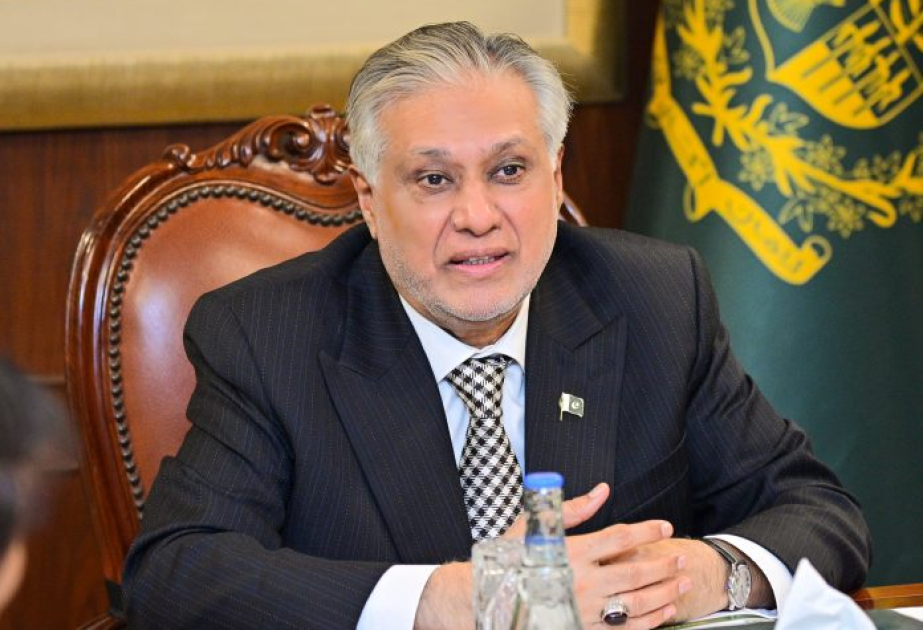
ISLAMABAD — Pakistan’s Deputy Prime Minister and Foreign Minister Ishaq Dar said Sunday that the newly signed defence agreement between Pakistan, Saudi Arabia and Türkiye is open to other regional countries, potentially setting the stage for a broader security bloc as the Middle East faces heightened instability.
Dar described the Makkah Joint Defence Agreement as “purely defensive,” stressing that it is not directed against Iran or any other country and is intended to strengthen regional peace, stability and collective security.


The agreement, signed Friday in Makkah, establishes a collective-defence principle under which an external armed attack against any one of the three countries would be considered an attack against all three.
Door Open for More Countries
Dar said membership would remain open to countries in the region willing to accept the pact’s principles and resolve disputes through cooperation, mutual respect and peaceful means.
That could make the three-country agreement the foundation of a considerably larger regional security architecture.
Turkish Foreign Minister Hakan Fidan has already identified Egypt as a possible future member, saying Cairo is a “natural partner” and that only technical issues remain. He also said other unnamed countries have expressed interest in joining.
A Collective-Defence Commitment
The most consequential provision is the commitment to collective defence.
Fidan compared its basic principle to NATO’s Article 5: an attack on one member is treated as an attack on all. However, assistance would not necessarily mean an automatic military deployment.
Depending on circumstances, a country under attack could request intelligence, logistics, ammunition or military forces, with members consulting on the appropriate response.
Dar said the agreement is consistent with the right of individual and collective self-defence recognized under Article 51 of the United Nations Charter.
How the New Alliance Will Work
The pact is also expected to develop an institutional structure rather than remain simply a political declaration.
According to Fidan, a political and military committee involving the countries’ foreign ministers, defence ministers and chiefs of general staff will oversee cooperation.
A permanent secretariat in Saudi Arabia is also planned. Cooperation is expected to include intelligence sharing, joint military exercises, logistics, threat assessments, interoperability and defence-industry projects.
Not an Alliance Against Iran, Officials Say
The timing inevitably raises questions about Iran and the rapidly changing security environment across the Middle East.
But both Pakistani and Turkish officials have explicitly rejected portraying the pact as an anti-Iran coalition.
Fidan said discussions on the initiative began before the current regional war environment, while Dar said its purpose was not to target another state but to reinforce security and stability.
Why It Matters
The biggest development may now be what comes next.
Pakistan, Saudi Arabia and Türkiye are positioning themselves as the core members of a security framework that could eventually include additional regional powers. Egypt joining would significantly expand the pact’s military and geopolitical weight.
For Pakistan, the arrangement also places Islamabad at the center of an emerging regional defence structure stretching from South Asia through the Gulf to Türkiye.
If more countries join and the planned military institutions become operational, the Makkah Accord could evolve from a three-country defence pact into one of the most consequential new security frameworks in the Muslim world.