
By Sadaf Sundas Riaz | The Changer
ISLAMABAD — Pakistan’s military has begun drawing clearer boundaries around the new Makkah Defence Alliance, insisting it is neither an offensive bloc nor an attempt to reshape the region — just as attacks on Saudi Arabia are forcing Islamabad, Riyadh and Ankara to confront the question the agreement left deliberately flexible: what happens when collective defence moves from principle to practice?
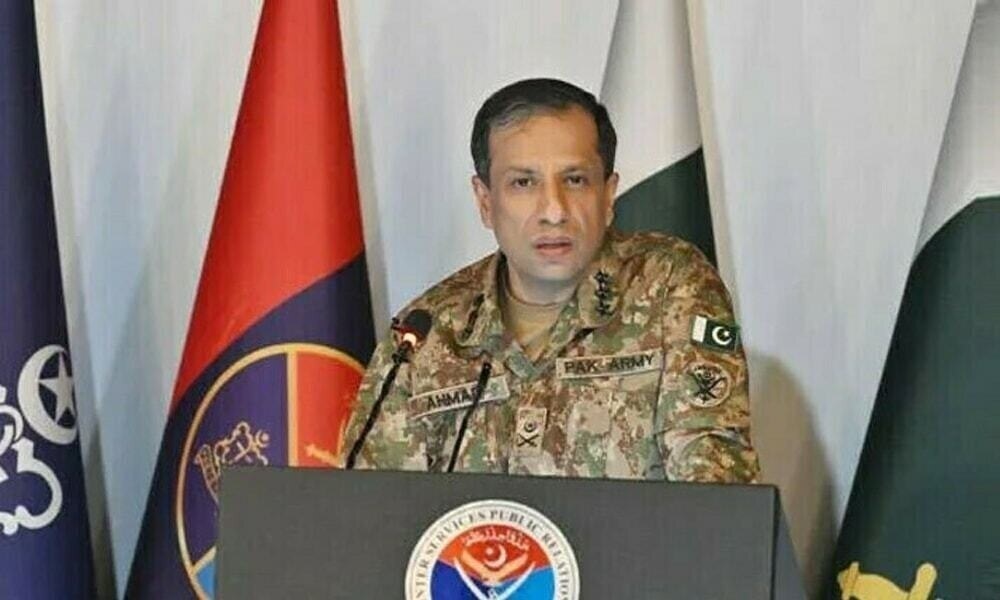
Director General Inter-Services Public Relations Lt Gen Ahmed Sharif Chaudhry said the agreement between Pakistan, Saudi Arabia and Türkiye was designed around collective deterrence and contained no aggressive or expansionist objective.


“There are no regional aspirations,” Chaudhry said in an interview with Al Arabiya English, describing the arrangement as defensive and complementary to the three countries’ existing international relationships.
His comments matter because the debate surrounding the pact has shifted significantly since it was signed in Makkah on August 7.
The agreement establishes a collective-security framework under which an armed attack against one of the three countries is regarded as an attack against all. But it does not publicly spell out an automatic military response, leaving the mechanism for fulfilling that commitment to the participating governments.
Chaudhry reinforced that distinction. Asked how Pakistan would respond if another member came under attack, he said the three governments would determine how their commitments were operationalised, while the detailed procedures remained classified.
That ambiguity may be intentional.
Collective-defence agreements derive part of their deterrent value from convincing a potential attacker that aggression could trigger a broader response. But preserving political discretion over the form of that response gives governments room to manage a crisis without automatically escalating it into a wider war.
The distinction has become particularly relevant as Houthi attacks against Saudi cities and energy infrastructure create what could become the alliance’s first practical security challenge. Pakistan has strongly condemned the attacks and repeatedly pledged support for Saudi territorial integrity, while its leadership has simultaneously called for regional de-escalation.
The military spokesman also pushed back against another interpretation of the alliance: that Pakistan, Saudi Arabia and Türkiye are constructing a specifically Muslim military bloc.
Chaudhry said nothing in the agreement defined it that way. Instead, he described it as an arrangement for regional stability that could potentially accommodate other countries sharing principles including non-aggression, non-interference and collective deterrence. Any expansion, he said, would be a political decision for the three founding governments.
That clarification appears designed to address a wider strategic concern.
Pakistan maintains important relationships beyond the alliance, including its longstanding strategic partnership with China and close ties with Iran. Türkiye is simultaneously a NATO member, while Saudi Arabia maintains extensive defence relationships with the United States and other Western powers.
Chaudhry therefore characterised the Makkah arrangement as “complementary” rather than a competitor to those relationships. Pakistani officials have similarly argued that the pact is not directed against another state or alliance.
This is where the pact’s significance extends beyond its formal language.
Islamabad, Riyadh and Ankara are attempting to establish a credible collective deterrent without presenting the alliance as the foundation of a rival regional military order. The difference will become increasingly important if the security environment around Saudi Arabia deteriorates.
For Pakistan, there is an additional balancing act. Islamabad wants its commitment to Saudi security to be credible, but it is also seeking to maintain diplomatic space with Iran and avoid framing the Makkah alliance as belonging to one side of the Middle East’s competing geopolitical camps. Chaudhry said the agreement did not undermine Pakistan’s relationship with Tehran.
The immediate test, therefore, is no longer what the Makkah pact says on paper.
It is whether Pakistan, Saudi Arabia and Türkiye can transform collective deterrence into a credible security mechanism while retaining enough flexibility to prevent an attack on one member from automatically widening an already volatile regional conflict.
That question remains unanswered — and according to Pakistan’s military, the answer ultimately rests with the political leadership of the three countries.