
By Mehak Najeeb — The Changer
ISLAMABAD — Pakistan Tehreek-e-Insaf said on Monday that no political reconciliation with the government would be possible without directly involving jailed former prime minister Imran Khan, hardening what began as a demand for prison access into a condition for any future settlement as thousands of his supporters continued a long march towards Islamabad.
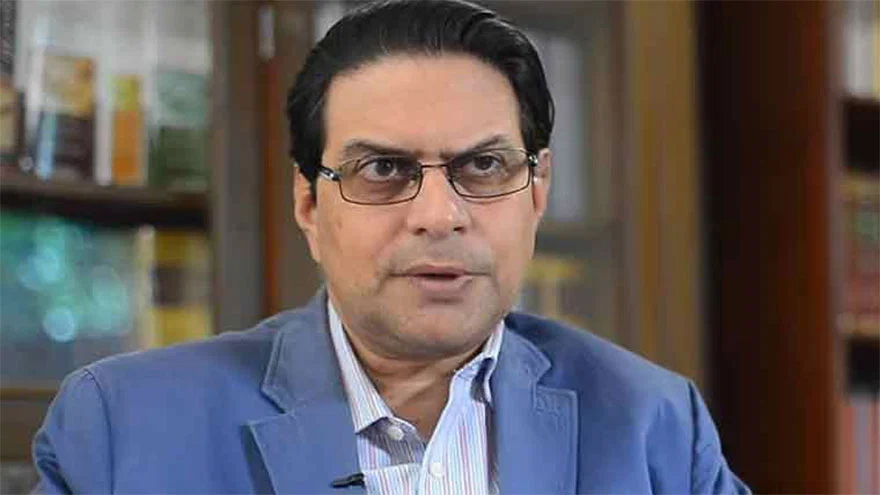
PTI Secretary General Salman Akram Raja said Khan must be included in any future political dialogue, arguing that the party founder remained indispensable to resolving the widening confrontation between PTI and the state. Raja said the opposition had entered the weekend negotiations seriously and had expected further rounds to produce progress, but maintained that PTI was denied the opportunity to obtain Khan’s views on decisions carrying major political and security consequences.


The declaration moves the dispute beyond the narrower question of whether PTI politicians should be allowed to visit Khan in prison. PTI is effectively arguing that its negotiating delegation cannot deliver a durable political settlement unless the man who retains ultimate authority within the party is connected to the process. That creates an unusual negotiating structure in which government representatives can reach tentative understandings with PTI officials across the table, only for the opposition to insist that the decisive political mandate must still come from a leader who is not present.
The issue became one of the principal obstacles during talks held under National Assembly Speaker Ayaz Sadiq over the weekend. Negotiators had discussed a framework covering legal facilities for Khan and his wife, meetings with lawyers and family members, pending cases and the worsening security situation in Khyber Pakhtunkhwa, but the process collapsed before a final agreement was signed. PTI says immediate political access to Khan and disagreements over counterterrorism policy prevented a settlement, while government representatives have offered a sharply different account of why negotiations failed.
Raja’s Monday remarks also connected Khan’s inclusion directly to the dispute over counterterrorism policy in Khyber Pakhtunkhwa. PTI says the federal government wanted the provincial administration to support security actions and operations undertaken by the Centre, while the party sought a jointly agreed strategy that would incorporate the KP government, political representatives, tribal leaders and other stakeholders. Raja said PTI wanted recommendations emerging from a provincial jirga to be respected and argued that decisions affecting communities confronting militancy should not simply be imposed from Islamabad.
The government rejects PTI’s description of the breakdown. Interior Minister Mohsin Naqvi has said negotiations failed because the PTI-led provincial government would not cooperate adequately with a federal counterterrorism strategy, including measures intended to confront rising militancy in Khyber Pakhtunkhwa. Government figures have also suggested constitutional and legal options could be considered against the provincial administration if it fails to implement state-backed security measures.
That competing account reveals why restoring dialogue may be harder than arranging another meeting between negotiating committees. PTI is seeking consultation and political ownership over security decisions affecting the province, while the Centre wants assurances that the provincial government will cooperate with measures it considers necessary against militant groups. Khan’s imprisonment sits directly between those positions because PTI says decisions of that magnitude cannot be authorised without consulting him.
The party’s argument also carries a broader political implication. By insisting that reconciliation itself requires Khan’s participation, PTI is asking the government to recognise him not merely as a prisoner whose legal cases are proceeding through the courts but as an active political principal whose consent is necessary for a national political settlement. Islamabad can facilitate negotiations with elected PTI lawmakers and the KP government without necessarily accepting that proposition, which helps explain why apparently procedural questions about access have become strategically important.
PTI has reinforced that argument by comparing Khan’s role with leadership structures inside other major political parties. Former National Assembly speaker Asad Qaiser has argued that PML-N and PPP politicians consult their senior leadership when determining major policy and that PTI should similarly be permitted to seek direction from its founder. The party says it was willing to set other demands aside if its political leadership received immediate access to Khan, but claims the government would not make that access part of the proposed agreement.
The confrontation is now unfolding outside the negotiating room as well. Thousands of Khan supporters began marching from Khyber Pakhtunkhwa on Sunday under Chief Minister Sohail Afridi, with planned stops before any eventual approach towards Islamabad. Reuters reported that the march had originally been scheduled for September 27 but was postponed when Prime Minister Shehbaz Sharif’s government offered negotiations, meaning the protest’s revival is a direct consequence of the failure to translate those talks into an agreement.
Afridi’s mobilisation gives PTI leverage but also raises the cost of another negotiating failure. Thousands of police and paramilitary personnel have been deployed in and around Islamabad, while shipping containers have been positioned around sensitive government areas. Naqvi has said marchers will not be allowed to enter the capital, creating the possibility that political negotiations and a security confrontation could develop simultaneously if the convoy continues towards Islamabad.
The march is also increasingly intertwined with the security-policy dispute that helped derail negotiations. Afridi has criticised the Centre’s approach to militancy and past military operations while presenting the protest as both a campaign for Khan and a challenge to policies affecting Khyber Pakhtunkhwa. That overlap means the disagreement is no longer easily divisible into separate questions of Khan’s imprisonment, PTI’s protest campaign and counterterrorism policy; each issue now affects the others.
There is nevertheless evidence that the political distance between the sides may not be absolute. PTI figures have recently signalled a willingness to explore reconciliation, and in August a close Khan aide told Reuters that the former prime minister would not seek confrontation with Pakistan’s military leadership if released. That message suggested at least some figures around Khan were attempting to create space for a political thaw even after years of confrontation following his removal from office and subsequent imprisonment.
Monday’s position therefore does not necessarily close the door on negotiations; instead, it establishes PTI’s condition for reopening it. The party is saying that another dialogue conducted exclusively through intermediaries will not be sufficient unless a mechanism exists for Khan to participate directly or for PTI negotiators to consult him before making binding commitments.
For the government, accepting that condition would carry its own political consequences. It could facilitate a settlement capable of stopping the march and opening discussion on security cooperation, but it would also reinforce Khan’s position as PTI’s ultimate decision-maker despite his imprisonment. Refusing it, however, risks reproducing the same structural problem in any future talks: government negotiators would again be seeking commitments from PTI representatives who say they cannot make final decisions without their founder.
That is the deeper significance of PTI’s new reconciliation formula. Pakistan’s latest political dialogue did not fail simply because two delegations could not agree on wording; it exposed disagreement over who actually has the authority to make peace. Until the government and PTI resolve that question, negotiations may continue to produce provisional compromises while the political confrontation is ultimately decided somewhere else — inside Khan’s prison meeting room or on the road to Islamabad.