
By Uzair Saleem — The Changer
From 1965 to Multi-Domain Warfare: Air Force Day Message Signals Pakistan’s Changing Defence Doctrine
ISLAMABAD: Pakistan’s annual commemoration of its air battles in the 1965 war carried a distinctly modern message this year, with the country’s leadership using Air Force Day not only to remember fallen aviators but to highlight a transformation in how Pakistan expects future conflicts to be fought — across interconnected air, land, sea, cyber and other operational domains.


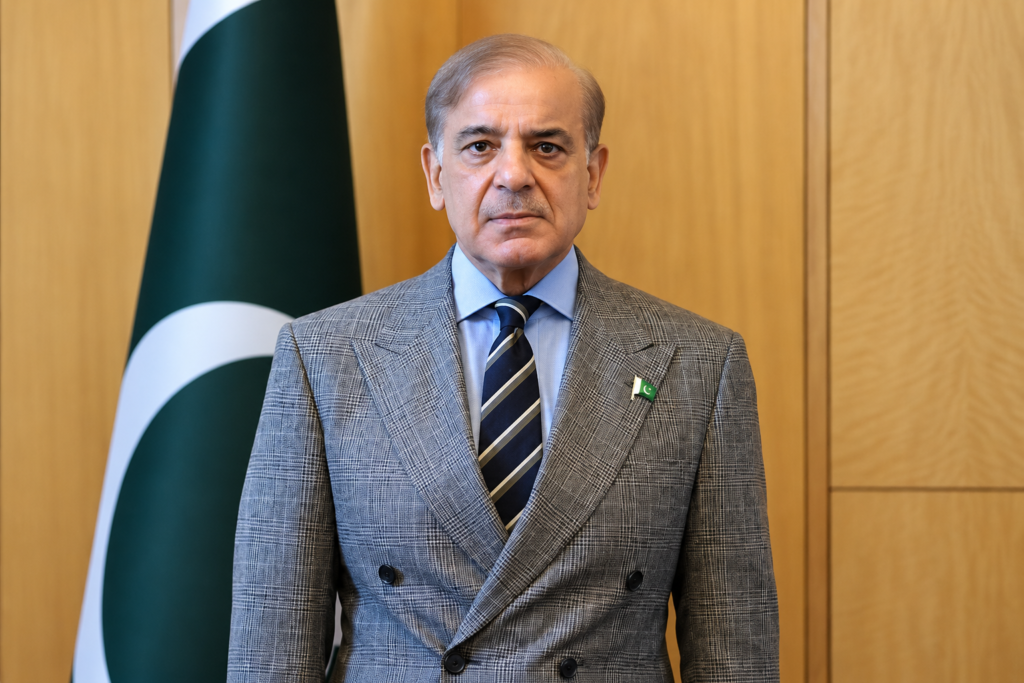
Prime Minister Shehbaz Sharif, in his official September 7 message, linked the Pakistan Air Force’s 1965 legacy directly with its role in the May 2025 confrontation with India, which Pakistan officially commemorates as Marka-e-Haq. But behind the historical comparison was a more consequential description of the PAF’s evolution: Shehbaz specifically credited what he called the coordinated employment of “Multi-Domain Warfare Capabilities,” developed through a broader programme of modernisation and indigenisation.
That language makes the 2026 message different from a simple remembrance of past battlefield performance. The government is presenting technological integration, domestic capability development and coordination among military services as central elements of Pakistan’s contemporary deterrence model. President Asif Ali Zardari’s separate Air Force Day message reinforced essentially the same framework, citing planning, combat performance, multi-domain capabilities, modernisation and indigenisation while discussing the PAF’s recent evolution.
The emphasis also fits a broader shift visible in Pakistan’s official description of the 2025 conflict. On the first anniversary of Marka-e-Haq in May, Shehbaz described Pakistan’s response as coordinated across “land, sea, air and cyber domains,” explicitly portraying the confrontation as an integrated operation rather than a conventional air or ground battle conducted independently by individual services.
That evolution matters because modern air warfare increasingly extends beyond fighter-versus-fighter combat. Surveillance and intelligence networks, electronic warfare, air-defence systems, unmanned platforms, long-range weapons, communications and cyber capabilities can determine how effectively aircraft operate and how quickly commanders can identify and respond to threats. The government’s repeated use of “multi-domain” language indicates that Pakistan wants the PAF’s future combat effectiveness judged as part of that larger network rather than primarily through aircraft numbers or individual aerial engagements.
The historical symbolism remains central. Pakistan observes Air Force Day on September 7 in remembrance of PAF personnel who fought during the 1965 India-Pakistan war, and Shehbaz paid tribute to aviators who lost their lives defending the country. His message portrayed the force’s recent performance as a continuation of that legacy, while expressing confidence that it would remain prepared to defend Pakistan’s sovereignty and airspace.
But six decades separate the conflicts being invoked by Pakistan’s leadership, and the vocabulary used to describe them reveals how dramatically the battlefield has changed. The national memory of 1965 remains centred on pilots, aircraft and individual acts of aerial combat; the official narrative emerging after 2025 increasingly centres on networks, coordination, technology and simultaneous operations across multiple domains.
Air Force Day 2026 therefore carries two messages at once. One looks backward to sacrifice and aerial combat in 1965. The other looks forward — presenting modernisation, indigenous capability and integrated warfare as the foundations on which Pakistan intends to build the next generation of its air defence.
Short Permalink: paf-changing-war-doctrine
SEO Meta Description: Pakistan’s Air Force Day message links the 1965 legacy with multi-domain warfare, modernisation and indigenous defence capabilities.