
By Shahnoor Saqib
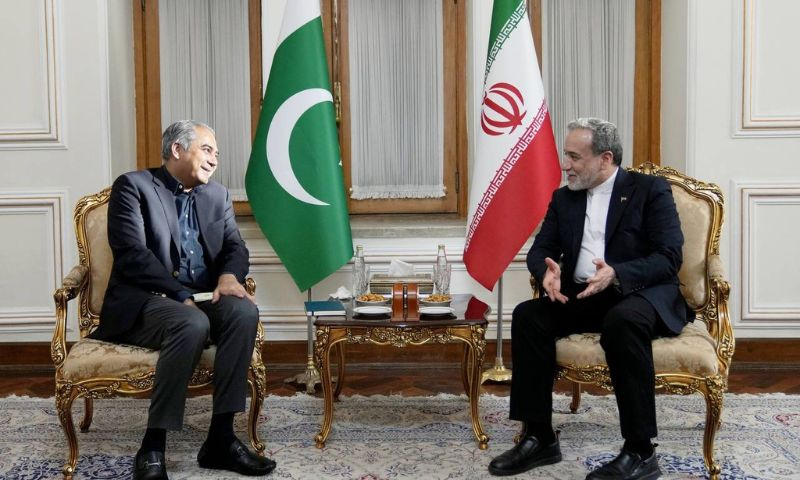
TEHRAN — Pakistan’s Interior Minister Mohsin Naqvi held talks with Iranian Foreign Minister Abbas Araghchi in Tehran on Tuesday as Islamabad intensified its diplomatic push to help move the United States and Iran toward an agreement and ease the continuing confrontation over the Strait of Hormuz.
Naqvi’s visit comes at a potentially decisive moment in the diplomatic process. Pakistan’s Defence Minister Khawaja Asif said separately that recent signals suggested Washington and Tehran were close to “some sort of an arrangement,” while regional diplomacy over reopening Hormuz has also reached an advanced stage.


The Tehran meetings therefore carry significance beyond routine Pakistan-Iran bilateral relations: Islamabad is again positioning itself as an active intermediary between two governments whose confrontation has disrupted regional security and global energy markets.
Naqvi Takes Pakistan’s Message to Tehran
Naqvi met Araghchi as part of Pakistan’s continuing mediation efforts, with reports indicating that Islamabad was carrying new proposals aimed at helping resolve the standoff.
He also met Iranian President Masoud Pezeshkian, reinforcing the high-level nature of the mission and Pakistan’s direct engagement with Tehran’s political leadership.
The discussions come after months in which Pakistan has maintained communication with both Washington and Tehran while repeatedly urging negotiations instead of another cycle of military escalation.
Hormuz Is Central to the Diplomatic Push
One of the most urgent issues remains the Strait of Hormuz, where disruption to commercial traffic has shaken global energy markets.
Iran and Oman have been negotiating arrangements concerning navigation through the strategic waterway, while Qatar has said those discussions have reached an advanced stage.
For Pakistan, reopening and stabilizing Hormuz is also an economic priority. The country depends heavily on imported energy and is vulnerable to higher oil prices and supply disruptions caused by prolonged instability in the Gulf.
Pakistan Sees a Possible Breakthrough
The timing of Naqvi’s mission is particularly important because Pakistani officials are publicly expressing greater optimism about the negotiations.
Khawaja Asif said the signals of recent days suggested the United States and Iran were moving closer to an arrangement. The comments also attracted attention in international financial markets, where any reduction in tensions around Hormuz could lower geopolitical risk surrounding oil supplies.
But major differences remain, and fresh maritime violence demonstrates how quickly diplomatic progress could be disrupted.
Islamabad’s Growing Mediation Role
Pakistan’s involvement has evolved beyond publicly calling for restraint.
Repeated contacts with Iranian leaders and communication with Washington have given Islamabad a direct role in efforts to preserve negotiations. Naqvi’s latest trip reinforces that diplomatic channel at a moment when both sides appear to be testing whether a workable compromise is possible.
For Islamabad, success would also strengthen Pakistan’s standing as a diplomatic bridge between Washington, Tehran and major Gulf capitals.
Why It Matters
The significance of Naqvi’s Tehran mission will ultimately depend on what happens after the meetings.
If the United States and Iran move toward a Hormuz arrangement and broader de-escalation, Pakistan could emerge as one of the countries that helped keep diplomacy alive during a critical stage of the crisis.
If negotiations fail, however, renewed confrontation could again threaten shipping, energy supplies and regional stability.
For now, Naqvi’s meeting with Araghchi shows that Pakistan remains directly engaged in the diplomatic effort — and believes there is still a deal to be made.