
By The Changer Pakistan Desk
PESHAWAR, Sept 7 — Pakistan’s counterterrorism fight in Khyber Pakhtunkhwa is entering a technological phase that would have seemed unusual for civilian policing only a few years ago: police officers are now being trained not merely to survive militant attacks on the ground, but to operate and counter unmanned aircraft in the air.
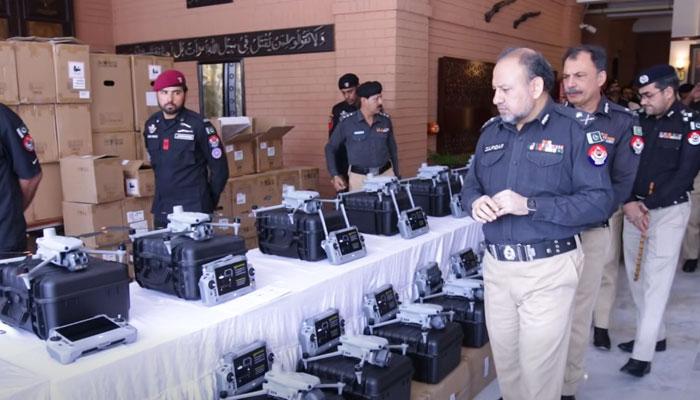
KP Police have established a specialised UAV division — the first such unit created by a Pakistani police department — as militant tactics evolve from conventional attacks toward quadcopter surveillance, ammunition delivery and aerial strikes. The unit has been trained in drone flying, aerial surveillance, intelligence collection, counterterrorism operations and protection of sensitive installations.


The development represents more than another equipment purchase. KP Inspector General of Police Zulfiqar Hameed said specialised UAV units have also been approved at district level, initially concentrating on high-risk areas, while the Counter Terrorism Department is expected to receive longer-range drones capable of operating at greater altitude. A Peshawar data centre is intended to receive real-time information on quadcopters and coordinate law-enforcement responses.
That architecture points toward something significantly different from the earlier counter-drone strategy. Instead of relying primarily on jammers or defensive systems around police facilities, the province is beginning to build an integrated chain combining detection, electronic countermeasures, police-operated UAVs, trained pilots, intelligence and centralised command.
The shift has been driven by militants’ own technological adaptation. Police officials say armed groups increasingly use quadcopters to conduct reconnaissance before approaching targets, allowing them to identify police positions and avoid ambushes. Reporting from KP has also documented militants’ growing use of drones alongside thermal and night-vision technology.
The scale of the drone confrontation is already substantial. KP Police said in July that modern anti-drone technology had helped them foil 341 drone attacks during the first six months of 2026. The same operational reporting said 294 militant attacks targeted police during the period, while 161 attacks were repelled using surveillance equipment and other advanced technology.
Police have simultaneously expanded their own aerial fleet. In July, KP Police received 76 advanced surveillance drones for deployment across 27 districts and specialised units. Equipment distributed to the force included thermal-capable systems, while more advanced platforms were earmarked for the CTD and particularly sensitive districts.
The technological transition is occurring against an intense conventional security backdrop. Pakistan’s military said 21 militants were killed in operations in KP between September 3 and 5, including engagements in North Waziristan, Kohat and Dera Ismail Khan. Ten of those killed were part of a group originally intercepted while attempting to cross into Pakistan from Afghanistan, according to ISPR.
But the emergence of aerial tactics complicates the older model of counterterrorism. A police checkpoint can be fortified against gunfire and a patrol can alter its route to reduce exposure to an ambush. A relatively inexpensive commercial quadcopter, however, can potentially observe those defensive preparations from above before an attacker ever enters firing range.
This produces an asymmetric technology problem. Police and security agencies must protect thousands of personnel, installations, patrol routes and public spaces, while militants need only identify vulnerabilities. Counter-drone equipment therefore has to be deployed broadly enough to matter without becoming prohibitively expensive or operationally cumbersome.
KP’s answer appears increasingly to be technological integration rather than a single anti-drone weapon. Police-operated UAVs can extend surveillance over difficult terrain; thermal systems can improve night detection; jammers can interfere with hostile aircraft; and a central data system can potentially convert individual drone sightings into a wider intelligence picture.
That last element may ultimately prove the most important.