
By Muhammad Najam — The Changer
KARACHI, Sept 7 — The killing of a young shop worker during an attempted robbery in Karachi has pushed the city’s reported 2026 death toll from resistance to street crime to 50, turning another motorcycle snatching into a marker of a deeper public-safety problem in Pakistan’s largest city. The victim was shot in the head after armed men targeted an LPG shop in Liaquatabad on Sunday, according to police accounts reported by Pakistani media.
Police identified the victim as Shehzad Husain. Investigators said two armed men arrived on a motorcycle, took his mobile phone and demanded the keys to his motorcycle. When he resisted, one of the assailants opened fire. The attackers escaped with his motorcycle but abandoned the bike on which they had arrived, which police seized as evidence.


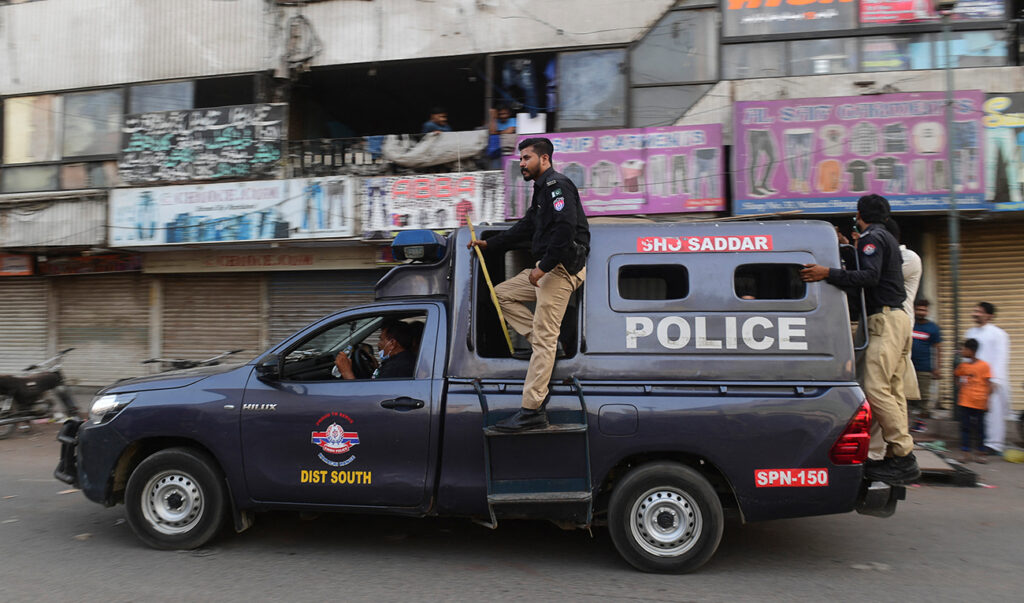
The same day produced another warning about the changing character of Karachi’s street violence. In Surjani Town, four suspects on two motorcycles allegedly opened fire after a police patrol attempted to stop them, wounding constables Imran Shah and Usman. Separately, Constable Owais Tanoli died from wounds suffered after being shot during an encounter with suspected criminals in Korangi a day earlier.
Taken together, the incidents make the story larger than one fatal robbery. Street criminals are not only targeting phones, cash and motorcycles; confrontations are repeatedly escalating into gunfire against citizens and police. That creates a security challenge in which the cost of relatively small property crimes can become fatal within seconds.
The scale of the underlying property-crime economy helps explain why. CPLC data show 24,195 street-crime incidents were reported during the first five months of 2026. Those included 16,031 motorcycles stolen or snatched and 7,427 mobile phones snatched, according to figures reported from the committee’s statistics.
The motorcycle numbers remained striking later in the year. CPLC statistics for July showed 2,648 motorcycles stolen and another 492 snatched, while 1,846 mobile phones were reported snatched during that month. The figures indicate that even when individual categories improve from one month to another, Karachi continues to generate thousands of opportunities for an illicit resale economy built around stolen vehicles, phones and parts.
Official police data reinforce the scale of the enforcement challenge. Sindh Police’s April figures alone recorded 762 motorcycle thefts and 252 motorcycle snatchings in the Karachi Range, alongside 265 other robberies. Those numbers differ from CPLC’s broader reporting because the organisations compile crime data differently, but both datasets point to persistent high-volume property crime.
There has nevertheless been measurable enforcement activity. District Central Police said in July that it had conducted 251 encounters with street criminals during the first half of 2026, arresting hundreds of suspects. Yet Sunday’s killing occurred in Liaquatabad within District Central, illustrating a central contradiction confronting Karachi: large numbers of arrests and encounters can coexist with a street-crime market capable of continually producing new offenders and victims.
That contradiction shifts the policy question. Measuring police performance primarily through encounters, arrests and weapons recovered captures enforcement activity, but it does not necessarily measure whether a resident is becoming less likely to lose a motorcycle or encounter an armed robber.
The abandoned motorcycle in the Liaquatabad killing provides a particularly revealing investigative detail. Police said the vehicle used by the attackers had not been reported stolen, and investigators subsequently raided a location in Orangi Town while pursuing clues about those responsible.