
Pakistan | By Shahzaib Saqib
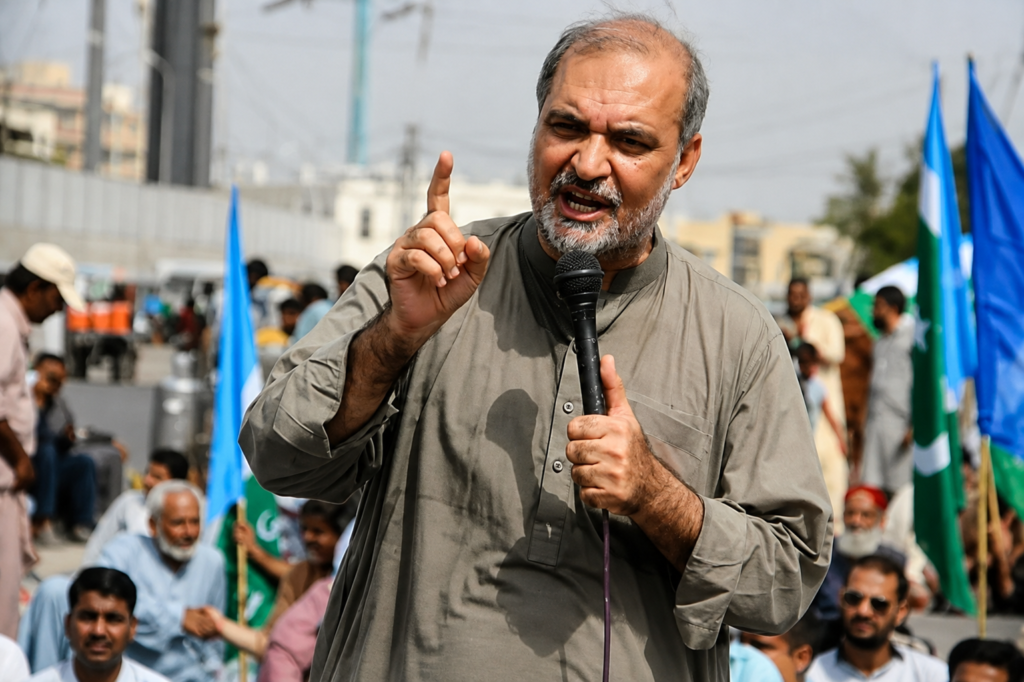
LAHORE — Jamaat-e-Islami has announced a new round of countrywide protests on Sunday, August 16, against Pakistan’s petroleum levy and high fuel prices, escalating a campaign that party chief Hafiz Naeemur Rehman says could turn into a broader movement against the government if authorities attempt to block demonstrators.
The protests are scheduled to begin at 4pm, with major sit-ins planned outside the Punjab Chief Minister’s House in Lahore and the Governor Houses in Sindh, Khyber Pakhtunkhwa and Balochistan.


JI Takes Protest to ‘Seats of Power’
The demonstrations mark the latest phase of JI’s campaign against the petroleum levy, fuel prices and inflation.
Earlier this month, the party organized protests and road blockades at hundreds of locations across Pakistan. Demonstrations disrupted major routes in Karachi and other cities as JI attempted to build nationwide pressure on the government.
This time, the party is shifting its focus toward provincial centers of government.
Hafiz Naeem has accused the government of increasingly relying on the petroleum levy as a revenue-generating mechanism while ordinary households absorb higher transportation and living costs.
Warning Against Government Intervention
The JI chief also issued a political warning ahead of Sunday’s demonstrations.
He said any government attempt to obstruct the protests could transform the campaign for lower petroleum prices into a movement aimed at removing the government.
The statement significantly raises the stakes of what began primarily as an economic protest.
JI has increasingly linked fuel taxation with the wider cost-of-living crisis, arguing that higher transportation costs eventually feed into prices for food and other essential goods.
Fuel Prices Remain Politically Sensitive
Pakistan recently reduced petrol by Re0.94 per litre while increasing high-speed diesel by Re0.54, but JI argues that relatively small adjustments do not address the underlying burden created by the petroleum levy.
The party has demanded substantially lower fuel and electricity prices and has also called for broader reforms to the country’s taxation and energy systems.
Its campaign comes at a particularly sensitive time for Pakistan as turmoil in the Middle East and disruption around the Strait of Hormuz continue to create uncertainty in international energy markets.
Why It Matters
JI is attempting to transform anger over fuel prices into a sustained national political campaign.
The first phase demonstrated the party’s ability to mobilize supporters across hundreds of locations. Sunday’s strategy raises the pressure by moving demonstrations directly outside provincial seats of power.
The government’s handling of the protests will therefore matter.
If demonstrations remain peaceful, the campaign may continue primarily as pressure for reductions in fuel taxes. But confrontation between authorities and protesters could give JI an opportunity to broaden the movement around inflation, electricity prices and the government’s overall economic policies.
For Islamabad, that makes Sunday’s demonstrations more than another protest over petrol — they are becoming a test of whether public frustration over the cost of living can develop into a wider political challenge.