

World | News Desk
JERUSALEM/CAIRO — Israel’s military has acknowledged that its troops opened fire on the car carrying five-year-old Palestinian girl Hind Rajab and members of her family in Gaza in 2024, and announced criminal investigations into her killing and a separate incident in which 15 Palestinian emergency and aid workers were killed near Rafah in 2025.
The announcement on Wednesday marks a significant change in the military’s account of Rajab’s death. An earlier Israeli assessment had said its forces were not near the vehicle or within firing range. The latest military review concluded Israeli troops did fire at the car and that an Israeli tank later fired at a Palestinian Red Crescent ambulance sent to rescue her, killing two paramedics.


Rajab’s case became one of the most internationally recognised civilian deaths of the Gaza war after recordings emerged of the child pleading by telephone for rescuers while trapped inside the vehicle with dead relatives.
Two High-Profile Incidents Move to Criminal Investigation
The military said its fact-finding mechanism had reviewed a wider group of incidents and recommended criminal investigations in two particularly serious cases.
The first concerns Rajab, her relatives and the Palestinian Red Crescent rescuers.
The second involves the March 2025 killing of 15 Palestinian paramedics and emergency workers near Tel al-Sultan in southern Gaza. Their bodies were later recovered near destroyed emergency vehicles.
The opening of criminal investigations does not establish criminal responsibility. Investigators will now determine whether individual soldiers or commanders violated Israeli military or criminal law.
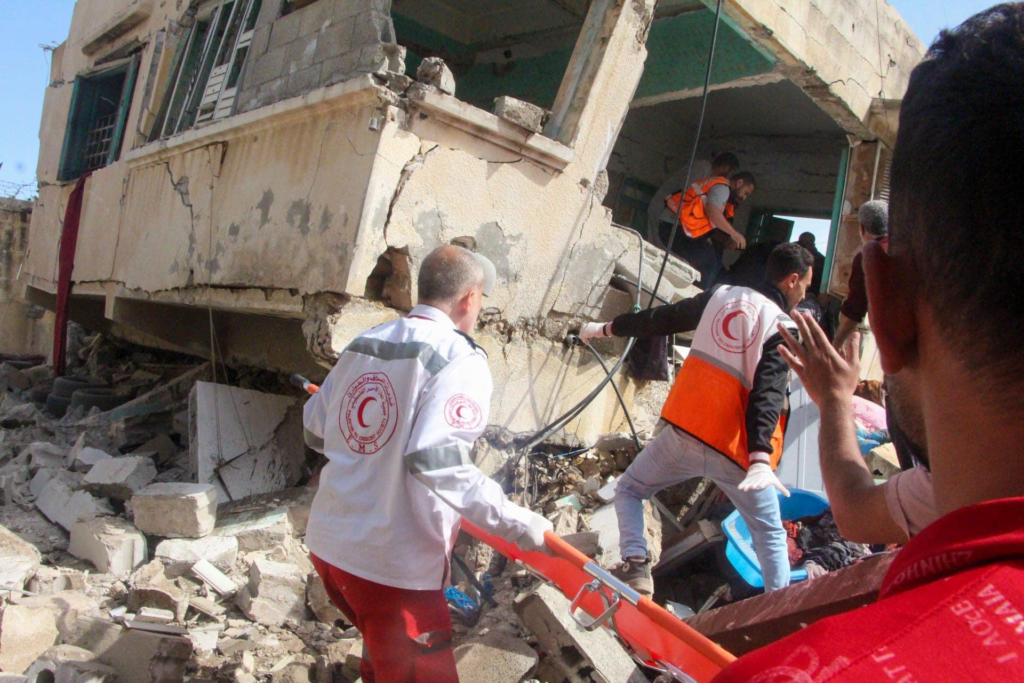
But Israel Declines Criminal Probes Into Other Aid-Worker Deaths
The decision is also notable for the cases Israel chose not to pursue criminally.
The military said it found insufficient grounds for criminal investigations in three other incidents reviewed by the mechanism, including the April 2024 Israeli strikes that killed seven World Central Kitchen aid workers.
That decision has renewed criticism of Israel’s internal accountability process.
Rights organisations have long argued that military investigations into alleged misconduct involving Palestinians rarely result in convictions. Israel maintains that its military justice system is capable of independently investigating suspected violations.
Hind Rajab Case Has Changed Dramatically
The evolution of Israel’s account makes Rajab’s case particularly important.
After her death, questions emerged over whether Israeli forces had been operating close enough to fire on the vehicle. Israel initially disputed that premise.
Independent investigations subsequently challenged that account, using satellite imagery and other evidence to place Israeli armoured vehicles near the scene.
Now, more than two years later, the Israeli military itself acknowledges its troops opened fire on the vehicle.
That acknowledgement does not by itself establish whether the shooting was unlawful. That is precisely what the criminal process is expected to examine.
The Changer Angle: The Investigation Matters Because the Official Story Changed
The headline is that Israel has opened criminal investigations.
The deeper development is why one of those investigations became necessary.
For more than two years, the circumstances surrounding Hind Rajab’s death were contested. Israel’s initial account placed its troops away from the vehicle. Outside investigations challenged that version.
The military now accepts the central factual point that its forces fired on the car.
That transforms the accountability question from:
“Were Israeli forces responsible for the gunfire?”
to:
“Why was the vehicle fired upon, what could the troops see, why was the rescue ambulance later hit, and did anyone violate the law?”
The decision to investigate two incidents while declining criminal probes into others — including the World Central Kitchen killings — creates another test.
The credibility of Wednesday’s announcement will ultimately depend less on the fact that investigations have been opened and more on whether they establish individual responsibility where evidence supports it and whether their findings are made transparent.
That is why the Hind Rajab case has moved beyond one of the Gaza war’s most haunting stories.
It has become a test of whether Israel’s military accountability system can meaningfully investigate its own conduct in one of the conflict’s most internationally scrutinised civilian deaths.