
By Jahanzaib Saqib — The Changer
ISLAMABAD: A proposal to give Islamabad its own 27-member elected assembly has drawn attention for potentially creating a chief minister-style office in Pakistan’s federal capital, but the more consequential change lies deeper in the draft: an attempt to replace decades of fragmented, CDA-centred administration with a single elected territorial government while leaving the federal government in control of the capital’s two most strategically sensitive functions.
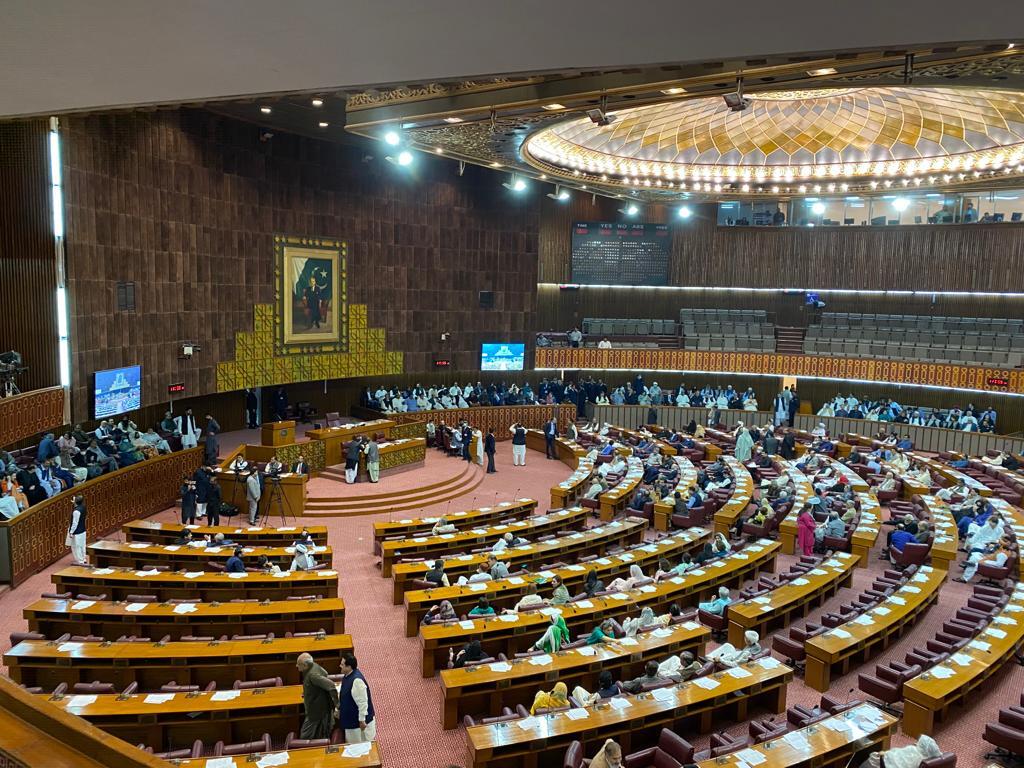
The framework submitted to Prime Minister Shehbaz Sharif proposes an Islamabad Capital Territory Government with 21 directly elected assembly members, five seats reserved for women and one for minorities. The assembly would choose a chief executive — potentially called either chief minister or mayor — while 27 administrative departments would operate under the new territorial setup. Elections would be administered by the Election Commission of Pakistan and members would be subject to constitutional qualification and disqualification provisions under Articles 62 and 63.


Yet the proposed division of power is more revealing than the new political titles. Health, education, environment, municipal services and most functions currently associated with Islamabad administration would move toward the elected government. Reporting on the draft says CDA functions would also be transferred to the new setup, with master planning remaining outside its control; law and order would likewise stay with the Centre.
That creates an unusual governance architecture. Islamabad residents would gain elected representatives with substantial administrative and financial authority over everyday services, but the federal government would retain control over security and the long-term physical blueprint of the national capital. The arrangement therefore resembles provincial autonomy in several respects without transforming Islamabad into a conventional province. The draft envisages federal authority over the retained functions being exercised through the relevant federal minister or potentially a governor for ICT.
The proposal is also an attempt to solve an institutional problem that predates the current political debate. Islamabad has expanded from a purpose-built administrative capital into a metropolitan territory of more than 2.4 million people, but responsibility for its services has remained divided among federal ministries, territorial administration, the Capital Development Authority and local-government structures. In June, the Planning Ministry explicitly described the existing arrangement as fragmented and argued that the capital had outgrown a governance system designed for a much smaller city.
The September draft is therefore the latest stage of a process rather than a surprise proposal. At a public consultation on June 11, Planning Minister Ahsan Iqbal had already outlined a 27-member ICT Assembly comprising 21 elected members, five women and one minority representative, together with a locally accountable chief minister or mayor. The government also proposed specialised authorities covering health, education, social welfare, tourism and culture, environment and climate, and digital governance.
What has now become clearer is the intended legal route. According to reporting on the submitted draft, the government proposes creating the new structure through an Act of Parliament rather than a constitutional amendment, tentatively titled the Islamabad Capital Territory Government Act 2026. The legislation would consolidate elements of the ICT Local Government Act 2015 and the CDA Ordinance 1960, but it still requires federal cabinet approval before being introduced in the Senate and National Assembly.
That distinction is important because the proposal remains just that — a proposal. Islamabad does not yet have a 27-member assembly, an elected chief executive or a new territorial government. Cabinet consideration and parliamentary legislation remain necessary, and details could change during that process. Recent reporting also places the initiative against a wider national debate over administrative restructuring and new provinces, although the Islamabad model is specifically designed around the capital territory.
If enacted substantially in its present form, however, the reform would redraw who actually governs Islamabad. The CDA, created under a 1960 ordinance and synonymous with the capital’s development for generations, would cease to be the dominant all-purpose institution it once was as functions migrated into an elected territorial administration.
That is the more significant transformation hidden behind the headline about 27 lawmakers. Islamabad would gain something approaching a provincial-style political government without becoming an ordinary province — while Pakistan’s federal government would deliberately retain control of security and the master plan that determines how the seat of national power physically develops.