
World | By Web Desk
TEHRAN — Iran’s oil exports have not stopped despite a significant reduction in sales, Oil Minister Mohsen Paknejad said on Thursday, pushing back against Washington’s attempt to choke off Tehran’s most important source of foreign currency through a naval blockade and an expanding sanctions campaign. Paknejad said deliveries were continuing to customers in “distant waters,” but declined to disclose routes, volumes or buyers, arguing that operational details could be used against Iran.
His statement comes at a critical moment for Iran’s energy sector. The United States reimposed its blockade of Iranian ports and shipping in mid-July after the latest diplomatic arrangement broke down, sharply restricting Tehran’s ability to move crude through conventional export channels. Ship-tracking data cited by Reuters showed Iranian crude exports falling after the blockade, with no visible crossings of the Strait of Hormuz by fully loaded Iranian supertankers since mid-July — although tankers operating without location transponders make the full scale of shipments difficult to establish independently.


The pressure is particularly visible in China, historically the most important destination for sanctioned Iranian crude. Kpler data cited by Reuters showed Chinese imports of Iranian oil falling to about 534,000 barrels per day in August, compared with roughly 1.4 million barrels per day on average last year. Available Iranian crude stored on vessels has also been shrinking: floating stocks outside the US blockade zone fell to around 80 million barrels from approximately 105 million barrels before the blockade was restored.
Yet the trade has not disappeared. Paknejad’s acknowledgement of reduced volumes while insisting deliveries continue is important because it differs from Tehran’s earlier claims that sanctions would have little effect on exports. Iran appears instead to be acknowledging that Washington has damaged its oil network without succeeding in shutting it down completely. The continued movement of crude also underscores the difficulty the United States faces in enforcing a complete embargo against a country that has spent years developing alternative shipping, trading and payment networks to circumvent sanctions.
Washington intensified that pressure this week with another sanctions package targeting around 60 individuals, companies and vessels linked to Iranian oil revenues, weapons procurement and other activities. Treasury Secretary Scott Bessent also warned foreign governments and businesses that continued dealings with Iran could ultimately threaten their access to the dollar-based financial system. The United States stopped short, however, of immediately imposing its most severe measures against major Chinese financial institutions involved in Iranian trade.
China has rejected Washington’s secondary-sanctions threat and pledged to protect what Beijing describes as legitimate economic relations with Iran. That resistance matters because China has absorbed the majority of Iranian oil exports in recent years, giving Tehran a large buyer willing to operate outside Washington’s sanctions framework. But the latest shipping data show that political resistance to US sanctions does not necessarily eliminate their practical impact: fewer Iranian barrels are reaching the market, availability has tightened and some Chinese independent refiners have begun examining alternative supplies from countries including Brazil and Iraq.
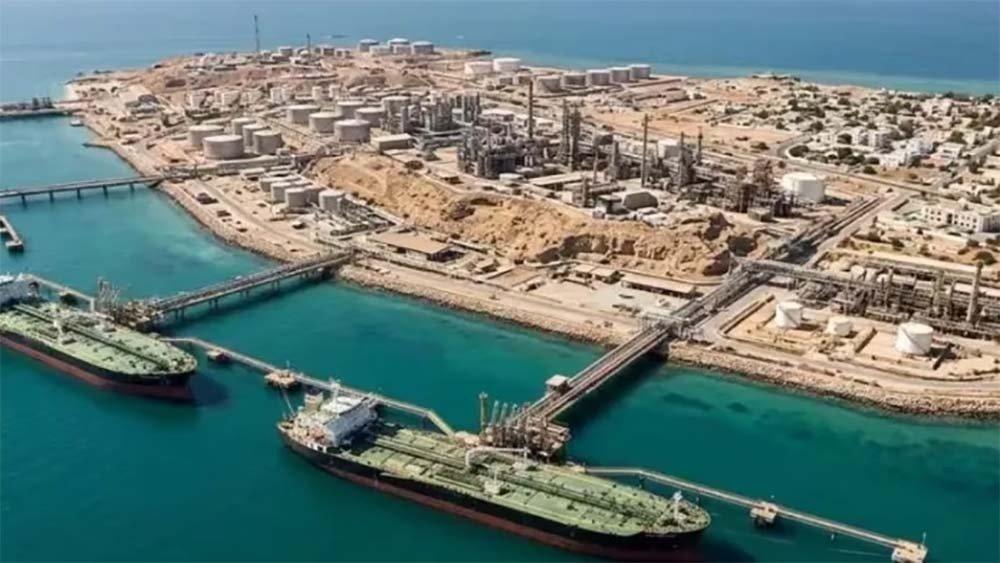
Iran is simultaneously attempting to restore energy infrastructure damaged during the conflict. Deputy Oil Minister Ahmad Zeraatkar said Thursday that about 40% of damaged production capacity at the South Pars gas field has returned to operation, with reconstruction continuing. Kharg Island, historically the centre of Iranian crude exports, has also been under intense pressure during the war, making Tehran’s ability to maintain overseas deliveries increasingly dependent on both repaired infrastructure and unconventional logistics.
The emerging picture is therefore more complicated than either Washington’s claim that Iran can be economically isolated or Tehran’s insistence that its oil trade remains resilient. US pressure has clearly reduced Iranian export volumes, but it has not eliminated the trade. Iran is still moving oil to overseas customers while Washington attempts to make those remaining transactions progressively more expensive, difficult and risky.
That struggle could ultimately become more consequential than the number of tankers leaving Iranian waters. If Washington begins aggressively sanctioning major foreign banks and buyers — particularly in China — Iran’s remaining export network would face a substantially harder test. If those governments resist and alternative payment and shipping networks continue functioning, Tehran could demonstrate the limits of America’s ability to enforce economic isolation even while US naval forces constrain physical exports.
For now, Paknejad’s statement captures the reality of Iran’s oil economy more accurately than claims of either complete resilience or complete blockade: Iran is selling less oil, through increasingly difficult channels, but its most important economic lifeline remains open.