
The Changer Explainer | Pakistan | By Shahnoor Saqib
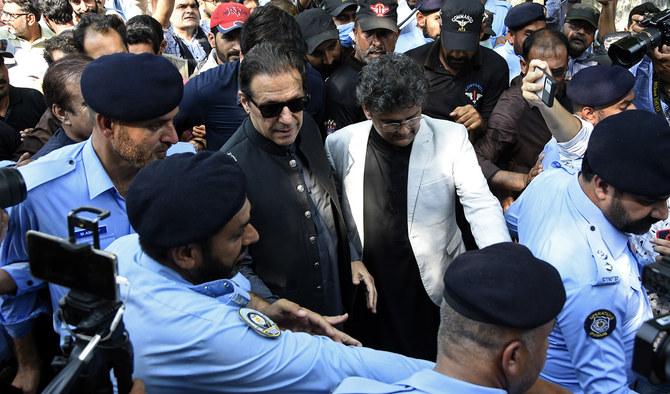
ISLAMABAD — Former prime minister Imran Khan has faced more than 100 legal cases since his removal from office in April 2022, spanning corruption, state secrets, state gifts and terrorism allegations. But the sheer number can obscure a more important reality: most of the convictions that once kept Khan behind bars have either been overturned or had their sentences suspended.
As of August 18, 2026, the major exception is the £190 million Al-Qadir Trust corruption case, in which Khan and his wife Bushra Bibi were sentenced to lengthy prison terms. Appeals remain pending.


That distinction matters as the Supreme Court has now ordered Khan transferred from Adiala Jail to Shifa International Hospital amid health concerns.
So what are the major cases — and where does each one stand?
1. £190 Million Al-Qadir Trust Case — The Conviction That Still Matters Most
This is currently the most consequential case for Khan’s imprisonment.
Khan and Bushra Bibi were convicted in January 2025 in a corruption case involving the Al-Qadir Trust. Khan received a 14-year prison sentence.
Prosecutors alleged that Khan and his wife received land worth billions of rupees through the trust in exchange for providing improper benefits connected to £190 million returned to Pakistan following a UK investigation involving property tycoon Malik Riaz.
Khan and Bushra deny wrongdoing.
Their legal team has challenged the conviction, and in June 2026 they approached the Supreme Court seeking suspension of their sentences and release on bail while the appeal proceeds.
Current position: Conviction remains operative; appeal/sentence-suspension litigation continues.
2. Toshakhana-I — Three-Year Sentence Suspended
Khan was convicted in August 2023 over allegations that he improperly declared proceeds from the sale of gifts received while prime minister.
A trial court sentenced him to three years in prison.
Later that month, the Islamabad High Court suspended the sentence, although the underlying appeal against the conviction remained to be decided.
This distinction is important: suspension of a sentence does not necessarily mean the conviction itself has been finally erased.
Current position: Sentence suspended; appeal remains relevant.
3. Toshakhana-II — A New 17-Year Conviction
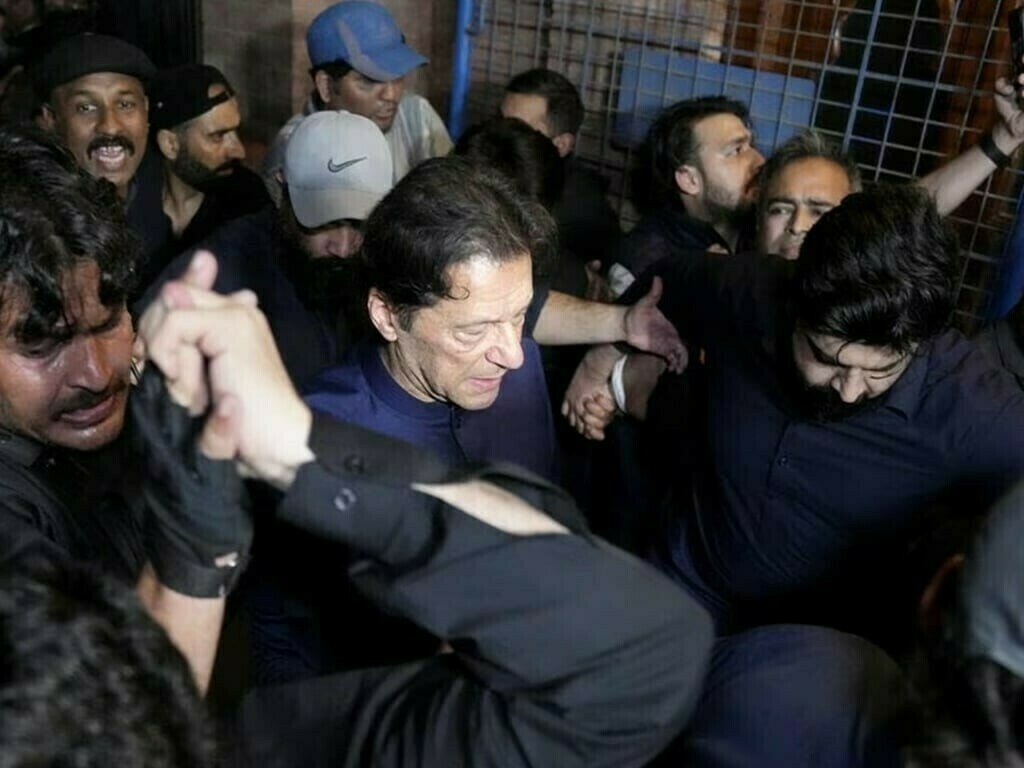
The legal picture became more complicated in December 2025 when Khan and Bushra were each sentenced to 17 years in prison in a second Toshakhana case involving the alleged underpriced acquisition of valuable state gifts.
The court imposed sentences under both the Pakistan Penal Code and anti-corruption legislation.
Khan and Bushra subsequently challenged the verdict. By March 2026, proceedings concerning their appeals were before the Islamabad High Court, where they were directed to address procedural objections through a fresh application.
This case therefore remains an important part of Khan’s current legal exposure even as litigation over the sentences continues.
4. Cipher Case — 10-Year Conviction Overturned
The cipher case was once among the gravest cases facing Khan.
A special court sentenced him to 10 years in prison in January 2024 for allegedly improperly retaining and making public a classified diplomatic cable sent by Pakistan’s ambassador in Washington.
The cable became central to Khan’s claim that the United States was involved in efforts to remove him from office — an allegation Washington denied.
But in June 2024, the Islamabad High Court overturned the conviction and acquitted Khan in the case.
Current position: Conviction overturned.
5. Iddat Marriage Case — Conviction Overturned
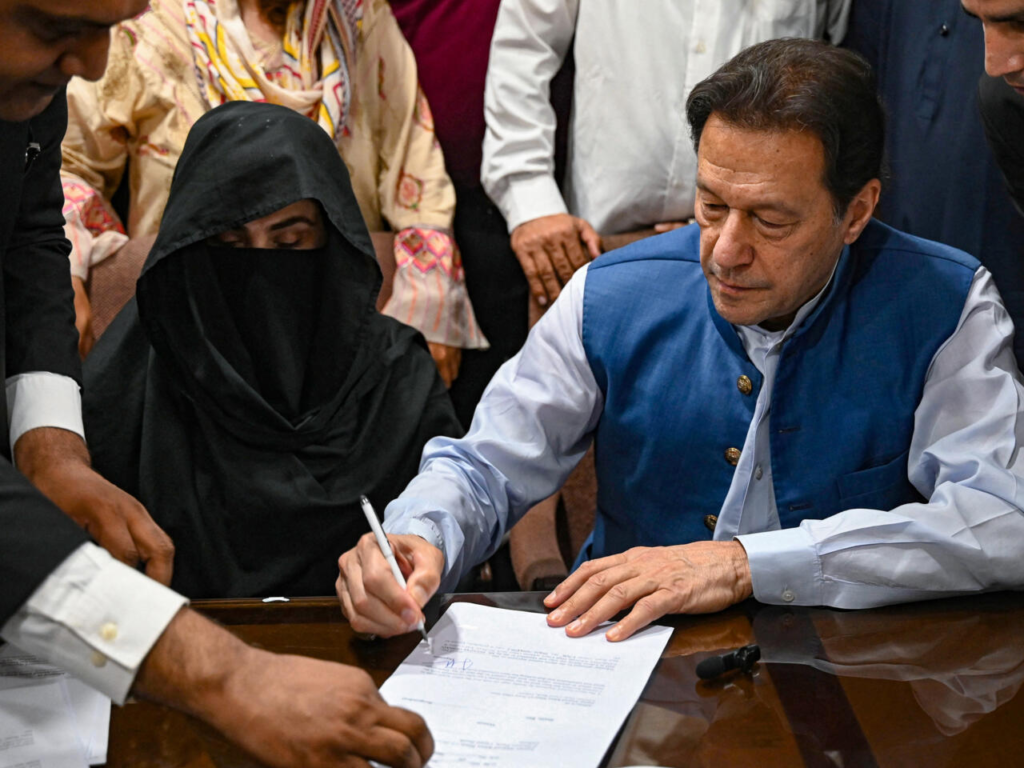
Khan and Bushra Bibi were also sentenced to seven years in prison in February 2024 after a court ruled that their marriage violated Islamic law because it took place before completion of the required waiting period following Bushra’s previous divorce.
Both denied wrongdoing.
In July 2024, a court acquitted the couple, removing another conviction that had previously prevented Khan’s release.
Current position: Acquitted.
6. May 9 Violence Cases — Potentially the Most Important Unresolved Criminal Front
Then there are the cases that have not yet produced final convictions against Khan.
Following his arrest on May 9, 2023, violent protests erupted across Pakistan. Military and government installations were attacked, including sites associated with the armed forces.
Authorities accuse Khan of involvement in or abetment of the violence.
He faces proceedings under anti-terrorism laws, and those cases remain ongoing.
Khan and PTI reject allegations that he directed attacks and have repeatedly described the cases as politically motivated.
Several PTI supporters have separately been tried by military courts, but those proceedings should not be confused with the criminal cases directly against Khan.
Current position: Trials/proceedings remain ongoing.
The Changer Narrative: Forget the Number “100” — Watch the Legal Bottlenecks
The usual narrative surrounding Imran Khan’s legal troubles focuses on the extraordinary number of cases against him.
That number is politically striking, but it is increasingly a poor way to understand his actual legal position.
The more useful question is:
Which cases can actually keep Imran Khan imprisoned?
That dramatically narrows the picture.
The cipher conviction disappeared.
The Iddat conviction disappeared.
The original Toshakhana sentence was suspended.
Other appeals remain pending.
Yet the Al-Qadir Trust conviction remains a central legal obstacle, while the later Toshakhana-II conviction and unresolved May 9 terrorism cases preserve significant additional legal exposure.
This means Khan’s legal battle has entered a different phase.
It is no longer simply:
How many cases does Imran Khan face?
It is increasingly:
How many remaining cases are strong enough, procedurally advanced enough and legally operative enough to keep him incarcerated?
That is the number that matters.
Why the Supreme Court Hospital Order Changes the Context
Khan’s legal and medical battles are also beginning to intersect.
The Supreme Court on August 18 ordered his transfer from prison to Shifa International Hospital, where a specialist medical panel is expected to assess and treat him.
The government has indicated it will seek modification of the order so that Khan can instead receive treatment at a government hospital.
His health therefore does not erase or suspend the criminal proceedings against him.
But it introduces another judicial question alongside the criminal cases: what level of medical treatment and access must the state provide while he remains incarcerated?
That could become increasingly important as his appeals continue.
What Happens Next?
Three legal fronts deserve the closest attention.
The first is the Al-Qadir appeal, because changing or suspending that conviction could materially alter the legal basis for Khan’s continued imprisonment.
The second is Toshakhana-II, because its 17-year sentence represents another substantial conviction now under challenge.
The third is the May 9 litigation. Unlike several older cases that have already travelled through appeals, these proceedings could generate new convictions — or acquittals — and therefore reshape Khan’s legal position again.
That is why counting cases alone can be misleading.
Imran Khan’s future may ultimately depend on the outcome of a much smaller group of cases than the enormous docket surrounding him suggests.