
By Uzair Saleem — The Changer
ISLAMABAD — Pakistan faces renewed pressure on household purchasing power after the International Monetary Fund raised its inflation forecast for the current fiscal year to 9.9%, while maintaining its economic growth projection at 3.5%. The revised outlook highlights a widening challenge for policymakers: achieving macroeconomic stability while ensuring that economic recovery translates into meaningful improvements in living standards.
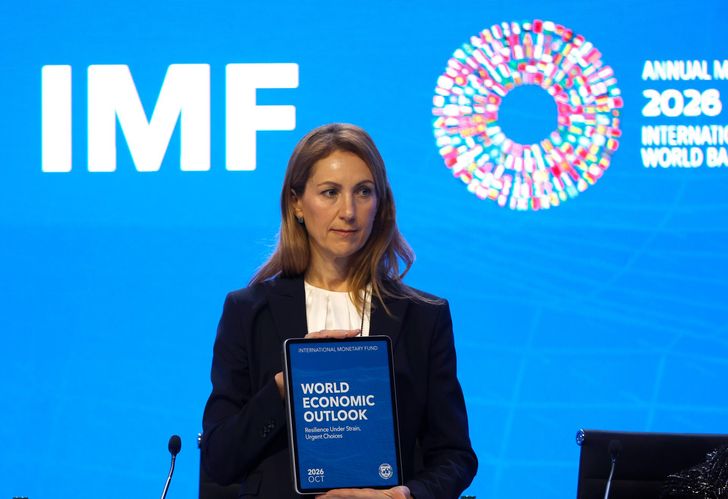
The IMF’s latest World Economic Outlook projects inflation rising from 7.1% in fiscal year 2025-26 to 9.9% in 2026-27, above the government’s target of 8.2%. The Fund’s growth estimate also remains below Islamabad’s 4% target, reflecting differences between the government’s expectations and the international lender’s assessment. The projections do not mean that every household will experience identical price increases, but they suggest that broad inflationary pressure could remain a significant concern throughout the fiscal year.


For Pakistani families, the central economic question is increasingly whether incomes can keep pace with living costs. Inflation measures the rate at which prices increase, meaning that even when inflation slows, prices generally do not return to previous levels. A household whose earnings remain unchanged can therefore experience declining purchasing power despite improvements in headline economic indicators.
The contrast between growth forecasts and household conditions is particularly important because GDP expansion does not automatically translate into higher real wages or more secure employment. Economic growth can be concentrated in particular industries, while the benefits may reach households unevenly. The quality of recovery will depend partly on job creation, wage growth, productivity and the affordability of essential goods and services.
Energy prices represent another significant risk to Pakistan’s economic outlook. The country remains exposed to international oil markets, and prolonged instability in the Middle East could increase import costs, transport expenses and pressure on domestic prices. Higher fuel costs can also affect agricultural distribution and manufacturing, potentially transmitting external shocks through multiple parts of the economy.
Pakistan’s government has sought to balance fiscal discipline with measures intended to cushion consumers from rising fuel costs. However, broad relief programmes can create additional budgetary pressures, especially when public finances are already constrained. The challenge is to design assistance that protects vulnerable households without undermining the financial stability that policymakers are attempting to preserve.
The latest IMF figures also point to pressure on Pakistan’s external accounts. The Fund projects a current account deficit equivalent to approximately 1% of GDP during the current fiscal year, indicating that foreign exchange requirements remain an important consideration. Export performance, remittances, investment inflows and international energy prices will all influence the country’s ability to manage external financing needs.
Finance Minister Muhammad Aurangzeb has expressed confidence that Pakistan can achieve growth above 4%, citing resilience in parts of the economy despite elevated energy prices and regional uncertainty. The government’s more optimistic outlook contrasts with the IMF’s projection, but the eventual result will depend on economic conditions over the remainder of the fiscal year. Neither forecast should be treated as a guaranteed outcome.
The latest outlook also presents a broader policy challenge for Pakistan’s economic managers. Measures that support short-term financial stability must be assessed alongside their effects on business investment, employment opportunities and household welfare. Sustained recovery will require more than improvements in headline indicators if ordinary citizens are to experience measurable gains in their standard of living.
Pakistan’s next economic test is therefore not simply whether GDP growth reaches 3.5% or exceeds 4%. It is whether the country can contain inflation, improve real incomes and expand economic opportunities while maintaining financial stability. For millions of households, the success of economic policy will ultimately be judged less by official forecasts than by what their earnings can purchase in everyday life.