
By Naeema Saleem — The Changer
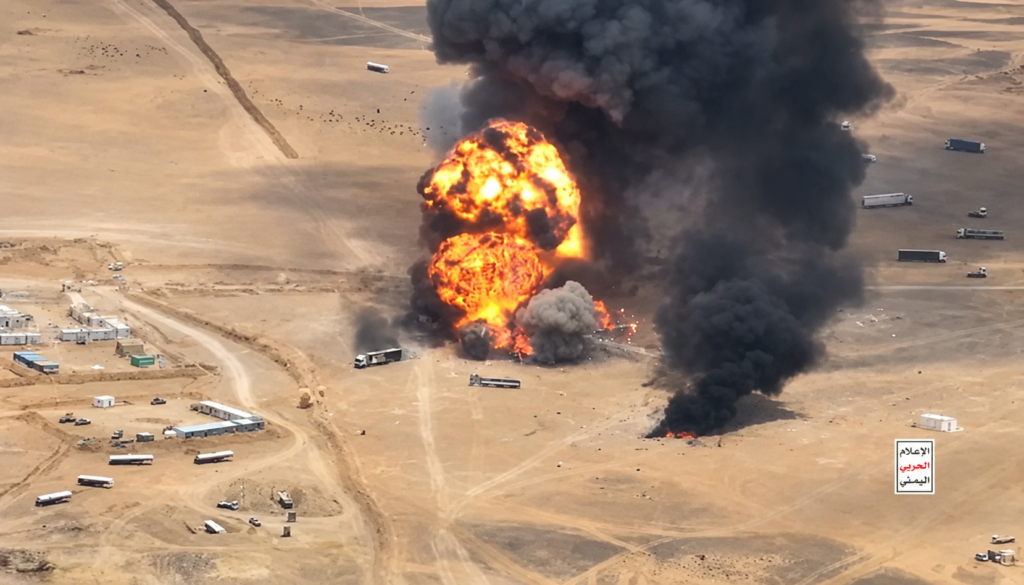
CAIRO/DUBAI, Sept 8 — Houthi missile and drone attacks on four southern Saudi cities wounded 73 people and set energy installations ablaze on Tuesday, marking a major expansion of the Middle East conflict. But the strategic significance reaches beyond the scale of the assault: the attacks are pushing the energy war from the Strait of Hormuz toward Saudi Arabia’s Red Sea infrastructure, threatening routes designed to keep Gulf oil moving when the strait is disrupted.
Saudi authorities said civilian and economic facilities in Abha, Khamis Mushait, Jazan and Najran were targeted, with women and children among those wounded. Fires erupted at energy sites and operations at some facilities were temporarily halted while emergency crews contained the damage, according to the Saudi energy ministry. Riyadh described the attacks as a dangerous escalation and said it would take necessary measures to defend its sovereignty.


The Houthis said they had carried out a large-scale, long-range operation using dozens of ballistic missiles and drones. Their military spokesman Yahya Saree said targets included a Saudi airbase at Khamis Mushait and facilities linked to state oil giant Aramco in Abha, Najran and Jazan. The group said the operation was retaliation for Saudi attacks in Yemen; Riyadh has not confirmed all of the Houthi allegations surrounding those strikes.
The geography makes Tuesday’s escalation especially consequential. Jazan is a major Red Sea port and energy centre, while Saudi Arabia’s western infrastructure provides an alternative outlet for crude that does not have to pass through the Strait of Hormuz. That redundancy has become increasingly important as the wider U.S.-Iran confrontation disrupts Gulf shipping.
In other words, the region’s energy-security problem is no longer concentrated at a single maritime chokepoint.
Before the conflict, roughly a fifth of global oil and liquefied natural gas shipments passed through Hormuz. Gulf producers have since relied increasingly on alternative pipelines, terminals and routes to preserve exports. Houthi pressure on Saudi Arabia’s southwest and Red Sea approaches therefore creates a second vulnerability: even supplies successfully diverted away from Hormuz can face military risk farther west.
Oil markets reacted immediately. Brent climbed above $99 a barrel during Tuesday’s trading, reaching a six-week high as investors weighed the possibility of prolonged disruption to Middle Eastern supply. The Saudi attacks added another risk premium to a market already dealing with restricted Gulf exports and wider regional fighting.
The escalation also reconnects two conflicts that had partially separated in recent years. Saudi Arabia intervened militarily in Yemen in 2015 after the Houthis seized Sanaa, but large-scale cross-border fighting eased following a UN-mediated truce in 2022. That relative calm has now broken down as Yemeni government forces push against Houthi-held territory and the Houthis again strike Saudi targets.
The humanitarian consequences inside Yemen are growing alongside the regional danger. The International Organization for Migration said more than 18,500 people had fled their homes amid recent fighting along Yemen’s western coast, while the World Health Organization reported more than 1,000 people killed or wounded since late August.
Tuesday’s attacks also demonstrated the Houthis’ continuing ability to impose costs beyond Yemen. The movement controls Sanaa and much of Yemen’s populated north and has previously used missiles, drones and attacks on shipping to project military pressure into the Red Sea and Saudi Arabia. It declared a naval blockade against Riyadh in July and has targeted Saudi-linked vessels.
For Riyadh, the strategic calculation is becoming more difficult. Saudi Arabia must protect its cities and energy infrastructure without allowing renewed confrontation in Yemen to develop into another prolonged cross-border war. The Saudi-led coalition has already warned that it will take operational measures against the sources of the attacks.