
World | By News Desk
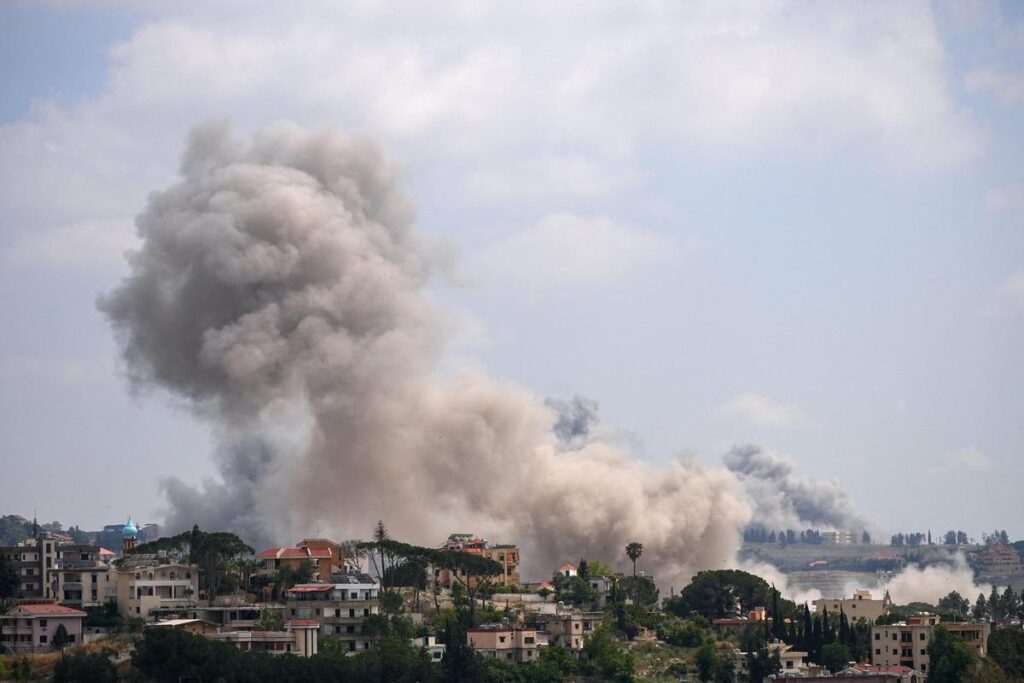
BEIRUT — Hezbollah warned Saturday that Israeli attacks on Lebanon would face an “appropriate response” after a wave of airstrikes killed at least 11 people in the country’s south, threatening to unravel an already fragile truce and complicate US-backed efforts to stabilize the Israel-Lebanon front.
Lebanon’s Health Ministry said the strikes killed 11 people, including three children and two women, in attacks on southern communities including Ansar and Deir al-Zahrani. The attacks were among the deadliest since the June ceasefire framework.


Hezbollah Warns Israel
Hezbollah said Israel must understand that continued attacks and attempts to impose new realities on Lebanon could not continue without consequences.
The Iran-backed group warned that the strikes would receive an “appropriate” response, raising fears of another exchange of fire across the Israel-Lebanon front.
Hezbollah also intensified its criticism of the Lebanese government’s negotiations with Israel, urging Beirut to abandon what it described as humiliating direct talks and accusing Washington of prioritizing Israeli interests over Lebanese sovereignty.
Israel Says Strikes Followed Hezbollah Attack
Israel said its strikes came after a Hezbollah attack wounded three Israeli soldiers.
The Israeli military said its operations targeted Hezbollah infrastructure and personnel in southern Lebanon. Israel also said one of those killed was Hezbollah commander Ali Samir Al-Haj Hassan.
The civilian casualties, however, triggered condemnation from Lebanon’s leadership.
President Joseph Aoun said the attacks sent a damaging message while negotiations were underway, while Prime Minister Nawaf Salam condemned the killing of civilians and warned that continued strikes threatened efforts to restore stability.
Fragile June Framework Under Pressure
The escalation comes at a particularly sensitive moment.
A US-brokered framework reached in June links a phased Israeli withdrawal from southern Lebanon to the disarmament of Hezbollah and the deployment of Lebanese state forces.
But the central conditions remain disputed.
Israel says it will not complete its withdrawal until Hezbollah is disarmed. Hezbollah, meanwhile, rejects disarmament while Israeli forces remain on Lebanese territory.
That creates a diplomatic deadlock in which both sides argue the other must move first.
Why This Escalation Matters
Saturday’s violence threatens to turn that political stalemate back into an active military confrontation.
A Hezbollah retaliation could prompt another Israeli response, potentially producing the same cycle that repeatedly destabilized the ceasefire: attack, retaliation, diplomatic intervention and another temporary pause.
The danger extends beyond Lebanon.
Hezbollah remains closely aligned with Iran, while Israel’s confrontation with Tehran and the continuing crisis around the Strait of Hormuz have already placed the wider Middle East under intense pressure.
A renewed Israel-Hezbollah war would therefore add another major front at precisely the moment Washington and regional governments are struggling to contain the broader Iran conflict.
For now, Hezbollah has stopped short of specifying when or how it will respond. But its warning makes clear that the deadly Israeli strikes have pushed the Lebanon ceasefire into another dangerous test.