
World / Middle East | By Mayson Woodenbridge
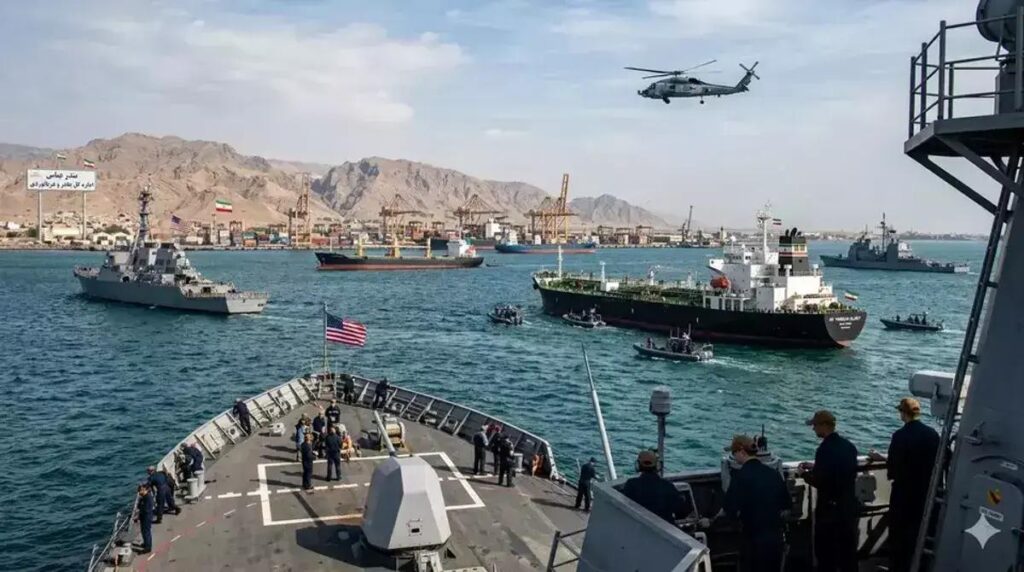
WASHINGTON/DUBAI — The US military says it has helped commercial vessels transport more than 660 million barrels of crude oil through the Strait of Hormuz since early May, offering a striking counterpoint to Iran’s insistence that the strategic waterway remains closed to unauthorised commercial shipping. US Central Command said American forces had assisted roughly 1,300 commercial vessels through the strait during the same period, as Washington seeks to maintain an energy corridor through one of the world’s most contested maritime chokepoints.
US Navy Captain Tim Hawkins, a CENTCOM spokesperson, said multiple routes remained available for commercial transit. The latest figures represent a significant increase from late July, when CENTCOM said approximately 500 million barrels had moved through the strait since May. That suggests another roughly 160 million barrels were transported during the following three weeks, equivalent to more than 7 million barrels per day on average.


However, the figures should be understood as CENTCOM’s account of US-assisted traffic, rather than evidence that normal pre-war shipping has returned. Before the conflict, more than 20 million barrels of crude oil and petroleum products typically passed through Hormuz each day. Current flows remain substantially below those levels, with Reuters reporting that traffic has fallen to around 8 million barrels per day according to US officials.
The gap between Washington and Tehran’s descriptions of the strait has become part of the wider strategic confrontation. Iran continues to maintain that Hormuz is closed to shipping that does not have its authorisation, while US forces have been working to move commercial vessels through protected routes. Iran has nevertheless granted permission for several Iraqi oil tankers to transit following requests from Baghdad, illustrating that Tehran continues to exercise selective control over passage even while Washington challenges its ability to enforce a broader closure.
The continuing risk has forced major shipping companies to change how they move Gulf energy. Chinese state-owned shippers have avoided Hormuz since late July and increasingly relied on ship-to-ship transfers outside the Gulf, including around Fujairah and Oman. Meanwhile, Britain and France are leading discussions among interested countries about a potential multinational effort to safeguard freedom of navigation, although NATO itself has stressed that such an operation would not formally be an alliance mission.
The Changer Angle: 660 Million Barrels Does Not Mean Hormuz Is ‘Open’ — It Shows a Parallel Shipping System Is Emerging
The bigger story behind CENTCOM’s number is not simply the volume of oil. Washington and Tehran are effectively presenting two different realities in the same waterway. Iran says the strait remains closed unless vessels receive authorisation; the United States says it can keep significant commercial traffic moving regardless.
That distinction changes the meaning of the 660-million-barrel figure. Rather than demonstrating a return to normal shipping, the number suggests that a militarily protected alternative transit system has emerged. Oil is moving, but at substantially reduced volumes, amid naval protection, selective Iranian permissions and shipping companies adopting extraordinary measures to reduce exposure.
This also explains why Hormuz remains one of the biggest risks hanging over global energy markets. The system is functioning well enough to prevent a complete Gulf export shutdown, but it is far from the predictable commercial environment that existed before the war. Any renewed confrontation involving tankers, Iranian forces or US naval assets could rapidly threaten those flows.
The 660-million-barrel milestone therefore tells a more complicated story than either side’s political narrative. Iran has not achieved a complete shutdown of Hormuz, but the United States has not restored normal freedom of navigation either. The world’s most important oil chokepoint is operating under an extraordinary wartime system somewhere between closure and reopening.