
By Naeema Saleem — The Changer
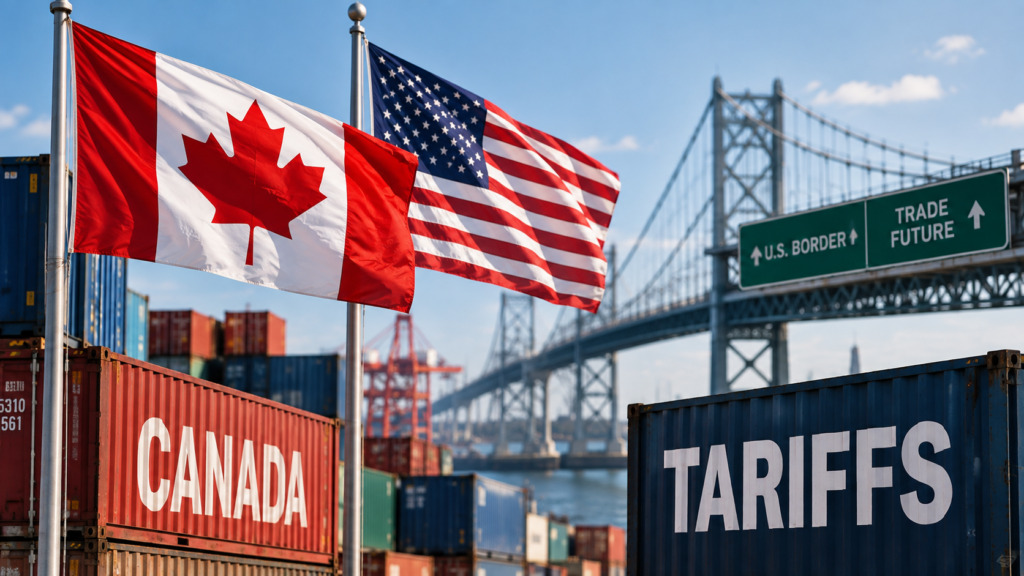
OTTAWA, Sept 7 — Canada will impose a new round of retaliatory tariffs on U.S. goods from midnight on Tuesday, escalating a trade confrontation with its largest commercial partner while simultaneously exposing a deeper economic challenge for Ottawa: whether years of promises to diversify Canadian trade can finally reduce the country’s dependence on the United States. The countermeasures will apply tariffs of 15%, 25% or 50% to C$27.6 billion worth of U.S. imports, matching Washington’s latest measures dollar-for-dollar and rate-for-rate. Steel, dairy products, appliances, agricultural equipment, pulp and paper, plastics and electronics are among the sectors targeted.
The immediate trigger was Washington’s decision to impose 50% tariffs on C$27.6 billion of Canadian goods from Aug. 22 after negotiations between the two neighbours failed to produce an agreement. Ottawa suspended those negotiations rather than accept terms it considered damaging to Canadian workers and strategic industries, and Prime Minister Mark Carney has since said Washington must approach future talks more seriously before negotiations can resume. The Canadian government is coupling its retaliation with C$7.5 billion in new and enhanced support for affected workers and businesses, on top of almost C$25 billion in previously announced assistance.


Yet the significance of the confrontation reaches beyond the tariff schedules taking effect on Sept. 8. Canada’s latest trade data underline how difficult economic separation from the United States would be. Canadian exports fell 2.3% in July, while exports specifically to the United States dropped 6.6%; the U.S. still absorbed roughly two-thirds of Canada’s exports that month. Canada’s merchandise trade surplus consequently narrowed sharply to C$769 million from C$4.2 billion in June.
There is, however, another trend underneath those numbers. Canadian exports to non-U.S. destinations increased 7.4% in July, while the U.S. share of Canadian exports so far this year has fallen from about 73% to 68%, according to Statistics Canada data reported by Reuters. That does not amount to economic independence from the United States, but it gives Ottawa’s diversification campaign something it has often lacked: immediate commercial and geopolitical pressure to accelerate.
Canada has been laying pieces of that strategy for years, pursuing deeper commercial relationships with Europe and the Indo-Pacific and negotiating additional trade agreements. The new confrontation has given those efforts a more strategic character. Finance Minister François-Philippe Champagne said ahead of the recent G20 meetings that Canada increasingly sees itself as a trusted transatlantic partner, while Carney has promoted greater cooperation among middle powers as the international economic order becomes more fragmented.
The cost of failing to adapt is becoming more visible inside Canada as well. The economy unexpectedly lost 41,700 jobs in August, including 35,900 full-time positions, while trade tensions remain an additional risk to employment in tariff-exposed industries. The unemployment rate held at 6.4%, but the figures illustrate why Ottawa’s response cannot be measured solely by whether Canadian tariffs inflict equivalent costs on American exporters.
Canada’s C$7.5 billion support package reflects that problem. It includes an additional C$1.5 billion through the Regional Tariff Response Initiative aimed particularly at helping small and medium-sized companies manage tariff-related pressures. Ottawa has also retained a remission mechanism for businesses that depend on U.S. inputs which cannot reasonably be sourced domestically or from alternative foreign suppliers — an acknowledgement that retaliation itself can impose costs on Canadian production.