
By Naeema Saleem — The Changer
NEW DELHI, India, September 9, 2023 — The African Union has been admitted as a permanent member of the Group of 20, giving the continental organization a place alongside the world’s major economies in a significant expansion of international economic representation announced at the opening of the G20 leaders’ summit in New Delhi on Saturday.
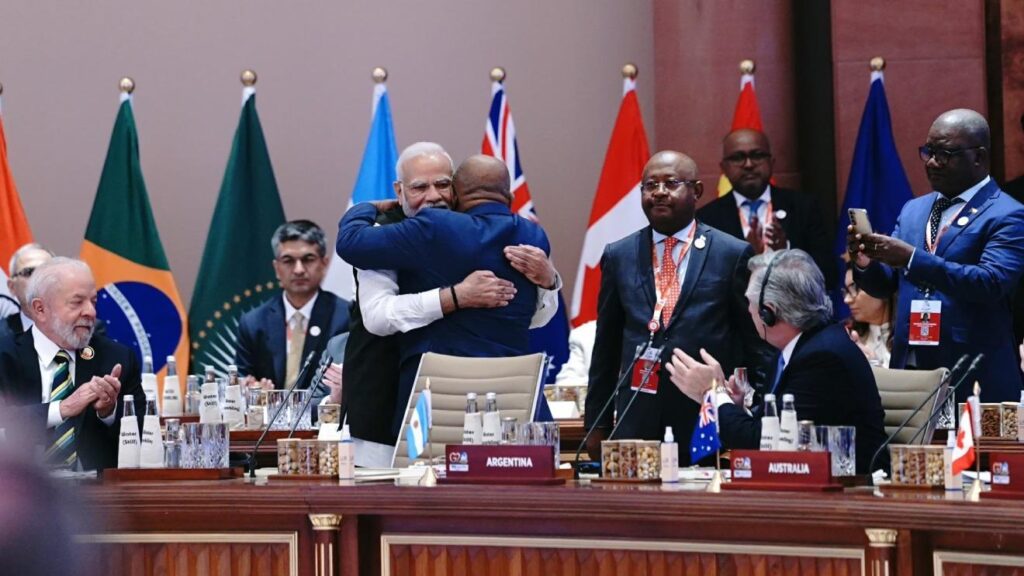
Indian Prime Minister Narendra Modi welcomed the African Union into the forum during the opening session at Bharat Mandapam, inviting African Union Chairperson and Comoros President Azali Assoumani to take his seat among the leaders. The announcement drew applause from delegates and marked a major diplomatic success for India’s presidency, which has made the concerns of developing countries a central part of its G20 agenda.


The decision gives the African Union a permanent place in a forum that plays an influential role in discussions on global economic growth, international finance, debt, trade, energy security and sustainable development. The European Union is also a member, making the African Union the second regional organization represented in the G20 alongside individual countries.
The African Union represents 55 member states across a continent facing major development opportunities and economic challenges. Its inclusion strengthens Africa’s collective representation in international economic discussions and provides a new platform for advancing regional priorities, including infrastructure investment, food security, climate finance and debt sustainability.
India has campaigned for the African Union’s admission, arguing that the G20 should reflect the priorities of a broader range of developing economies. Modi has placed particular emphasis on the Global South, calling for international institutions to respond more effectively to countries facing limited access to affordable financing, rising debt burdens and the consequences of climate change.
The African Union’s entry follows agreement among G20 members to support its permanent membership. The decision allows the continental organization to participate directly in the forum’s discussions rather than relying solely on invitations extended to individual African leaders or institutions.
South Africa is already a G20 member and remains an important voice for the continent. The African Union’s admission broadens representation beyond one national government, creating an opportunity for African countries to present shared regional priorities through their continental institution.
The announcement comes at a time when African economies are confronting rising borrowing costs, food and energy price pressures and significant financing requirements for infrastructure and development. Many countries are seeking reforms to international lending arrangements and stronger representation in institutions whose decisions influence global economic conditions.
Debt sustainability is expected to remain a major issue in discussions involving African governments and international financial institutions. Higher interest rates and external financing pressures are making it increasingly difficult for some countries to meet debt obligations while maintaining public investment in essential services.
The African Union’s membership could strengthen efforts to advance these concerns within G20 discussions, although the forum’s decisions are based on political cooperation rather than legally binding obligations. Membership does not automatically provide access to development funding or establish new financial commitments from other participating economies.
Climate change is another major priority for African countries, many of which face severe environmental risks despite contributing a relatively small share of historical global greenhouse gas emissions. Governments across the continent are seeking greater access to climate adaptation finance, clean energy investment and support for resilient infrastructure.
The African Union’s permanent membership creates an additional opportunity to bring these demands directly into discussions among major economies. It also supports calls for more inclusive global governance as developing countries seek a stronger role in shaping international economic policies.
The African Union’s entry is also significant for regional economic integration. The African Continental Free Trade Area is intended to expand trade among African economies, encourage investment and strengthen regional value chains. A permanent place in the G20 could help African representatives promote infrastructure, transport connectivity and industrial development priorities that support those objectives.
Agriculture and food security remain pressing concerns across parts of the continent, where drought, conflict, high fertilizer costs and disruptions to supply chains have increased the vulnerability of households. African governments are seeking investment in agricultural productivity, irrigation, storage facilities and transport networks to improve food availability and reduce dependence on imports.
The G20’s New Delhi Leaders’ Declaration formally welcomes the African Union as a permanent member and commits participating economies to strengthening cooperation with the organization. It also expresses support for the African Union’s Agenda 2063 development framework and existing initiatives intended to encourage investment and industrialization across Africa.
South African President Cyril Ramaphosa welcomed the decision during the summit’s opening working session, saying the inclusion of the African Union represents an important step toward broader international representation. He also called attention to the challenges African countries face in financing climate action while addressing poverty, inequality and unemployment.
The expansion comes as international institutions face growing demands for reform from countries seeking greater influence over economic rules and development priorities. African governments have called for changes to global financing arrangements, more affordable access to capital and greater consideration of their needs in international negotiations.
The African Union’s membership does not give each of its 55 countries a separate G20 seat. Instead, the continental organization participates as a member alongside the existing national and European Union representatives, with its leadership responsible for advancing shared African priorities.
The decision also creates opportunities for stronger cooperation between Africa and other emerging economies on trade, investment, technology and sustainable development. Its practical significance will depend on the African Union’s ability to coordinate positions among its member states and secure support for specific proposals within the G20.
For India’s presidency, the admission provides an important outcome on the summit’s opening day and reinforces Modi’s emphasis on making international economic cooperation more inclusive. The decision broadens the G20’s representation while placing African development priorities more firmly within discussions among the world’s major economies.
The New Delhi summit continues with leaders addressing global growth, climate action, debt vulnerabilities and geopolitical tensions. With the African Union taking its place as a permanent member, attention turns to how the expanded forum can translate wider representation into stronger cooperation on the economic challenges confronting developing countries.