
By Muhammad Irfan — The Changer
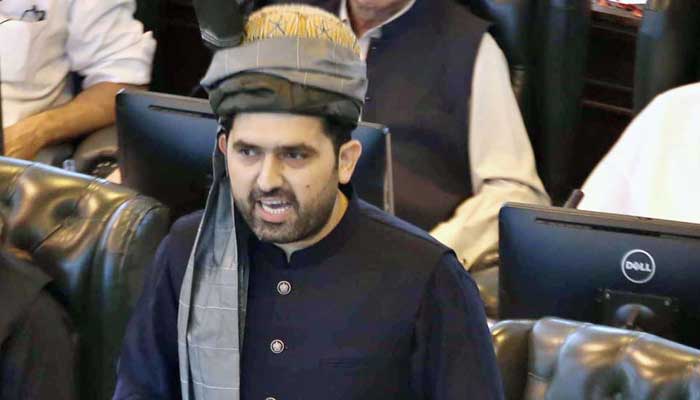
PESHAWAR — The detention of Khyber Pakhtunkhwa’s suspended Chief Minister Sohail Afridi has become the subject of a constitutional petition before the Peshawar High Court, opening a new legal confrontation over the limits of preventive custody, the obligation of authorities to disclose a detainee’s whereabouts and the protection of fundamental rights during emergency rule.
Afridi’s brother, Muhammad Amir, filed the petition on Tuesday through senior lawyer Bashir Khan Wazir, asking the court to direct police and other relevant authorities to establish where the former provincial chief executive is being held and under whose authority. The application also seeks his production before the court so that judges can examine the legality of his detention. The petition follows the federal government’s October 11 decision to impose emergency measures and governor’s rule in Khyber Pakhtunkhwa.


According to the petition, Afridi was allegedly taken from the Chief Minister’s House in Peshawar by unidentified armed and masked individuals. His brother claims the incident occurred in the presence of senior police officials and that the family was not provided with sufficient information about his legal status or location. These allegations have not been established by a judicial finding, and the precise circumstances surrounding his detention remain a matter for investigation.
The application names senior provincial police authorities among the respondents and requests a detailed account of the circumstances in which Afridi was taken into custody. It also seeks the preservation of surveillance recordings, security registers, entry and exit records, duty rosters and other material that could help establish the sequence of events. The requested evidence could become important if the court orders an inquiry into the conduct of officials or the legal basis for the detention.
Federal and police authorities have acknowledged that Afridi and several members of the suspended provincial administration were placed in preventive custody following the emergency declaration. State Minister for Interior Tallal Chaudhry said individuals facing criminal cases would be dealt with through legal proceedings, while those not wanted in cases would be released. That official account confirms the use of preventive detention but does not, by itself, resolve the questions raised by Afridi’s family about his precise whereabouts, access to legal protections and the documentation authorising his custody.
The dispute centres on a fundamental distinction in constitutional law: the power of the state to restrict liberty under legally authorised circumstances does not automatically eliminate the requirement to account for a person’s detention. Pakistan’s Constitution contains protections relating to personal liberty, lawful treatment, arrest procedures and human dignity. The petition invokes those protections and asks the judiciary to determine whether the authorities complied with their obligations.
Article 199 of the Constitution empowers high courts, subject to applicable legal conditions, to examine the custody of individuals and require their production where necessary. The mechanism provides a route for judicial scrutiny when the legality of detention is disputed. In Afridi’s case, the immediate legal issue is whether the state can demonstrate a valid basis for holding him and provide the information required for the court to assess that basis.
The case has become more politically significant because Afridi was leading a provincial government controlled by Pakistan Tehreek-e-Insaf before the federal intervention. Islamabad has justified emergency rule by citing deteriorating security conditions and accusing the provincial administration of failing to cooperate adequately in counterterrorism operations. PTI rejects those allegations and maintains that the federal action was designed to weaken the party and disrupt its political mobilisation.
The federal government has defended its intervention under Articles 232 and 234, which address different constitutional circumstances involving emergency powers and provincial governance. Opposition figures and legal critics have questioned whether the constitutional requirements for such measures were satisfied. Those arguments concern the legality of the wider federal intervention and remain distinct from the question of whether Afridi’s individual detention complied with the law.
The timing of the detention adds another dimension to the legal dispute. On October 9, the Peshawar High Court maintained interim protection from arrest for Afridi and 27 other PTI leaders in proceedings connected with May 9 cases. Whether that protection applies to the circumstances or legal authority invoked in the latest detention will depend on the relevant court orders, the nature of the custody and the submissions presented by the parties.
The petition also seeks an independent investigation into the alleged removal of Afridi from the Chief Minister’s House. Such an inquiry could examine the involvement of law enforcement personnel, the existence of any detention orders and the handling of official records. Its findings would be necessary before conclusions could be drawn about allegations of abduction or unlawful conduct by particular individuals.
Beyond Afridi’s personal circumstances, the case raises a broader institutional question about the operation of constitutional safeguards during political emergencies. Emergency powers may alter the distribution of governmental authority, but their exercise remains subject to the constitutional framework and any applicable judicial review. The ability of courts to obtain reliable information about detained individuals is therefore an important measure of legal accountability.
For Khyber Pakhtunkhwa, the proceedings are unfolding amid uncertainty over provincial administration, political representation and the federal government’s security measures. The legal challenge could clarify the immediate circumstances of Afridi’s custody while leaving the wider dispute over governor’s rule to separate constitutional proceedings. Both questions carry implications for the relationship between federal authority and elected provincial institutions.
The next development will depend on how the Peshawar High Court handles the petition and what information the respondents provide. No final judicial determination on the legality of Afridi’s detention had been established in the reports available at the time of writing. Until the court examines the relevant evidence, allegations of abduction, the government’s justification for preventive custody and the constitutional objections must remain clearly distinguished.