
By Shahnoor Saqib — The Changer
RIYADH — Saudi Arabia and the United States have reaffirmed their strategic defence partnership as renewed fighting in Yemen, Houthi threats and a broader confrontation involving Iran increase pressure on Riyadh to strengthen the security architecture protecting the kingdom and the wider Gulf.
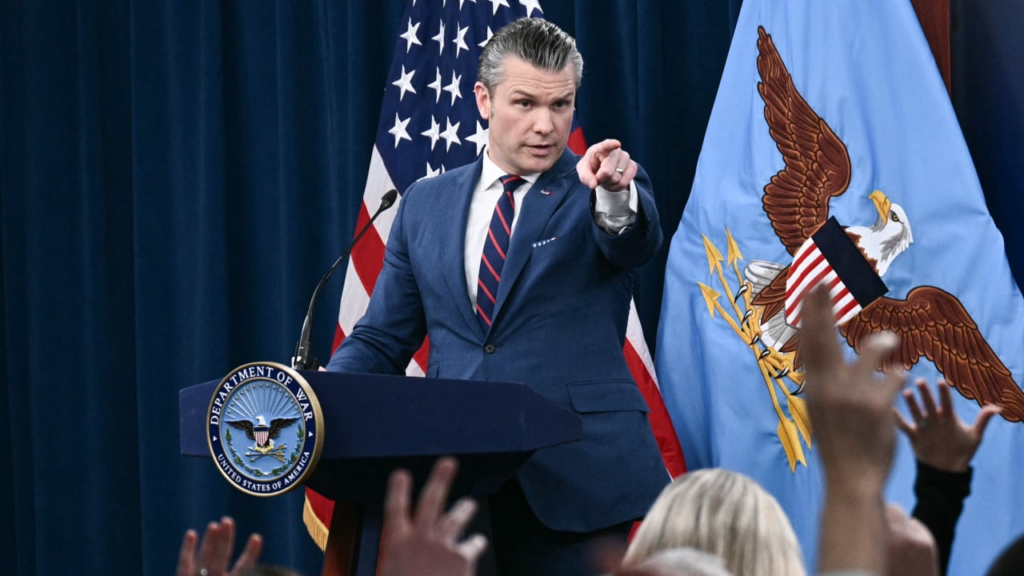
Saudi Defence Minister Prince Khalid bin Salman and U.S. defence chief Pete Hegseth reviewed bilateral defence cooperation during a telephone call and pledged to continue coordinating efforts to strengthen regional security and stability. The two officials also discussed regional and international developments, according to statements describing the conversation. Although no new military deployment, weapons agreement or defence treaty was announced, the timing gave the reaffirmation significance beyond a routine exchange between longstanding security partners.


The call took place on October 1 and was highlighted again by the U.S. Embassy in Riyadh on Sunday, drawing renewed attention as regional tensions intensified. Saudi official reporting described the conversation as covering the strategic defence partnership as well as joint efforts to promote stability. The public emphasis from both sides suggests Washington and Riyadh wanted to underline the durability of their military relationship at a moment when Saudi Arabia faces multiple overlapping security challenges.
Those pressures are increasingly connected to Yemen, where the internationally recognised government has announced a new military campaign aimed at reversing Houthi territorial gains. Fighting around Taiz and strategic areas leading towards the Red Sea has intensified, while the Houthis have renewed attacks against Saudi targets. The developments are raising the possibility that a conflict that had remained comparatively contained for several years could again directly affect Saudi territory and critical infrastructure.
For Riyadh, the security challenge extends well beyond its southern border with Yemen. Houthi ballistic missiles and drones have previously demonstrated the ability to threaten targets deep inside Saudi Arabia, including economically important infrastructure, while instability around the Red Sea and Bab al-Mandeb can affect maritime trade and energy flows. Renewed fighting therefore forces Saudi planners to consider air and missile defence, border security and protection of shipping routes as interconnected parts of the same regional threat environment.
The Saudi-US conversation also comes against the backdrop of heightened confrontation involving Iran. Tehran has warned Gulf countries that any future use of their territory or facilities to facilitate attacks against Iran could provoke a different response, placing governments that host American military assets in an increasingly difficult strategic position. Saudi Arabia and other Gulf states have sought to maintain dialogue with Tehran while insisting that their territory should not become a battlefield in conflicts involving Iran, Israel and the United States.
That creates a delicate calculation for Riyadh. Saudi Arabia has invested heavily in reducing tensions with Iran and has an economic interest in preventing another major Gulf confrontation, but renewed attacks against Saudi territory could increase domestic and strategic pressure for stronger deterrence. Maintaining close defence ties with Washington gives the kingdom access to military capabilities and coordination mechanisms while its diplomatic channels with Tehran remain open.
Prince Khalid’s recent contacts indicate that Riyadh is not relying on a single security relationship. In addition to speaking with Hegseth, the Saudi defence minister held discussions with French Armed Forces Minister Catherine Vautrin covering defence cooperation and regional security. The parallel diplomacy points to a broader Saudi strategy of expanding security partnerships while preserving the United States as a central pillar of the kingdom’s defence architecture.
The relationship with Washington remains particularly important because decades of cooperation have created extensive links involving military equipment, training, intelligence and defence planning. Prince Khalid and Hegseth had also met at the Pentagon in Washington in February 2025, where they discussed strengthening bilateral defence cooperation and developments affecting regional security. The latest call therefore represents continuity in an established partnership rather than the creation of a new military alliance.
What has changed is the strategic environment surrounding that partnership. Saudi Arabia is simultaneously watching renewed warfare in Yemen, threats from the Houthis, instability around major shipping routes and the possibility that confrontation with Iran could spill across Gulf borders. These overlapping risks make the effectiveness of regional air defence, intelligence sharing and military coordination increasingly important even when no immediate joint operation is announced.
The reaffirmation also illustrates the limits of Saudi Arabia’s effort to diversify its security relationships. Riyadh has expanded defence contacts with other international and regional partners and pursued a more independent diplomatic strategy in recent years, but those initiatives have not replaced its extensive military relationship with Washington. Instead, the kingdom appears to be building additional partnerships around an existing security structure in which the United States continues to play a major role.
For Washington, Saudi Arabia remains strategically important because of its location, military capabilities, energy infrastructure and influence across the Arab and Islamic worlds. Cooperation with Riyadh also matters for security in the Red Sea and Gulf, where instability can quickly affect international shipping and energy markets. A visible reaffirmation of defence ties therefore sends a message not only to Saudi Arabia but also to regional actors assessing Washington’s willingness to remain engaged in Gulf security.
Neither side disclosed operational details from the call, and there is no public evidence that Khalid and Hegseth agreed to a new deployment or immediate military action. The significance of the conversation lies instead in the political signal that existing defence coordination remains active while the regional security environment deteriorates. Treating the exchange as an announcement of a new military arrangement would go beyond what either government has publicly stated.
For Saudi Arabia, the larger challenge will be maintaining two policies that can increasingly pull in opposite directions: preserving enough engagement with Iran to prevent escalation while maintaining military partnerships capable of deterring or responding to attacks if diplomacy fails. The renewed emphasis on Washington suggests Riyadh does not see those approaches as mutually exclusive, but rather as complementary parts of its security strategy.
The Khalid-Hegseth call therefore matters less for what was formally announced than for when it occurred. With Yemen’s war again intensifying and Gulf governments confronting the possibility of wider regional escalation, Saudi Arabia is signaling that its efforts to diversify diplomacy and defence relationships have not displaced its longstanding strategic security partnership with the United States.