
By Hira Arshad — The Changer
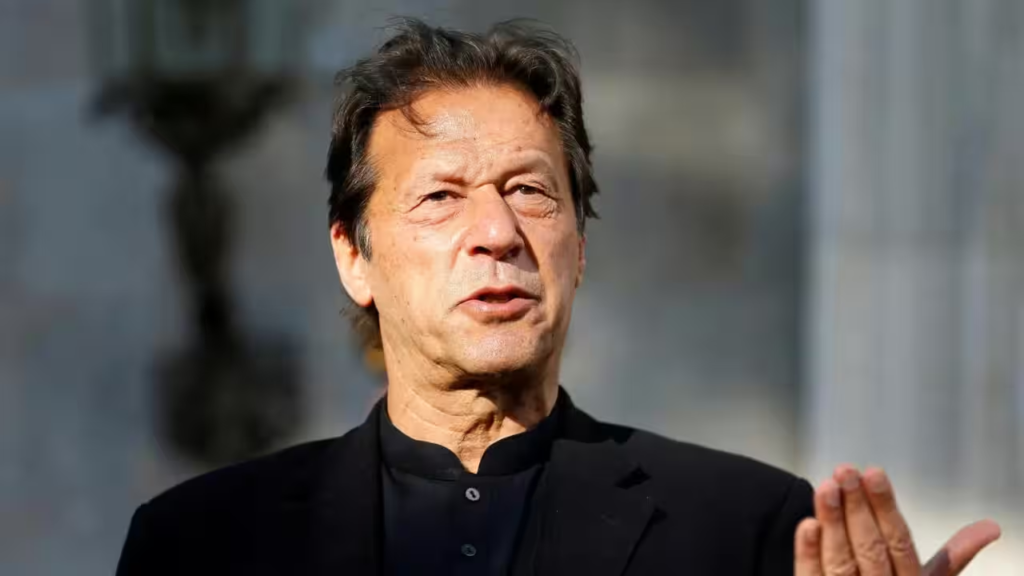
ISLAMABAD — A dispute over access to jailed former prime minister Imran Khan has exposed a deeper obstacle in negotiations between Pakistan’s government and opposition: whether PTI’s negotiating team has the authority to strike a political settlement without consulting the party founder.
Pakistan Tehreek-e-Insaf said on Sunday that immediate political access to Khan became the principal sticking point in marathon negotiations aimed at averting its march towards Islamabad. The party said government negotiators were prepared to restore meetings between Khan and his family and lawyers but would not incorporate the opposition leadership’s access to him into a proposed agreement.


That distinction proved critical because PTI says its negotiators cannot independently make some of the decisions the government wants from them. Party Chief Whip Aamir Dogar said the authority to call off the march rests with Khan, making consultation with him a prerequisite rather than a symbolic demand. PTI said it even offered to set other demands aside if political access to Khan was accepted, but no agreement emerged. Dawn
The breakdown reveals a structural problem that could complicate any renewed dialogue. The government can negotiate directly with PTI representatives sitting across the table, but the opposition continues to identify an imprisoned leader—whose access is restricted—as the ultimate authority over major political decisions.
PTI negotiators identified three areas where the sides remained apart: access to Khan, his medical treatment and the federal approach to counterterrorism in Khyber Pakhtunkhwa. Government representatives offered a different account, putting greater emphasis on what they described as inadequate assurances from the provincial government over cooperation against militancy. Dawn
Interior Minister Mohsin Naqvi accused KP Chief Minister Sohail Afridi of undermining negotiations and said the opposition’s march meant the talks had collapsed. Other government representatives argued that the core problem was the KP government’s position on counterterrorism and implementation of security measures, while PTI rejected accusations that it was unwilling to fight militancy. Dawn
The disagreement over Khan therefore became intertwined with a much larger security dispute. According to PTI’s account, the Centre sought provincial support for counterterrorism measures and emergency steps in merged districts and adjoining areas, while the opposition argued against what it described as unilateral decisions that could affect civilian communities.
PTI instead proposed consultations involving federal and provincial representatives as well as political parties, elected representatives, tribal elders and other stakeholders. The party maintains that consultation with Khan could have helped Chief Minister Afridi bridge some of the differences over security policy.
That claim cannot establish that access to Khan would have produced a compromise, but it demonstrates why PTI treated the meeting demand as more than a prison-conditions issue. For the opposition, access was the mechanism through which its negotiators hoped to obtain authority for decisions on both the protest and politically sensitive security questions.
The government, meanwhile, faced a different calculation. Accepting Khan as the indispensable decision-maker in negotiations could effectively give the imprisoned former prime minister a direct role in determining whether a major protest proceeds and how the country’s largest opposition party responds to federal security proposals.
The two sides had appeared closer to progress before the negotiations collapsed. A second round stretched for hours at Parliament House, with opposition leaders already signaling that meeting Khan was important before they could call off the march. Dawn
The failure to bridge that issue has now moved the confrontation from the negotiating table back onto the road. More than 5,000 Khan supporters began a multi-day march from Lakki Marwat towards Islamabad on Sunday under Chief Minister Afridi, according to Associated Press, as authorities maintained extensive security preparations around the capital. AP News
Those preparations are producing consequences outside the immediate political confrontation. Reuters reported that authorities’ use of shipping containers to barricade approaches to Islamabad has disrupted freight movement as far away as Karachi, with truckers reluctant to move cargo north because of fears their vehicles could be requisitioned. Reuters
The stakes therefore extend beyond whether PTI leaders are permitted another meeting at Adiala jail. If PTI continues to insist that only Khan can authorize compromises, future negotiations may repeatedly encounter the same problem unless the sides establish a mechanism allowing the opposition team to consult him.
Conversely, if the government refuses to formalize such political access, it may continue negotiating with representatives who say they lack the authority to deliver the concession Islamabad most urgently wants—the suspension of street mobilisation.
That leaves Pakistan’s latest dialogue caught in a political paradox: both sides can sit at the same table, but the person PTI says can ultimately make the deal is not in the room.