
Naeema Saleem | The Changer
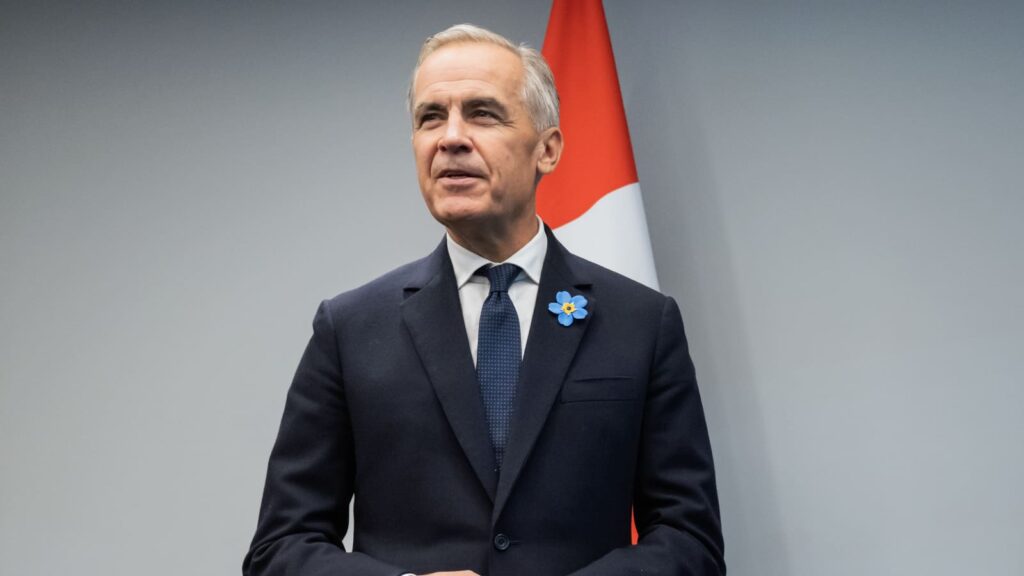
STRASBOURG, France, Sept 17 — Canadian Prime Minister Mark Carney on Thursday welcomed the European Union’s ambition to forge an unprecedented new relationship with Canada, while making clear that Ottawa would decide for itself which international partnerships it pursues after U.S. President Donald Trump threatened trade retaliation over the proposed closer alignment.
Addressing the European Parliament in Strasbourg, Carney said Canada and Europe should build a strategic alliance capable of strengthening their economic resilience and protecting their sovereignty at a time when trade, technology and supply chains are increasingly being used as instruments of geopolitical pressure. He stopped short of formally adopting the term “associate member,” proposed a day earlier by European Commission President Ursula von der Leyen, but said Canada welcomed the ambition behind the initiative.


The comments mark a significant new stage in a Canada-EU initiative that The Changer reported on earlier Thursday, when von der Leyen opened the door to Canada becoming the bloc’s first “associate member.” That proposal remains undefined and no such formal membership category currently exists, making Carney’s latest remarks important less as an acceptance of a legal status than as an indication of how far Ottawa is prepared to deepen its relationship with Europe.
Carney said the substance of any eventual arrangement was more important than its name. Speaking to reporters after his address, he said Canada would determine independently who it reaches international agreements with and argued that closer ties with Europe could also make Canada a more effective partner to the United States.
His position came after Trump warned that Washington could impose heavy tariffs or restrict trade with Europe if he concluded that the proposed Canada-EU arrangement was hostile to the United States. The European Commission rejected that interpretation, saying the initiative was intended to strengthen Canada and Europe rather than target another country.
Carney nevertheless framed the emerging partnership in broader strategic terms. He said Canada and Europe should cooperate more deeply in critical minerals, defence-industrial capacity, artificial intelligence and computing, energy security, space and payments, while moving toward more seamless digital trade in non-agricultural goods and services. His government and von der Leyen had identified essentially the same priorities during their meeting in Strasbourg on Wednesday.
The agenda shows that Ottawa and Brussels are considering something considerably broader than an expansion of their existing Comprehensive Economic and Trade Agreement, or CETA. Von der Leyen has proposed an “Alliance for the Future” that could include advanced manufacturing, technology, integrated defence industries, Arctic cooperation, energy, critical minerals, batteries, artificial intelligence, quantum technology, cybersecurity and economic security.
Carney’s government has already been moving toward Europe as part of a strategy to diversify Canada’s international economic and security relationships. Canada became the first non-European country to join the EU’s Security Action for Europe initiative earlier this year, giving Canadian defence businesses access to opportunities linked to Europe’s expanding defence-industrial programme. Ottawa has described its wider European strategy as an effort to create greater economic and strategic resilience.
However, major questions remain before the political proposal can become a defined institutional relationship. Von der Leyen’s concept has yet to be fleshed out and would require support from EU member states. Reuters reported that some European diplomats were surprised by the proposal and questioned what an associate-member category would actually mean, illustrating that the initiative remains at an early political stage rather than representing an agreed accession framework.
Carney’s remarks therefore move the story beyond Wednesday’s initial proposal. Canada has not agreed to join the EU, nor has Brussels created a formal Canadian membership category. What Ottawa has now publicly endorsed is the ambition behind a much deeper alliance, while identifying concrete areas — defence, critical minerals, energy, technology, digital trade and financial infrastructure — where that relationship could take shape.
The next question is whether Canada and the EU can translate that political ambition into an agreement acceptable to the bloc’s 27 member states. For Carney, the strategic argument is already clear: Canada wants greater freedom to diversify its partnerships while retaining its relationship with the United States, rather than allowing tensions with Washington to determine the limits of its engagement with Europe.