
The Changer News Desk
ISLAMABAD, Sept 17 — Pakistan has placed an initial order with US defence technology company Powerus for unmanned aerial systems and associated support, while a separate memorandum establishes a framework for potentially broader cooperation in autonomous defence technology, according to company disclosures and reporting reviewed by The Changer.
The distinction between the procurement order and the memorandum of understanding adds an important detail to initial reports of the agreement. Powerus said on Thursday that it had received a “limited procurement order” from Pakistan’s Ministry of Defence covering unmanned aerial systems and associated support. It said no other commercial terms had been disclosed.


The company separately described its memorandum with senior Pakistani defence officials as a framework for exploring expanded cooperation in unmanned and autonomous systems. Crucially, Powerus said the MoU itself was not a definitive procurement agreement and created no purchase obligation, with any future programmes requiring separate agreements as well as applicable US regulatory and government approvals.
That clarification provides The Changer’s distinctive angle: Pakistan’s first Powerus purchase is limited, but the potentially more consequential part of the relationship is the framework being created for future technology, production and autonomous-systems cooperation.
Munir meeting focused on procurement and production
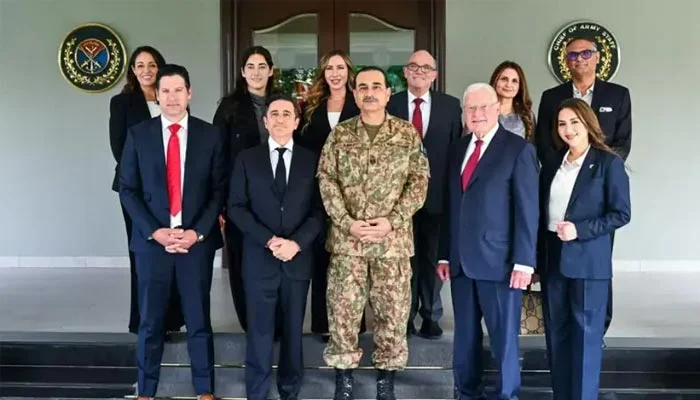
The development followed a meeting at General Headquarters in Rawalpindi between Chief of Army Staff and Chief of Defence Forces Field Marshal Syed Asim Munir and a Powerus delegation.
Pakistan’s military said discussions covered defence procurement, production and long-term capacity building. Its initial public statement, however, did not disclose the MoU or the procurement order, Reuters reported.
Powerus co-founder Brett Velicovich subsequently told Reuters that the company had signed an MoU and received an initial order. He declined to disclose its value or technical specifications because of confidentiality and security considerations, saying only that the agreement concerned unmanned aerial systems.
Powerus’ later corporate announcement narrowed that description further by identifying Pakistan’s Ministry of Defence as the customer for the limited procurement order and saying the package included associated support.
Local production could become the bigger story
Powerus produces technology for autonomous and unmanned applications, including aerial and maritime systems for defence and industrial customers.
The company is examining a deeper technological relationship with Pakistan that could eventually go beyond importing finished equipment.
Velicovich told Reuters that Powerus was exploring possibilities for building technology in Pakistan, describing the objective as combining US and Pakistani technological capabilities. Chief Executive Andrew Fox separately said Pakistan’s private defence sector remained at an emerging stage, which he argued created opportunities for US companies.
No local manufacturing agreement has yet been announced, however. Powerus’ own statement describes expanded cooperation as potential, making any suggestion that Pakistan has already secured domestic production or technology transfer premature.
That distinction matters because local production would represent a substantially deeper defence-industrial relationship than the initial procurement disclosed this week.
A new dimension in US-Pakistan defence ties
The agreement arrives during a broader improvement in relations between Islamabad and Washington following years of uneven ties.
Reuters reported that Pakistan has recently pursued economic, financial and defence initiatives intended to strengthen relations with the United States, while President Donald Trump has publicly praised Field Marshal Munir.
The Powerus arrangement therefore carries significance beyond the size of the initial order, which remains undisclosed. If subsequent agreements move into production, technology collaboration or larger procurement programmes, the relationship could provide another channel for Pakistan to obtain US-origin unmanned and autonomous defence technology.
For now, the verified commitments are narrower: a limited Ministry of Defence procurement order for unmanned aerial systems and associated support, plus a separate framework for exploring future cooperation.
Powerus’ Trump-family investment connection
Powerus is also preparing for a corporate transaction that has brought additional attention to the Pakistan agreement.
The company has entered into a merger agreement with publicly traded Aureus Greenway Holdings. Reuters reported that Donald Trump Jr. and Eric Trump have an interest in Aureus through investment fund American Ventures, which regulatory filings indicate is expected to hold a 9.9% beneficial ownership stake in the combined company after the transaction.
Powerus executives rejected suggestions that those connections were responsible for the company’s business growth. Fox told Reuters that contracts were obtained on merit and said Trump’s sons had no role on the business side of Powerus. A spokesperson for Donald Trump Jr. similarly told Reuters that he was a passive investor and had no involvement in negotiating or securing the Pakistan agreement.
The proposed Powerus-Aureus transaction remains subject to closing conditions.