
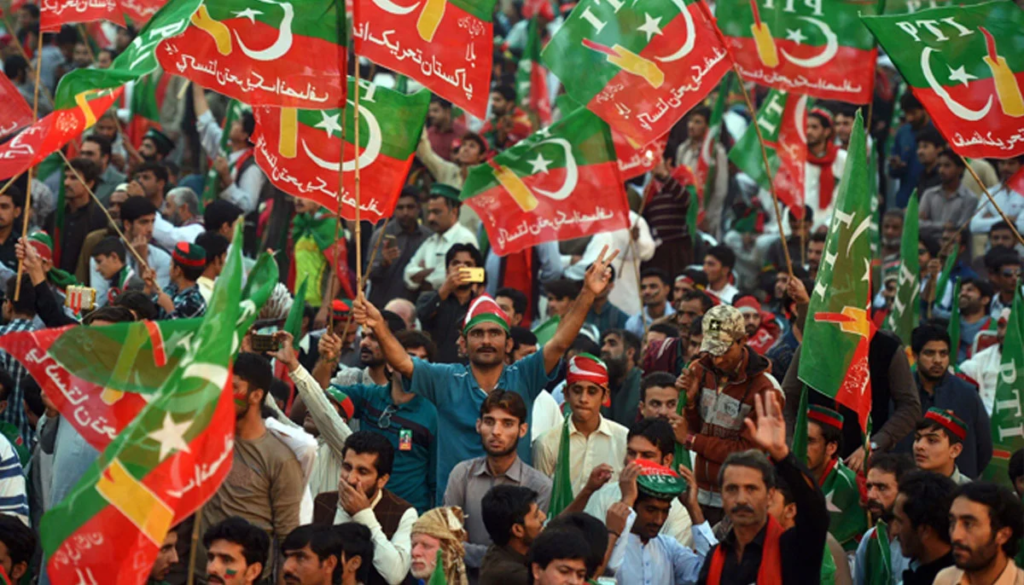
ISLAMABAD, Sept 8 — Pakistan Tehreek-e-Insaf’s planned September 27 nationwide protest has entered the courts nearly three weeks before demonstrators are due to reach Islamabad, but the Islamabad High Court proceedings have opened a question potentially larger than whether another political march can enter the capital: how far can an elected provincial government use its authority, personnel or resources to support a political mobilisation against the federal government?
IHC Chief Justice Sardar Muhammad Sarfraz Dogar on Tuesday constituted a three-member larger bench to hear a petition challenging PTI’s planned protest and Islamabad march. The bench comprises Chief Justice Dogar, Justice Azam Khan and Justice Muhammad Asif and will take up the matter on September 10. The court summoned the attorney general, chief secretaries, police chiefs and advocate generals of all four provinces, alongside senior Islamabad officials.
The breadth of those summonses is significant. This is no longer being treated merely as a dispute between Islamabad authorities and demonstrators seeking entry to the capital. By calling senior administrative and police officials from Punjab, Sindh, Khyber Pakhtunkhwa and Balochistan, the court has effectively placed the planned nationwide mobilisation inside a federal-provincial governance framework before it has even begun.


The petition was filed by Islamabad citizen and trader Waqas Ahmed, who argues that the September 27 mobilisation could disrupt normal life, traffic and commercial activity in the federal capital. His counsel described the proposed protest as illegal and argued that pending legal cases should be resolved through courts rather than political pressure on the streets. These remain the petitioner’s claims; the court has not ruled that PTI’s planned protest is unlawful.
That distinction is important. Pakistan’s Constitution protects peaceful assembly subject to lawful restrictions, and Tuesday’s proceedings were preliminary. The larger bench will now examine the challenge after hearing government officials and other respondents rather than deciding the legality of the September 27 protest in advance.
But one exchange during the hearing revealed where the constitutional dispute could be heading.
Chief Justice Dogar asked whether protesters would arrive with Khyber Pakhtunkhwa Chief Minister Sohail Afridi and government machinery. The petitioner’s counsel said they would and relied on a November 2024 Interior Ministry communication while alleging that provincial government resources had been used during an earlier PTI mobilisation. Again, that was an allegation advanced by counsel rather than a judicial finding.
The chief justice described the matter as sensitive and referred to its potential constitutional implications, prompting the decision to move it before a larger bench.
That creates a fundamentally different legal question from the familiar debate over containers, protest routes and public inconvenience.
Sohail Afridi is not simply a PTI organiser. As chief minister, he heads an elected provincial government. PTI’s preliminary mobilisation strategy has envisaged a major convoy from Khyber Pakhtunkhwa, while supporters elsewhere in Pakistan are expected to hold demonstrations or join the broader campaign demanding the release of jailed PTI founder Imran Khan. Afridi has recently been campaigning outside KP, including in Sindh, to build support for September 27.
That means September 27 could produce two overlapping roles: a political party exercising its claimed right to protest and a provincial administration whose chief executive is participating in that political campaign.
The distinction matters because state authority follows a chief minister wherever political activity takes him. Police protection, official vehicles, administrative personnel and other public resources can quickly blur the line between safeguarding an elected office-holder and deploying provincial machinery for partisan mobilisation.
The petition has put precisely that boundary before the IHC.
The court’s decision to summon the chief secretaries and IGPs of all four provinces also broadens the potential significance of whatever directions eventually emerge. Instead of waiting until protesters approach Islamabad and then adjudicating arrests, road closures or restrictions retrospectively, the court could be asked to define aspects of the state’s responsibilities before mobilisation occurs.
No such rules have yet been issued, and it would be premature to predict what the larger bench will decide.
The political stakes are nevertheless growing. PTI says the September 27 mobilisation is intended to press for Imran Khan’s release and what the party describes as constitutional supremacy. The petitioner’s lawyer, by contrast, alleged that street mobilisation was being used to seek relief in cases already before courts.
Those competing narratives will now intersect with questions of public order, judicial independence and provincial authority.
There is also a recent history behind the court’s concern. The petitioner’s counsel invoked PTI’s November 2024 Islamabad protest, including allegations surrounding casualties, economic losses and use of government machinery. Those claims formed part of his argument for preventive judicial intervention; they should not be treated as findings made by the IHC in Tuesday’s hearing.
This makes the September 10 hearing potentially more consequential than the initial petition suggests.