
By Uzair Saleem — The Changer
ISLAMABAD, Sept 8 — Prime Minister Shehbaz Sharif strongly condemned Houthi attacks on civilian and energy facilities in Saudi Arabia on Tuesday, but the significance for Pakistan extends beyond another statement of solidarity with a longstanding Gulf partner. The coordinated strikes, which Saudi authorities said wounded 73 civilians including women and children and disrupted operations at some energy installations, have brought instability directly onto Saudi territory at a moment when Pakistan has repeatedly tied its diplomatic position to the kingdom’s sovereignty, security and territorial integrity.
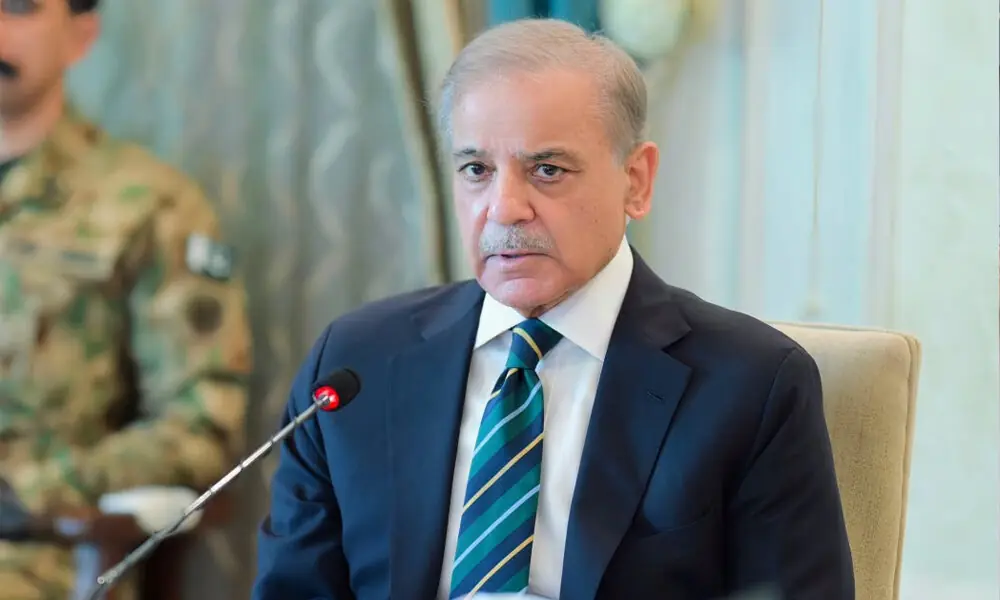
Shehbaz described the attacks as cowardly and said they threatened innocent lives as well as regional peace and security. He reaffirmed Pakistan’s support for Saudi Arabia’s sovereignty and security and expressed solidarity with King Salman, Crown Prince Mohammed bin Salman and the Saudi people.


The statement followed one of the most consequential Houthi attacks on the kingdom in years. Saudi officials said strikes hit civilian and economic facilities across Abha, Khamis Mushait, Jazan and Najran, while the Energy Ministry confirmed that several installations in the south had been attacked. Fires broke out and operations at some facilities were temporarily halted as emergency teams moved to secure the sites.
The Houthis said their operation targeted Saudi Aramco facilities and other strategic sites. Saudi authorities called the assault a dangerous escalation and said the coalition would take operational measures against the sources of the threat. The competing claims come amid renewed fighting inside Yemen between the Iran-aligned Houthis and forces aligned with Yemen’s internationally recognised government and backed by Riyadh.
For Pakistan, however, the strategic consequence begins where the prime minister’s condemnation ends.
Islamabad’s relationship with Riyadh is unusually broad, spanning political ties, investment, energy, defence cooperation and millions of Pakistanis living and working in Saudi Arabia. That means an attack capable of simultaneously threatening Saudi civilians and energy infrastructure is not simply another episode in Yemen’s conflict from Pakistan’s perspective. It touches two interests Islamabad has consistently treated as important: Saudi territorial security and stability of Gulf energy supplies.
Tuesday’s strikes demonstrated how closely those two issues are now connected. Saudi Arabia is one of the world’s largest oil exporters, and the attacks came as energy markets were already absorbing severe geopolitical risk. Brent crude climbed to around $98 a barrel following the strikes and wider regional tensions, showing how quickly a localised military event can acquire global economic consequences.
That matters particularly for an energy-importing economy such as Pakistan. A prolonged confrontation threatening Saudi production or regional shipping would potentially transmit Middle Eastern insecurity through oil prices, import costs and external financing pressures long before Pakistan became involved in any security dimension of the crisis.
The geographic expansion is equally significant. The attacks affected four southern Saudi cities, including Jazan, where a major refinery is located, while the Houthis have also intensified pressure around Red Sea shipping. Meanwhile, Yemen’s renewed conflict is unfolding alongside wider tensions affecting the Strait of Hormuz and the Bab al-Mandeb — two maritime passages central to international energy and commercial flows.
Saudi Arabia now faces a difficult strategic calculation. Riyadh had spent years attempting to reduce its direct exposure to the Yemen war following the UN-mediated truce that began in 2022. The latest fighting represents the most serious deterioration since that period of relative calm, while attacks deep enough to disrupt Saudi energy installations increase domestic pressure for a response.
Pakistan faces a different calculation. Its immediate response has been unequivocal diplomatic support for Saudi Arabia, but Islamabad has historically also had strong reasons to avoid being pulled directly into regional conflicts involving competing Middle Eastern powers.
That distinction becomes increasingly important if the Saudi-Houthi confrontation escalates.
Pakistan can condemn attacks on civilians, support Saudi sovereignty and maintain close defence relations with Riyadh while continuing to favour regional de-escalation. But the more Saudi territory and strategic infrastructure come under sustained attack, the more difficult it may become to keep those policy tracks entirely separate.