
By Shahzaib Saqib — The Changer
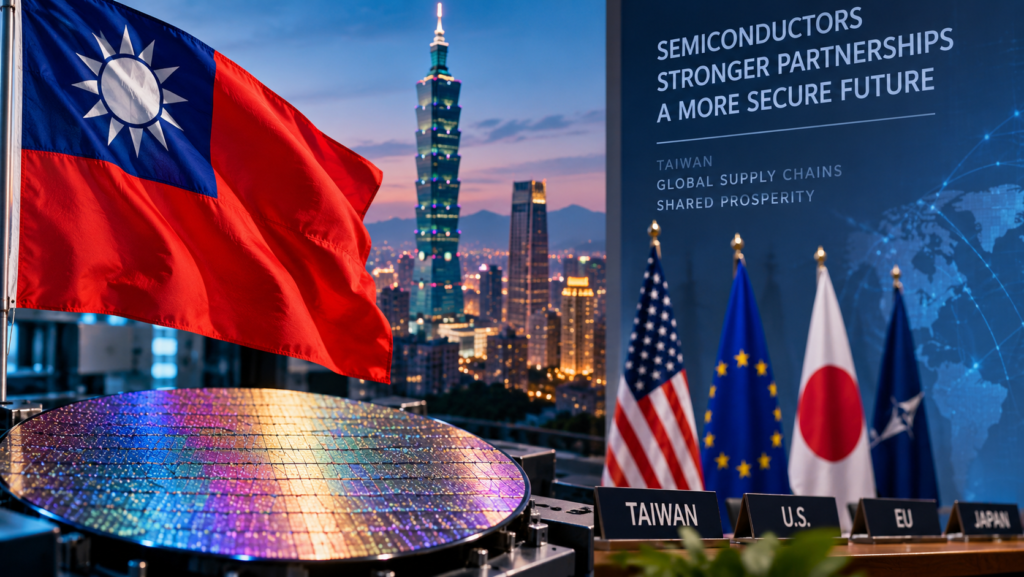
TAIPEI, Sept 7 — Taiwan is increasingly converting its extraordinary position at the centre of the global semiconductor industry into diplomatic leverage, as the artificial-intelligence boom pushes the island’s technology relationships with the United States, Europe and other partners far beyond conventional trade. The shift was on display around SEMICON Taiwan 2026, where government officials and industry leaders framed semiconductor cooperation not simply around factories and investment, but around trusted partnerships, democratic values, supply-chain resilience and strategic relationships. Reuters reported on Monday that Taiwan is increasingly flexing what amounts to “chip diplomacy” as allies seek a larger share of the investment generated by the AI boom.
The transformation matters because Taiwan occupies an unusual position in the international system. It faces persistent pressure from Beijing while simultaneously hosting an ecosystem indispensable to advanced computing, artificial intelligence and electronics manufacturing. Instead of treating that industrial strength solely as an economic asset, Taipei is increasingly presenting technological trust and semiconductor cooperation as foundations for deeper international relationships. President Lai Ching-te told a semiconductor summit this month that Taiwan’s manufacturing ecosystem, democratic system and rule of law had helped it earn international partners’ trust, describing technology cooperation as a potential force for peace and prosperity.


The United States provides the clearest example of how that relationship is changing. Taiwan’s economy ministry said Taiwanese companies had identified another $20 billion in U.S. investment, on top of massive semiconductor commitments already under way. Reuters reported that the additional investment is being driven by demand for AI applications, while Taiwan’s government said overseas expansion had become an important strategic component of the industry’s development.
That overseas expansion creates a delicate balancing act for Taipei. Moving more semiconductor production abroad can strengthen political relationships and make global supply chains more resilient, but Taiwan must also avoid hollowing out the industrial concentration that gives the island its strategic importance. Taiwanese companies including Foxconn and ASE have acknowledged the increasing need to globalise operations, while the island continues investing in the domestic land, energy, financing and talent needed to retain advanced manufacturing.
Europe is emerging as the second major arena. Lai told the 2026 EU Investment Forum that Taiwan and Europe should combine their semiconductor advantages, deepen their strategic partnership and pursue agreements on investment protection and double taxation. The objective, according to Taiwan’s presidency, is a more secure, diversified and resilient global supply chain. That language illustrates how semiconductor policy is migrating from industry ministries into the vocabulary of foreign policy.
The trend extends beyond Europe’s largest economies. Taiwan and Lithuania this week expanded cooperation in laser technologies used for heterogeneous integration in advanced semiconductor packaging, with Taiwan’s foreign minister witnessing the agreement. Separately, Taiwan’s foreign ministry convened U.S., Japanese, European and Taiwanese specialists at a forum specifically focused on trusted semiconductor supply chains, economic security and geopolitical risk. These arrangements are individually technical, but collectively they reveal a diplomatic network increasingly built around technology.
Taiwan is therefore confronting a paradox created by its own success. Allies want more Taiwanese investment precisely because Taiwan’s semiconductor industry is so valuable, yet distributing more of that production overseas could gradually reduce the geographic concentration that has made the island indispensable. The challenge for Taipei is to internationalise enough manufacturing to strengthen alliances without surrendering the technological ecosystem, expertise and advanced capabilities that underpin its strategic importance.
The AI boom makes that calculation more consequential. Semiconductors are no longer merely components buried inside consumer electronics; advanced chips have become essential infrastructure for AI systems, data centres, defence technologies and increasingly automated economies. Governments seeking secure access to that infrastructure consequently have reasons to cultivate relationships with Taiwan that extend well beyond ordinary commercial considerations.