
Pakistan | By Web Desk
ISLAMABAD — The federal government on Thursday announced Rs5 million in compensation for the family of each of the 14 newborn babies killed in the devastating fire at the Pakistan Institute of Medical Sciences (PIMS), as investigators began examining whether delays, safety failures or shortcomings in the emergency response cost children who might otherwise have been rescued. The government acknowledged that financial assistance could never compensate for the loss of a child, saying the payment was intended to provide immediate support to grieving families.
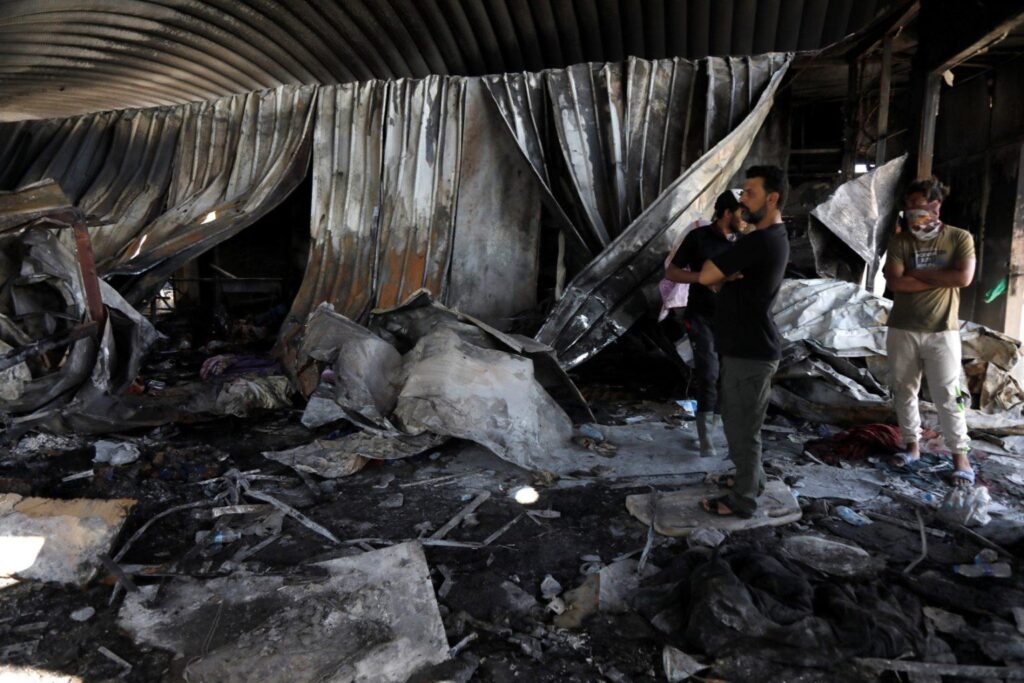
The tragedy unfolded at around 6:45 a.m. on August 26 when a fire erupted inside the neonatal intensive care unit on the third floor of PIMS’ Mother and Child Health Centre. Fifteen newborns were inside the nursery at the time and only one survived, leaving 14 infants dead in one of the gravest hospital disasters in the federal capital. Prime Minister Shehbaz Sharif subsequently constituted a four-member high-level inquiry committee and ordered an interim report within 48 hours.


What caused the fire remains under investigation, with early accounts producing potentially important inconsistencies. Rescue officials initially pointed to an air-conditioner compressor explosion, while PIMS’ preliminary account referred to a nebuliser near an incubator. Footage reviewed after the incident reportedly showed flames emerging from an air-conditioning unit. The hospital’s initial report said oxygen subsequently caught fire and smoke travelled through pipes connected to the infants’ breathing systems, while disruption of oxygen supplies and burns contributed to the deaths.
The inquiry is now moving beyond the question of where the first flame originated. Law Minister Azam Nazeer Tarar said investigators were examining footage to establish whether there had been enough time after the fire began to remove the oxygen-dependent children and save lives. He cautioned against reaching conclusions before technical evidence was examined, saying the independent committee would determine both the facts and responsibility.
Investigators have obtained CCTV footage, nursery staff statements, the August 26 duty roster, fire brigade records and emergency-department reports. Members of the prime minister’s inquiry committee also visited the Fire Brigade Headquarters, questioned emergency personnel and began reconstructing the timeline between the outbreak of the fire and the arrival and actions of rescue teams. The committee is specifically examining fire-safety arrangements, emergency response time and obstacles encountered during the rescue operation.
That timeline could become the most consequential evidence in the investigation. Determining whether an electrical or medical device triggered the fire will establish its physical cause, but investigators must separately establish whether functioning alarms, fire suppression systems, trained staff, accessible exits and a faster emergency response could have prevented the deaths. A hospital fire can begin accidentally; whether it becomes a mass-casualty event can depend on what happens in the minutes immediately afterwards.
Federal Health Minister Mustafa Kamal has offered himself for accountability and pledged that the inquiry’s findings will be implemented. He has argued that responsibility should extend beyond symbolic action against individual officials if investigators identify deeper institutional failures. The government says the independent investigation will determine responsibility rather than relying on preliminary accusations.
The Rs70 million total compensation package — Rs5 million for each of the 14 families — may provide financial assistance, but it cannot resolve the questions now confronting Pakistan’s largest federal public hospital. Those questions are increasingly focused on whether adequate fire-prevention systems existed inside an intensive-care environment where newborn babies could not be evacuated without specialised assistance.
The investigation therefore has two different causes to establish: what started the fire, and what allowed it to kill 14 newborns. If CCTV footage and emergency records show there was a window in which children could have been evacuated but were not, the PIMS tragedy could move from being treated primarily as an accidental fire to a much broader examination of hospital safety, emergency preparedness and institutional accountability.
The interim inquiry findings are expected shortly. For the families, however, the government’s compensation announcement cannot be the final response. The decisive question is whether investigators can identify exactly what failed inside PIMS — and whether those findings produce reforms capable of ensuring that another hospital fire does not become another preventable loss of life.