
World / Middle East | By News Desk
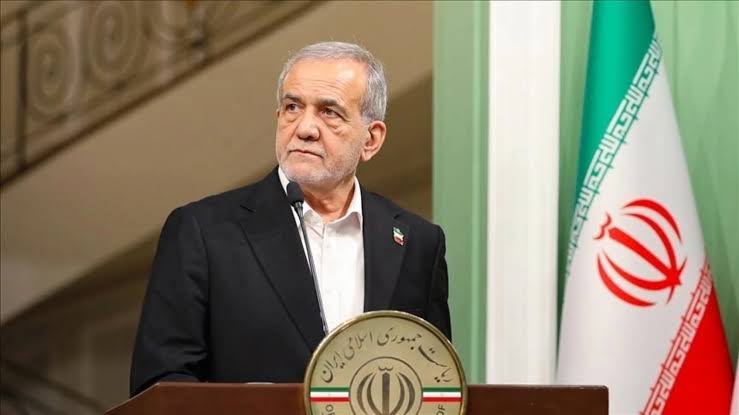
TEHRAN — Iranian President Masoud Pezeshkian said Friday that Iran should seek to end its months-long war with the United States while Tehran remains, in his assessment, in a position of “power and dignity,” declaring that the world now recognises Iran’s victory even as Washington prepares to intensify economic pressure. The remarks represent one of Pezeshkian’s clearest public arguments yet for converting what Tehran portrays as battlefield resilience into a negotiated political outcome.
Speaking at a gathering of Iran’s medical community in Tehran on August 21, Pezeshkian argued that war eventually has to end and that the present moment offered Iran an opportunity to pursue peace without presenting negotiations as capitulation. He said ending the conflict did not mean Iran would surrender if attacked again, warning that the country would continue defending itself and respond forcefully to renewed aggression. Pezeshkian also accused the United States of violating international norms through attacks on Iranian schools, hospitals and infrastructure. His assertion that the “whole world” acknowledges an Iranian victory is Tehran’s political characterization of the conflict, not an independently established international consensus.


The language fits an increasingly visible diplomatic message from the Iranian president. Two days earlier, Pezeshkian said “negotiation is not surrender”, arguing that Tehran wanted to end the war, lift restrictions on the country and recover blocked resources before moving toward nuclear negotiations. Earlier this month, he similarly described the current period as the best time to seek an agreement because Iran, in his view, was negotiating with greater internal cohesion and strength.
Yet Pezeshkian’s appeal comes as pressure on Iran is moving sharply in the opposite direction. The Trump administration has threatened what it describes as its toughest sanctions campaign against Tehran, while restrictions on Iranian oil and financial networks are increasing economic pressure inside the country. AP reported Friday that Iranian households are struggling with severe inflation, job losses and currency depreciation as the conflict and sanctions squeeze the economy.
Diplomacy has also suffered a major setback. The US-Iran memorandum negotiated earlier in the summer failed to produce a durable settlement after Washington and Tehran accused each other of violations, while disagreements over the Strait of Hormuz remained unresolved. Iran subsequently threatened to move toward a more offensive military posture if diplomacy failed, underscoring how quickly Pezeshkian’s preferred negotiating path could collide with harder-line security calculations inside Tehran.
The Changer Angle: Pezeshkian Is Trying to Redefine When a War Can End
The most important part of Pezeshkian’s statement is not his claim of victory. It is the argument behind it: Iran should negotiate before its leverage deteriorates, rather than waiting until economic or military pressure forces it to negotiate. That is a significant distinction. Pezeshkian is effectively presenting diplomacy to an Iranian domestic audience not as a retreat from resistance but as the mechanism through which military endurance can be converted into political gains.
That framing may also expose an important debate inside Iran. Pezeshkian’s government has repeatedly promoted negotiations, while elements of Iran’s security establishment have signalled willingness to escalate if Washington does not meet Tehran’s conditions. At the same time, the economic cost of prolonging the confrontation is becoming increasingly difficult to separate from the strategic calculation.
The next question is therefore not whether Pezeshkian can declare Iran victorious. It is whether Tehran and Washington can translate their competing claims of strength into concessions that both governments can sell domestically. Pezeshkian appears to be preparing Iran’s political ground for exactly that possibility: peace not because Iran says it has been defeated, but because its president argues this is the moment to negotiate before the balance changes.