
World | By Muhammad Irfan
DUBAI/TEHRAN — The United Arab Emirates has suspended all trade, commercial exchanges and financial transactions with Iran until further notice, dramatically escalating pressure on Tehran after Abu Dhabi accused Iran of launching two ballistic missiles toward the Gulf state. Iran denied responsibility and accused the UAE of making “baseless” allegations.
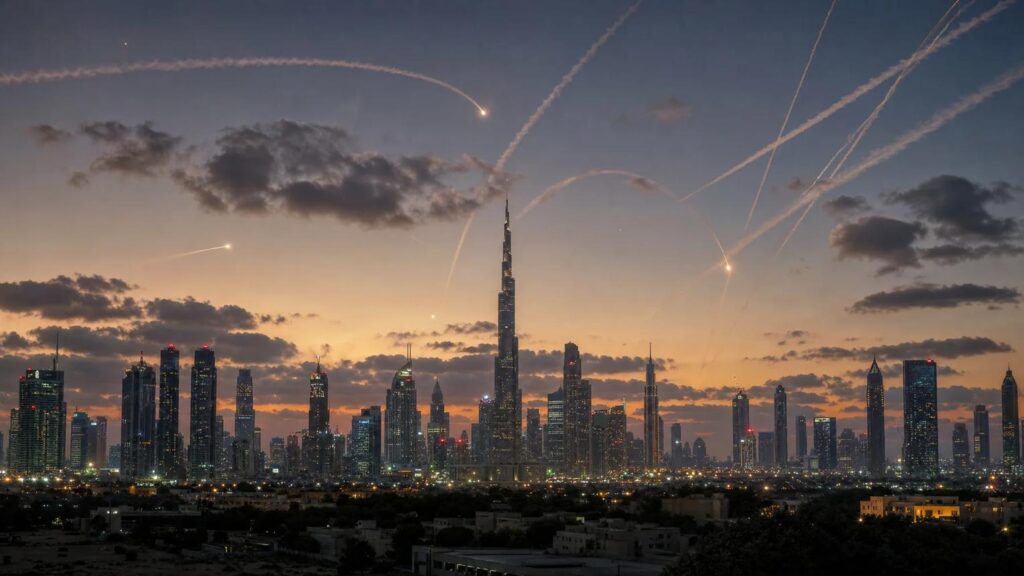
The UAE said its air defences detected two ballistic missiles coming from Iran on Tuesday. Emirati authorities said the missiles were apparently aimed at maritime traffic and fell into the sea, while emergency alerts were issued to residents. Tehran rejected the account.


The economic response is potentially more consequential than another diplomatic protest. The UAE has historically been one of Iran’s most important trading partners and commercial gateways, making the suspension capable of squeezing Tehran at precisely the moment it is already facing US sanctions and pressure on maritime trade.
Abu Dhabi Moves From Security Response to Economic Pressure
The UAE said the suspension covers commercial activity, trade exchanges and financial transactions and will remain in place “until further notice.”
Despite imposing the restrictions, Abu Dhabi said it remained committed to dialogue, cooperation and regional integration as mechanisms for restoring peace and stability.
The decision follows a deterioration in UAE-Iran relations during the wider conflict. UAE-owned vessels have also been targeted in the Strait of Hormuz, adding maritime security to Abu Dhabi’s concerns.
Iran Rejects Missile Allegation
Iran denied launching the missiles.
Foreign Ministry spokesman Esmaeil Baghaei described the UAE accusation as baseless and criticised Abu Dhabi’s approach as inconsistent with good-neighbourly relations.
Tehran has also argued that assessments of the deteriorating regional security environment cannot ignore what it describes as the “malicious” actions of the United States and Israel against regional peace.
That reflects Iran’s broader argument throughout the confrontation: Tehran says its actions cannot be separated from the military and economic pressure being applied against it.
The UAE, however, is treating the latest incident as a direct national-security issue rather than simply another episode in the US-Iran conflict.
Why Dubai Matters to Iran
This is where the story becomes economically significant.
For years, the UAE — and particularly Dubai — has functioned as an important commercial hub connecting Iranian businesses with international markets.
That relationship encompasses legitimate bilateral commerce, but US officials have also repeatedly focused on Iranian-linked companies and financial networks operating through the Emirates as part of efforts to enforce sanctions.
The latest UAE decision could therefore reinforce Washington’s economic pressure on Tehran even without a new American sanctions package.
The impact was immediately visible in Gulf markets. Abu Dhabi’s stock index fell 0.9% on Wednesday and Dubai declined 0.3%, with major banking shares among those losing ground as investors reacted to renewed regional risk.
Hormuz Crisis Adds Another Layer
The confrontation is unfolding alongside continued uncertainty over the Strait of Hormuz.
Only six commodity vessels crossed the strait on Tuesday, according to Kpler data cited in reporting Wednesday, down from nine the previous day and below the recent daily average.
That creates a dangerous combination.
The Gulf is simultaneously dealing with disrupted shipping, missile threats, restrictions on Iranian commerce and stalled US-Iran diplomacy.
Instead of the conflict being contained to military exchanges, its consequences are increasingly spreading through trade routes, banking systems, oil markets and Gulf financial centres.
The Changer Angle: Iran May Be Losing Its Economic Back Door
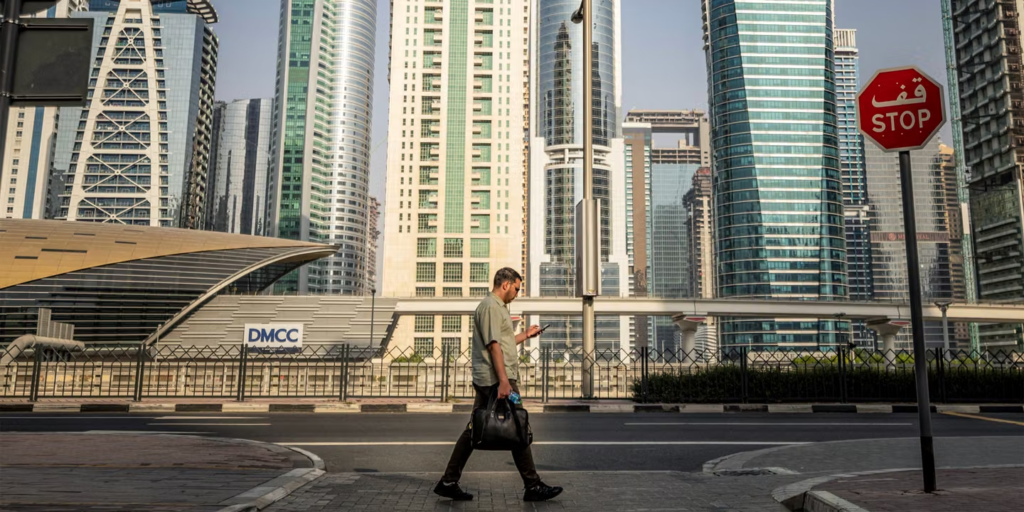
The missile dispute is the immediate trigger, but the potentially bigger story is Dubai.
US sanctions have constrained Iran’s access to the international financial system for years. Yet the UAE’s proximity, enormous re-export economy and established Iranian business community made it an exceptionally important commercial connection.
If Abu Dhabi genuinely enforces a comprehensive and prolonged suspension of trade and financial transactions, Iran could lose one of its most valuable remaining economic gateways. AP described the UAE as a critical re-export hub for Iranian commerce, while reporting on Washington’s pressure strategy has highlighted Dubai’s importance to Iranian financial networks.
That could make the UAE decision more damaging to Tehran than its headline suggests.
It also carries risk for Abu Dhabi. Cutting commercial connections with a major neighbouring economy can impose costs on Emirati businesses and reinforces perceptions of geopolitical risk around Dubai’s role as a global trading and financial centre.
The confrontation has therefore crossed another threshold: the Gulf’s economic networks are becoming instruments of the war itself.