
Pakistan / Middle East | By Shahnoor Saqib
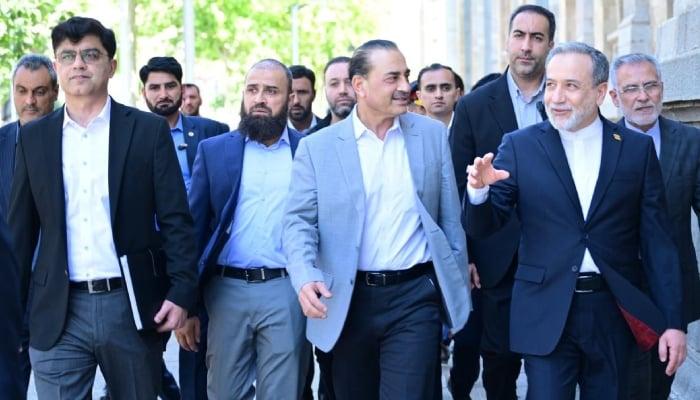
ISLAMABAD/TEHRAN — Pakistan’s Chief of Defence Forces and Army Chief Field Marshal Syed Asim Munir and Iranian Foreign Minister Abbas Araghchi held fresh consultations on Wednesday over the rapidly changing Middle East security environment, with both sides emphasizing political and diplomatic solutions as direct US-Iran negotiations remain frozen.
During a telephone conversation, Munir and Araghchi exchanged views on the latest regional developments, recent diplomatic initiatives and efforts aimed at advancing political solutions, according to an account of the discussion carried by Iranian media. The two also stressed strengthening consultations and cooperation between Pakistan and Iran.


The contact comes at a particularly sensitive moment. US President Donald Trump has said no talks or conversations with Iran are currently taking place, while the temporary ceasefire has expired and Tehran has warned that the diplomatic stalemate could force it toward a more offensive posture.
Pakistan’s Iran Channel Remains Active Even as US-Iran Talks Stop
The significance of the Munir-Araghchi conversation lies partly in what is happening elsewhere: formal Washington-Tehran diplomacy has effectively stalled, but Islamabad’s direct channel with Tehran remains open.
Pakistan has been involved in the diplomatic process for months. It hosted earlier US-Iran engagements and helped facilitate the Islamabad Memorandum of Understanding signed on June 17, followed by high-level implementation talks in Switzerland involving Pakistan, Iran, Qatar and the United States. Pakistan’s Foreign Office has described its approach as balanced and focused on keeping dialogue alive.
Munir himself has become a recurring participant in that diplomacy.
During an earlier visit to Tehran, he held discussions with Iranian President Masoud Pezeshkian, Parliament Speaker Mohammad Bagher Ghalibaf and other senior Iranian officials as Pakistan attempted to mediate an end to the conflict.
Araghchi and Munir have also remained in contact during subsequent disputes over implementation of the Islamabad framework.
Military Leadership Is Now Part of Pakistan’s Diplomatic Architecture
Pakistan’s engagement with Iran is notable because it is not being conducted solely through the Foreign Office.
Prime Minister Shehbaz Sharif, Deputy Prime Minister and Foreign Minister Ishaq Dar, and Munir have all participated in regional diplomacy. Earlier official Pakistani statements specifically highlighted Iranian leaders’ discussions with Munir as part of the wider peace effort.
That gives Islamabad multiple channels through which it can communicate with Tehran.
It also reflects the security dimension of the crisis. Pakistan shares a long border with Iran, while instability in the Gulf directly affects Pakistani energy supplies, trade and regional security.
Islamabad Has More at Stake After New Defence Pact
Pakistan’s diplomatic position has also become more complicated following this month’s Makkah Joint Defence Agreement with Saudi Arabia and Türkiye.
Pakistan’s Foreign Office says the agreement is purely defensive and intended to strengthen collective security and regional stability.
At the same time, Islamabad continues intensive engagement with Tehran.
That places Pakistan in an unusual position: it is strengthening formal security cooperation with major regional powers while simultaneously preserving a working political channel with Iran.
The balancing act could become increasingly important if the Iran conflict escalates again.
The Changer Angle: Pakistan May Be Becoming the Channel That Survives When Formal Talks Collapse
The immediate story is another Munir-Araghchi conversation. The larger development is the continuity of the channel itself.
Trump says Washington is not negotiating with Tehran.
Yet Pakistan remains in communication with Iran’s senior political leadership, while its previous mediation framework already connects Islamabad with Washington, Tehran, Qatar and other regional actors.
That does not mean Pakistan can independently produce a settlement. Washington and Tehran ultimately have to make the political concessions required for one.
But mediation becomes most valuable precisely when the principal parties stop talking directly.
This is where Pakistan’s role could change.
Islamabad may increasingly function less as the venue where a final agreement is signed and more as a communication bridge capable of keeping diplomatic options alive while Washington and Tehran publicly harden their positions.
The Munir-Araghchi contact therefore matters not because it signals an imminent breakthrough — there is no verified evidence of one — but because it shows that one of the diplomatic channels built during the earlier negotiations has not yet disappeared.