
Pakistan | By Shahnoor Saqib
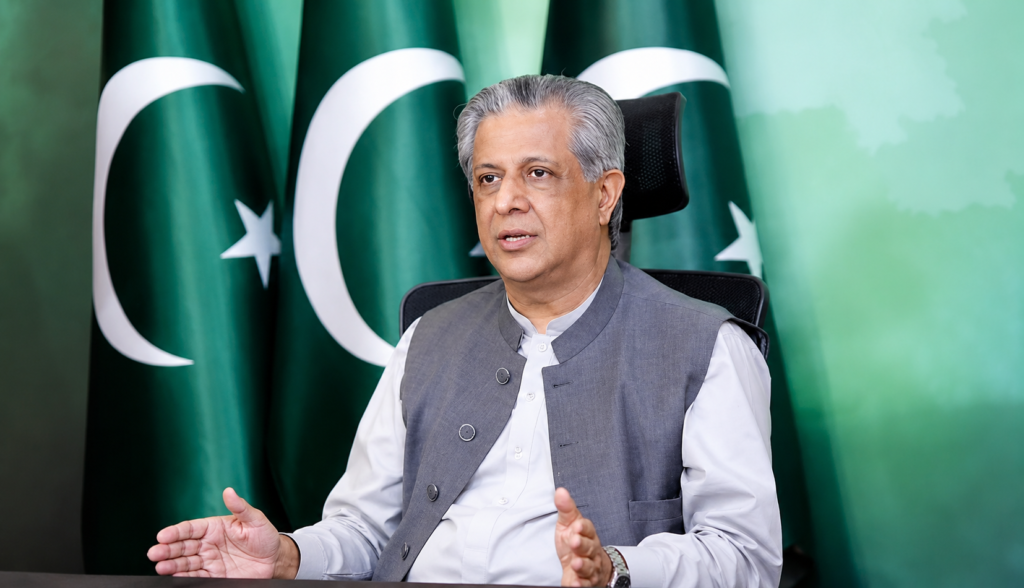
ISLAMABAD — Pakistan’s federal government will return to the Supreme Court seeking a modification of its order directing imprisoned former prime minister Imran Khan to be transferred to Shifa International Hospital, with Law Minister Azam Nazeer Tarar arguing that sending a convicted prisoner to a private hospital raises broader legal questions about prison rules and equal treatment.
The move came only hours after a three-member Supreme Court bench ordered authorities to shift the 73-year-old PTI founder from Adiala Jail to Shifa International Hospital within two days for medical assessment and treatment. The court also directed authorities to facilitate weekly family meetings and telephone contact with his children.


The government is not publicly opposing medical treatment itself. Its challenge centers on where that treatment should take place and whether the court’s direction fits the legal framework governing prisoners.
Government Wants Treatment at a Public Hospital
Tarar said the government had reviewed the ruling with prison authorities and the Islamabad administration and concluded that parts of the order required clarification.
According to the law minister, authorities intend to ask the Supreme Court to modify the arrangement so Khan can instead be examined at a tertiary-care government hospital, while specialists from other institutions could be included in the medical board if required.
Tarar argued that under existing procedures, a medical board determines whether a prisoner needs treatment outside jail and, when hospitalization is required, the prisoner is normally transferred to a government facility.
His central question was whether allowing Khan to receive treatment at a private hospital would establish a principle that could subsequently be invoked by other prisoners.
Supreme Court Acted After Medical Reports
The court’s intervention followed reports submitted by a medical board and the Adiala Jail superintendent.
Those reports raised concerns about Khan’s blood pressure and anxiety and recommended more frequent contact with his immediate family and spouse. Khan’s health and access to his personal physicians have been the subject of months of litigation.
Khan has been imprisoned since August 2023 and faces multiple legal cases. He denies wrongdoing and has described the cases against him as politically motivated.
PTI Welcomes Order, Promises No Hospital Mobilisation
PTI welcomed the Supreme Court ruling and urged the government to implement it.
Party chairman Barrister Gohar Ali Khan said PTI would not politicise Khan’s health and called on supporters to respect the court’s directions.
PTI Secretary-General Salman Akram Raja said the party had assured the court that supporters would not gather outside Shifa International Hospital and that Khan’s medical information would remain a private matter for his family.
Gohar also argued that implementing the ruling could help lower Pakistan’s political temperature and again called for political differences to be addressed through dialogue.
Government Voices Are Not Entirely Aligned
The response from within the government has not been completely uniform.
While Tarar announced plans to seek modification of the order, Parliamentary Affairs Minister Tariq Fazal Chaudhry indicated that the government would honour the Supreme Court’s directions. The differing statements suggest the administration is distinguishing between complying with the judiciary and exercising its legal right to seek review or clarification.
That distinction could become important if the government files its petition before the deadline set for Khan’s transfer.
The Changer Angle: This Case Is Becoming Bigger Than Imran Khan
The immediate political focus is inevitably on Khan, but the government’s argument raises a broader institutional question:
Can a court order private-hospital treatment for an individual prisoner, and if so, what precedent does that create for other inmates?
Tarar is effectively asking the Supreme Court to clarify whether its ruling is specific to Khan’s circumstances or establishes a wider standard governing prisoners requiring specialist treatment.
That makes the next Supreme Court proceeding potentially important beyond the confrontation between PTI and the government.
At the same time, Khan’s status as Pakistan’s most prominent imprisoned opposition politician ensures that any attempt to modify his medical arrangements will carry political consequences.
The next test is therefore twofold: whether the Supreme Court modifies its order — and whether the government implements the existing directive while that legal challenge is considered.