
World | By Saqib S. Qureshi
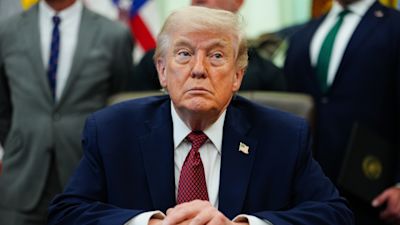
WASHINGTON — President Donald Trump said Tuesday that the United States is not holding talks with Iran and has no negotiations scheduled, sharply dimming hopes of an immediate diplomatic breakthrough as Washington and Tehran remain locked in a dispute over the Strait of Hormuz.
Trump said the US naval blockade of Iranian ports remains in force while insisting that Hormuz is open and operating. Tehran offered a directly conflicting account, saying the strategic shipping route will remain closed until Washington meets conditions attached to an interim agreement reached in June.


The competing declarations underline a widening gap between the two sides: Washington says there is currently nothing to negotiate, while Tehran is tying normalization in Hormuz to concessions it says the US has yet to deliver.
Trump Shuts Down Expectations of Immediate Diplomacy
Trump’s statement represents a notable change from earlier periods in the crisis when the president repeatedly suggested diplomacy could produce an agreement.
On Tuesday, however, he was unequivocal that no US-Iran discussions were underway or planned.
That position comes after weeks of conflicting signals about whether intermediaries were keeping indirect contacts alive. Earlier this month, Trump had said talks were taking place, while Iranian officials publicly denied direct negotiations with Washington.
The latest statement removes, at least publicly, the expectation that another negotiating round is imminent.
Iran Sets Its Price for Reopening Hormuz
Iran, meanwhile, has laid out what it wants before the confrontation can ease.
Top Iranian negotiator Mohammad Baqer Qalibaf said Tehran would keep Hormuz closed until Washington complies with conditions associated with the June interim agreement.
Those demands include lifting the US blockade of Iranian ports, removing oil sanctions, releasing frozen Iranian assets and ending military threats and operations against Iran.
This creates the central deadlock.
Washington is maintaining pressure to force Iranian concessions. Tehran is using Hormuz as leverage to force American concessions.
Neither side currently appears willing to move first.
Two Governments, Two Versions of Hormuz
There is an equally important dispute over what is actually happening in the strait.
Trump says Hormuz is open. Iran says it remains shut under Tehran’s conditions.
Commercial shipping data points to severe disruption regardless of the political terminology. The strait normally carries roughly one-fifth of global oil and LNG flows, making prolonged disruption there a direct threat to global energy markets.
Oil markets are already reacting to the deteriorating diplomatic outlook.
Brent crude settled Tuesday at $91.02 a barrel, its highest close in more than three weeks, while US West Texas Intermediate reached $84.94, as traders priced in the growing risk of prolonged supply disruption.
The Changer Angle: The Negotiation Has Shifted From the Table to the Strait
The most important development may not simply be that formal talks have stopped.
The confrontation has effectively moved from diplomatic rooms to economic pressure points.
Iran’s leverage is Hormuz and the disruption it can impose on global energy flows. Washington’s leverage is its naval blockade, sanctions and access to the international financial system.
That means both sides can continue negotiating without technically holding negotiations.
Every ship that crosses or avoids Hormuz, every Iranian oil cargo blocked, every sanction imposed and every movement in global oil prices changes the cost-benefit calculation for Washington and Tehran.
This is why Trump’s declaration that there are “no talks” does not necessarily mean diplomacy is permanently dead. It means the next bargaining phase may first be conducted through pressure.
What Happens Next
The immediate question is whether third countries can reopen an indirect channel.
Oman remains particularly important because Tehran has been discussing management of the Strait of Hormuz with Muscat even while US-Iran negotiations remain frozen.
Any successful arrangement over shipping could eventually create space for broader diplomacy.
But the opposite is equally possible.
Iran has warned it could adopt a more offensive posture if diplomacy fails, while Washington continues to maintain military and economic pressure.
For now, Trump’s statement removes the expectation of a quick US-Iran settlement and leaves the world’s most important energy chokepoint at the center of a confrontation in which neither side wants to concede first — and global markets are increasingly paying the price.