
Pakistan | By News Desk
ISLAMABAD — Prime Minister Shehbaz Sharif has declared Pakistan’s water interests a “red line,” warning India that Islamabad would respond directly to any action threatening the country’s sovereignty or water security while insisting Pakistan continues to seek peace in the region.
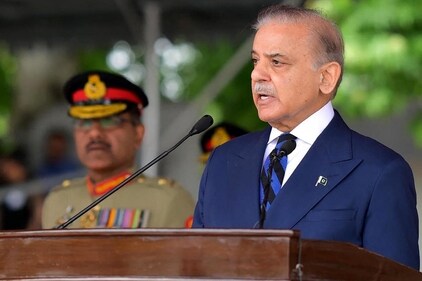
Speaking at the inauguration of Yadgar-e-Fatah in Islamabad on the eve of Pakistan’s 79th Independence Day, Shehbaz said Pakistan did not want another conflict but cautioned New Delhi against interpreting that position as weakness.


The warning was directly linked to the Indus Waters Treaty, whose status became a major source of confrontation between the nuclear-armed neighbours following their May 2025 military conflict.
“Every single drop of Pakistan’s water is our red line,” the prime minister said, according to the official account of his address.
Water Moves to Center of Pakistan-India Dispute
Shehbaz accused India of unilaterally suspending the Indus Waters Treaty following the 2025 confrontation and portrayed the water dispute as a matter of national security rather than simply bilateral diplomacy.
His language signals that Islamabad increasingly sees access to the Indus river system as inseparable from its broader security doctrine.
For Pakistan, the stakes are enormous. The Indus basin supports agriculture, food production, communities and major parts of the country’s economy, meaning any prolonged disruption would carry consequences far beyond relations with India.
‘We Do Not Want War’
Despite the warning, Shehbaz repeatedly framed Pakistan’s position around deterrence rather than a desire for renewed conflict.
He said Pakistan wanted “peace with honour and dignity” but warned that any future challenge to the country’s sovereignty and security would receive a stronger response than during the May 2025 confrontation.
The prime minister used the newly inaugurated monument to connect that warning with Pakistan’s account of last year’s conflict.
President Asif Ali Zardari, Shehbaz and Chief of Defence Forces and Army Chief Field Marshal Syed Asim Munir jointly inaugurated Yadgar-e-Fatah. Senior civilian and military leaders, service chiefs and foreign diplomats attended the ceremony.
A Message Beyond India
Shehbaz’s address extended beyond relations with New Delhi.
He highlighted Pakistan’s role in mediation between the United States and Iran, described relations with Washington as improving and pointed to the new Pakistan-Saudi Arabia-Türkiye defence arrangement as a contribution to regional peace.
He also reiterated Pakistan’s position on Kashmir and Palestine and urged Afghanistan’s leadership to prevent Afghan territory from being used for attacks against Pakistan.
The combination of those messages appeared designed to portray Islamabad as pursuing two tracks simultaneously: stronger deterrence against security threats and a more active diplomatic role in regional crises.
Why It Matters
Water has long been one of the most sensitive issues in Pakistan-India relations. Shehbaz’s decision to publicly describe it as a “red line” raises its political and strategic importance further.
The immediate challenge is preventing the water dispute from becoming another trigger for confrontation between two nuclear-armed neighbours whose relations remain deeply strained after the May 2025 conflict.
The prime minister’s message was therefore deliberately two-sided: Pakistan says it wants peace, but it is also signaling that water security now sits alongside territorial sovereignty among the issues on which Islamabad says it will not compromise.