
Pakistan | By News Desk
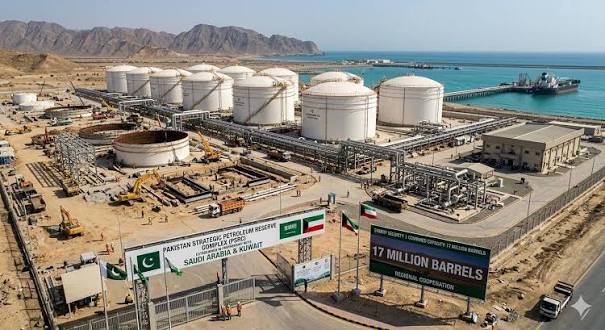
LAHORE — Pakistan is preparing a new oil-storage partnership with Saudi Arabia, Kuwait and Qatar that would allow Gulf producers to keep petroleum stocks on Pakistani territory while giving Islamabad access to those supplies during a crisis, Petroleum Minister Ali Pervaiz Malik said Sunday.
The proposal comes as disruptions around the Strait of Hormuz have exposed Pakistan’s vulnerability to international supply shocks and reinforced calls for the country to build a stronger energy-security buffer.


Under the proposed bonded storage scheme, participating Gulf countries would finance and store their oil at secure facilities in Pakistan and could use those stocks for international sales. Pakistan, however, would have the right to purchase the stored supplies during a conflict or other emergency, Malik said.
Gulf Countries Would Bear Storage Cost
One of the most significant elements of the proposal is its financing structure.
Malik said Saudi Arabia, Kuwait and Qatar would store petroleum in Pakistan at their own cost, potentially allowing Islamabad to strengthen its emergency energy position without immediately financing a massive strategic reserve itself.
The commercial framework was prepared with assistance from Saudi Aramco and other major companies and has been forwarded to Pakistan’s Economic Coordination Committee. Malik said he expects progress after an ECC decision next week.
Pakistan’s Oil Vulnerability Exposed
Pakistan currently imports roughly 90% of its energy requirements, according to Malik. Domestic oil production is around 70,000 barrels per day, compared with demand of approximately 500,000 barrels per day.
That dependence has become increasingly important as conflict involving the United States and Iran has disrupted normal energy flows through Hormuz.
Pakistan also lacks a conventional strategic petroleum reserve capable of insulating the economy from a prolonged international supply disruption.
Building one would be expensive. Malik estimated that storing enough crude for one month would require about $500 million, while an underground storage system could require another $300 million to $400 million.
Pakistan Could Become a Regional Energy Storage Point
The plan could have implications beyond emergency supplies.
If Gulf producers begin maintaining substantial inventories inside Pakistan, the country could gradually develop into a storage and distribution location connecting Middle Eastern energy producers with markets in South and potentially wider Asia.
The initiative also comes alongside another energy development: Malik said Turkish Petroleum is expected to begin offshore drilling in Pakistani territorial waters.
Why It Matters
For Pakistan, the proposal addresses one of the country’s biggest economic vulnerabilities without requiring Islamabad to immediately spend hundreds of millions of dollars building its own strategic reserve.
The timing is also significant. Just days after Pakistan, Saudi Arabia and Türkiye signed a new mutual-defence agreement, Islamabad is now pursuing deeper energy-security cooperation with major Gulf producers. The two developments are separate, but together they point toward Pakistan building stronger strategic links with Gulf partners amid growing regional instability.
If the bonded-storage proposal receives final approval and attracts substantial Gulf inventories, Pakistan could gain something it has long lacked: oil already positioned inside the country when the next external supply shock arrives.