
World | By Shahnoor Saqib
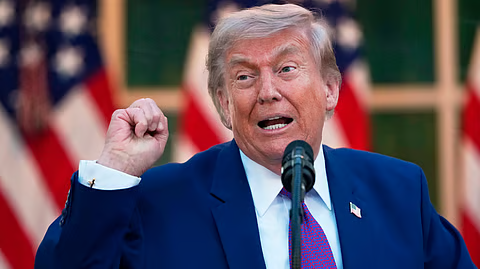
WASHINGTON — President Donald Trump says the war with Iran may be nearing its end, offering his most optimistic assessment yet as negotiators move closer to an agreement over the Strait of Hormuz.
Speaking from the Oval Office, Trump said he did not believe Iran could sustain the conflict much longer and predicted the war could end “pretty soon.” His remarks came as Iran and Oman said an arrangement to reopen the Strait of Hormuz was close to being finalized.


The two developments are closely connected. A workable Hormuz agreement could ease pressure on global shipping, reduce the immediate risk of further U.S.-Iran military escalation and create space for broader negotiations over ending the five-month conflict.
What Is Happening With the Hormuz Deal?
Iranian officials say negotiations with Oman are nearing completion after the sides agreed on routes for vessels entering and leaving the strait.
The emerging arrangement would reportedly separate inbound and outbound shipping through different channels. However, unresolved issues remain, including restrictions on Iranian ports and the wider U.S. military blockade.
Commercial traffic through the strait has increased, but it remains well below normal levels. The waterway is central to global energy markets because a major share of internationally traded oil and liquefied natural gas passes through it.
Why Is Trump Predicting the War Will End?
Trump suggested Iran is under growing military and economic pressure and may no longer be able to continue fighting at the same intensity.
His comments also came amid questions about U.S. weapons supplies. Trump acknowledged that some American munitions were running low, while saying production of systems including Patriot and Tomahawk missiles was being expanded.
That creates pressure on both sides. Iran faces economic and military strain, while Washington has strong incentives to avoid an indefinite war that consumes expensive precision weapons and destabilizes energy markets.
Is a Full Peace Deal Imminent?
Not necessarily.
A Hormuz agreement would be a major breakthrough, but it would address only one part of the conflict. The United States and Iran remain divided over sanctions, Iran’s nuclear programme, regional military activity and the terms of any permanent ceasefire.
There are also competing accounts of how close the parties really are. While Trump and Omani-mediated talks have generated optimism, Iranian officials have disputed some U.S. claims and say important details remain unresolved.
Fresh Attacks Could Still Derail Diplomacy
The diplomatic progress is unfolding alongside renewed violence across the region.
Houthi attacks have caused heavy casualties in Yemen, fighting has resumed between Israel and Hezbollah, and threats against Gulf infrastructure have added to fears that a single major incident could collapse negotiations.
That means the next stage will depend not only on diplomats reaching an agreement, but also on whether armed forces and regional groups respect it.
Why It Matters
A deal reopening the Strait of Hormuz could become the first concrete step toward ending the war.
It would help restore shipping, reduce pressure on oil markets and give Washington and Tehran a reason to keep negotiating. But the gap between a maritime arrangement and a comprehensive peace agreement remains large.
Trump’s optimism has raised expectations. The next question is whether the diplomacy can survive the region’s next military shock.