
Analysis | By Shahzaib S. Qureshi
GAZA — For years, every ceasefire proposal has focused on one goal: stopping the fighting.
The latest agreement goes much further.


For the first time, Hamas has reportedly agreed in principle to a framework that includes disarmament, one of Israel’s longest-standing demands. If implemented, it could fundamentally reshape Gaza’s political and security landscape. But it could also become one of the most difficult agreements ever attempted in the Israeli-Palestinian conflict.
The question is no longer whether the guns can fall silent.
It is whether the movement that has ruled Gaza for nearly two decades is truly prepared to surrender the military power that defined it.
What Has Hamas Agreed To?
According to officials involved in the negotiations, Hamas has accepted a draft framework that would eventually lead to the dismantling of its armed wing as part of a broader peace arrangement.
The proposal reportedly links disarmament to several key conditions, including:
- A permanent ceasefire.
- Israeli military withdrawal from Gaza.
- Large-scale humanitarian aid and reconstruction.
- Security guarantees for Gaza’s population.
- A new governing framework for the territory.
While negotiators describe the agreement as a breakthrough, many of the most difficult details remain unresolved.
Why Does Israel Want Hamas Disarmed?
Since the October 7 attacks, Israel has repeatedly stated that any lasting peace requires Hamas to lose its military capabilities.
Israeli leaders argue that allowing Hamas to retain weapons would make another conflict inevitable.
From Israel’s perspective, disarmament is considered essential before any post-war political arrangement can succeed.
Why Is This So Difficult?
Disarmament is not simply about handing over weapons.
Hamas has spent decades building an extensive military infrastructure that includes underground tunnels, rocket manufacturing sites, intelligence networks and thousands of trained fighters.
Even if political leaders accept a deal, implementing it would require unprecedented verification mechanisms and international oversight.
History shows that disarmament agreements involving armed movements are often the hardest part of any peace process.
Who Would Govern Gaza?
Perhaps the biggest unanswered question is governance.
If Hamas steps away from military control, who fills the vacuum?
Several possibilities are being discussed:
- A reformed Palestinian Authority.
- A technocratic interim administration.
- An internationally supervised governing body.
- A regional Arab-led stabilization mission.
Each option faces political and security challenges, making governance one of the most sensitive parts of the negotiations.
What Does This Mean for Ordinary Palestinians?
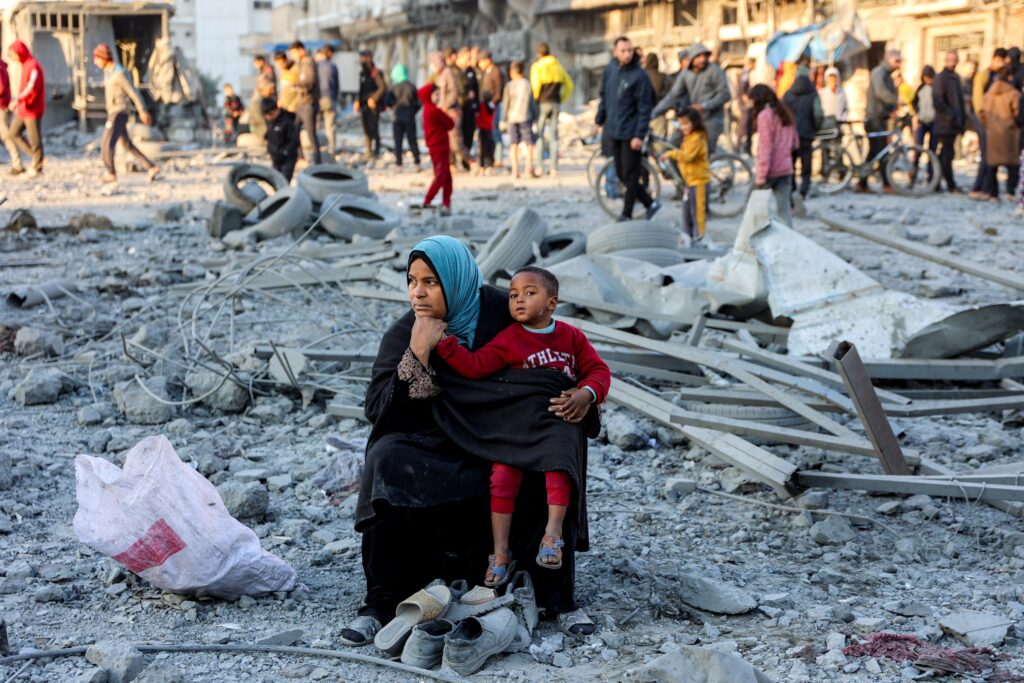
For civilians in Gaza, the agreement could offer the first realistic path toward long-term reconstruction after months of devastating war.
International funding, rebuilding efforts and economic recovery are all expected to depend on lasting security arrangements.
But many Palestinians remain cautious.
Years of failed ceasefires and collapsed negotiations have left deep skepticism about whether another agreement can survive.
Could This Change the Middle East?
Potentially.
If Hamas genuinely disarms and Israel agrees to withdraw under internationally backed guarantees, it would represent one of the most significant shifts in the Israeli-Palestinian conflict in decades.
It could also reshape regional diplomacy, opening the door to broader security arrangements involving Arab states and renewed international engagement.
Yet the road ahead remains uncertain.
A single disagreement over implementation, verification or political authority could derail the entire process.
Why It Matters
This is not just another ceasefire negotiation.
It is an attempt to answer the question that has haunted every Gaza conflict for nearly two decades: Who governs Gaza after the war—and under what security framework?
If successful, the agreement could mark the beginning of a new political chapter for both Israelis and Palestinians.
If it fails, the region could once again find itself trapped in the same cycle of violence that has defined the conflict for generations.